Si busca un bot que no solo responda preguntas, sino que realmente mejore a medida que interactúa —reduciendo las respuestas incorrectas el próximo mes en comparación con este, sin necesidad de reescribir sus reglas manualmente— tenemos excelentes noticias: es totalmente viable construirlo en 2026 y no hace falta un laboratorio de investigación para lograrlo.
En pocas palabras, para crear un bot de IA con aprendizaje autónomo, la clave es asignarle una tarea clara, conectarlo a un modelo de lenguaje, alimentarlo con los datos adecuados y —el paso que la mayoría de las guías omiten— estructurar un bucle de retroalimentación (feedback loop) para que cada conversación sirva de entrenamiento para la siguiente. Un bot con aprendizaje autónomo no es magia; es un ciclo continuo. Esta guía detalla en qué consiste ese bucle, las dos vías realistas para construirlo (con y sin código) y el factor decisivo para que su bot sea brillante o resulte inútil: las fuentes de las que le permite aprender.
¿Qué es un bot con aprendizaje autónomo? (Frente a los bots basados en reglas e IA básica)
Un bot con aprendizaje autónomo es un software que optimiza sus propias respuestas con el tiempo al asimilar nuevos datos y retroalimentación, en lugar de quedar limitado a la programación inicial de su creador. Es la misma diferencia que existe entre una máquina expendedora y un colaborador que perfecciona su desempeño semana tras semana.
Esa es la definición rápida. Si desea profundizar en cómo esta tecnología impulsa las ventas ininterrumpidas, nuestra página sobre agentes de ventas de IA con aprendizaje autónomo lo explica en detalle. Por ahora, vea cómo comparamos los tres tipos de bots más comunes:
Tipo de bot | Cómo responde | ¿Mejora con el tiempo? | Ideal para |
|---|---|---|---|
Basado en reglas | Guiones rígidos de tipo "si X, responde Y" y árboles de decisión | No, solo cuando se editan las reglas manualmente | Preguntas frecuentes sencillas, menús y flujos predefinidos |
Basado en IA (estático) | Un modelo de lenguaje genera las respuestas, pero el modelo no cambia | No, mantiene el mismo modelo y los mismos puntos ciegos | Preguntas y respuestas flexibles donde la precisión aceptable es suficiente |
Con aprendizaje autónomo | El modelo de IA genera respuestas y se reentrena con nuevas conversaciones y comentarios | Sí, la precisión y el tono mejoran con el uso diario | Soporte y ventas donde la calidad se capitaliza continuamente |
La conclusión clave: todo bot con aprendizaje autónomo es un bot de IA, pero no todo bot de IA tiene aprendizaje autónomo. Muchas herramientas comercializadas bajo la etiqueta de "IA" son en realidad estáticas: suenan inteligentes el primer día y exactamente igual (con los mismos errores incluidos) un año después.
Cómo funciona realmente un bot de IA con aprendizaje autónomo
Prescindiendo de tecnicismos, un bot con aprendizaje autónomo opera en un bucle continuo de cinco fases:
Entrada de datos. El usuario envía un mensaje. El bot accede también a información de respaldo (documentación, chats previos, detalles de productos).
Respuesta del modelo. El modelo de lenguaje interpreta el mensaje y genera una respuesta basándose en ese conocimiento.
Captura de retroalimentación. ¿Fue útil la respuesta? Esto se mide mediante señales explícitas (votos positivos/negativos), resultados implícitos (si el cliente compró, agendó o abandonó la sesión) o la corrección directa de un supervisor humano.
El bot aprende. Esas señales se utilizan para ajustar el comportamiento futuro, ya sea actualizando la base de conocimientos, puliendo las instrucciones y ejemplos, o reentrenando y refinando (fine-tuning) el modelo.
Repetición optimizada. La siguiente interacción similar se beneficia de lo aprendido en la anterior.
Este es el mismo principio con el que se entrenan los asistentes modernos: los modelos a gran escala se perfeccionan según las preferencias humanas, un enfoque que en el ámbito de la investigación se conoce como aprendizaje por refuerzo a partir de la retroalimentación humana (RLHF). No es necesario desarrollar un sistema de RLHF desde cero, pero el modelo mental es idéntico: los resultados y las correcciones actúan como instructores. Si no existe un bucle que conecte estos puntos, no tiene un bot con aprendizaje autónomo, sino un bot estático con una excelente estrategia de marketing.
Cómo crear su propia IA con aprendizaje autónomo paso a paso
A continuación, le presentamos la secuencia práctica de implementación, sin importar la ruta que elija.
Paso 1 — Definir el objetivo y una métrica de éxito
Los bots con objetivos vagos no prosperan. Seleccione una función específica ("calificar clientes potenciales entrantes", "responder consultas de facturación", "agendar citas") y defina una métrica clave que valide su rendimiento (tasa de resolución, tasa de reservas, conversión o CSAT). Su bot aprenderá a optimizar justamente esa métrica, así que selecciónela con criterio.
Paso 2 — Elegir el camino: código o no-code
Existen dos alternativas reales para desarrollar su propia IA con aprendizaje autónomo:
La vía del código. Consiste en utilizar la API de un modelo de lenguaje (como la de un proveedor de LLM) junto con un marco de orquestación como LangChain para vincular el modelo a sus datos, herramientas y memoria. Usted se encarga de programar la integración para la recuperación, el registro y el reentrenamiento. Ofrece el máximo control, pero usted asume la responsabilidad de cada componente y de corregir posibles fallos.
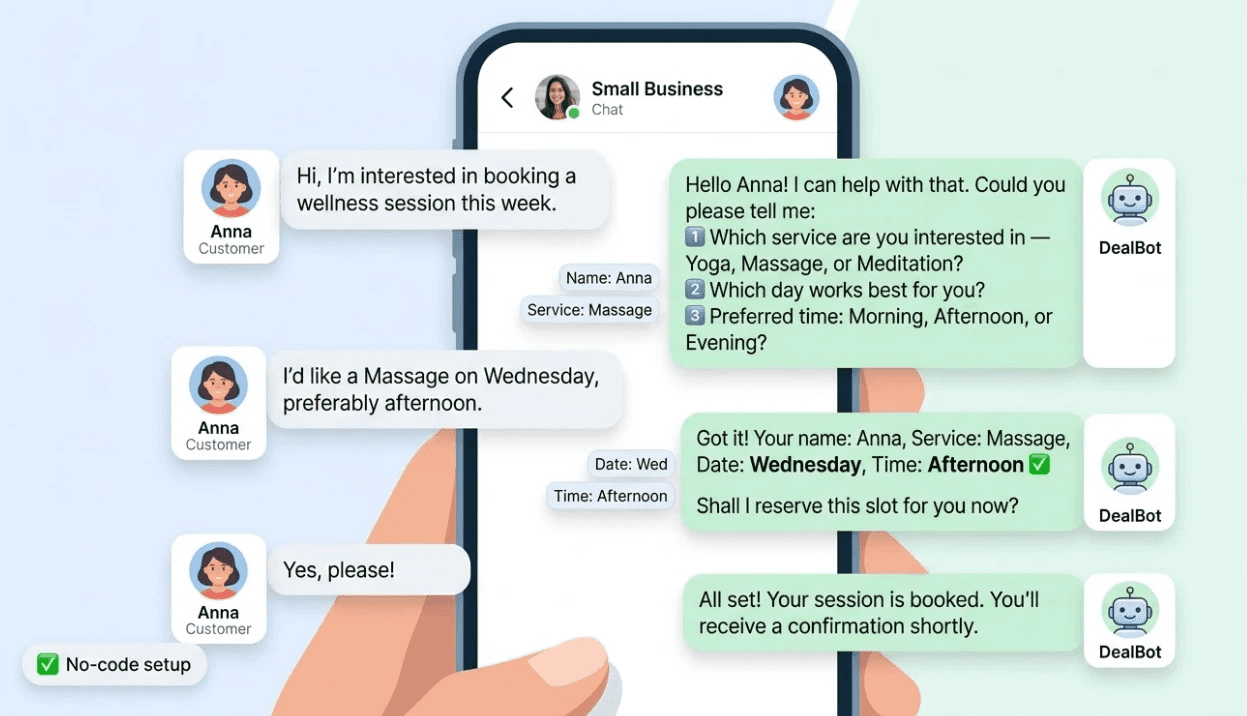
La vía no-code. Se basa en una plataforma que ya gestiona el modelo, la base de conocimientos y el bucle de aprendizaje, de modo que su tarea consiste en configurar en lugar de programar. El despliegue y mantenimiento son mucho más rápidos. Si prefiere esta opción, consulte cómo crear un bot sin código.
La mayoría de las empresas no necesitan la vía del código. El modelo en sí no representa su ventaja competitiva; lo son sus datos y su capacidad de seguimiento (más información en el Paso 3).
Paso 3 — Reunir los datos de entrenamiento adecuados
Aquí es donde se define el éxito o fracaso de la mayoría de los proyectos de aprendizaje autónomo. Un bot entrenado exclusivamente con preguntas frecuentes genéricas se limitará a dar respuestas genéricas. Un bot entrenado con sus conversaciones reales —las que cerraron una venta, las objeciones habituales que enfrenta su equipo, las frases que convencen— se convertirá en un miembro más de su equipo comercial.
Para un bot de soporte, esto se traduce en documentación de ayuda, historial de tickets y chats resueltos. Para un bot de ventas, implica registrar sus interacciones comerciales reales: qué responde su mejor vendedor cuando un cliente duda por el precio, cómo reactiva un lead frío o en qué momento propone agendar una cita. Esa es la diferencia entre un bot que recita de memoria y uno que utiliza chatbots para conversaciones de ventas con naturalidad humana. Si introduce datos irrelevantes, obtendrá respuestas mediocres.
Paso 4 — Implementar el bucle de retroalimentación
Este paso es el que transforma un bot convencional de "IA" en uno con "aprendizaje autónomo". Defina cómo se recopilará y procesará la retroalimentación:
Explícita: valoraciones de usuarios, botones de aprobación/desaprobación o revisiones y correcciones manuales de las respuestas.
Implícita: resultados comerciales reales —compras, reservas de citas, retención de clientes— vinculados directamente a las interacciones que los generaron.
Posteriormente, dirija estas señales hacia la optimización del sistema: las respuestas mejor valoradas se refuerzan, las correcciones sustituyen a las respuestas deficientes y los patrones exitosos se integran al comportamiento predeterminado del bot. Las plataformas que implementan esto con éxito logran mejoras de rendimiento medibles. Descubra cómo un bucle de aprendizaje puede incrementar la tasa de conversión con un chatbot de IA en lugar de limitarse a desviar consultas.
Paso 5 — Evaluar, monitorear el desvío y mantener la supervisión humana
Un bot con aprendizaje autónomo también puede incorporar hábitos incorrectos si recibe señales erróneas, un fenómeno que los investigadores denominan "desviación del modelo" (model drift). El informe AI Index de Stanford HAI analiza en profundidad las tendencias en confiabilidad y supervisión de sistemas de IA. Realice pruebas antes del lanzamiento oficial, monitoree la precisión de forma continua y asigne a una persona la revisión de los casos complejos. El aprendizaje autónomo no prescinde de la supervisión humana.
Crear una IA con aprendizaje autónomo sin código
Si gestiona un negocio y no cuenta con un perfil de desarrollo de software, la alternativa sin código es, casi siempre, la decisión más acertada. Las plataformas modernas le permiten integrar sus canales de comunicación, conectar el bot a su base de conocimientos y activar el bucle de aprendizaje sin escribir una sola línea de Python. De este modo, evita meses de desarrollo de infraestructura y se enfoca en lo verdaderamente importante: potenciar sus resultados comerciales.
Así evitará caer en un error muy común: un bot que capta leads pero arruina las conversaciones porque nunca fue entrenado en la dinámica de un diálogo fluido y natural. Optar por una solución sin código no compromete la calidad; significa que la plataforma absorbe la complejidad técnica para que usted se concentre en la estrategia de negocio.
La gran lección: su bot será tan inteligente como las fuentes de las que aprende
Hay una realidad ineludible detrás de cada tutorial sobre "cómo construir un bot con aprendizaje autónomo": configurar el modelo de lenguaje es la parte sencilla. Cualquiera puede conectarse a una API de LLM. Lo que diferencia a un bot que incrementa los ingresos de uno que simplemente responde dudas es de qué fuentes aprende y qué objetivos optimiza.
Si su bot solo se alimenta de manuales técnicos, actuará como una enciclopedia muy educada. En cambio, si aprende de las interacciones reales de su mejor vendedor —cómo maneja las objeciones de costo, cómo genera sentido de urgencia y cuándo propone el cierre— comenzará a vender de verdad. Este es el principio de un asistente de ventas de IA enfocado en cerrar tratos y no en desviar la atención del cliente. Dealism propone un enfoque más estructurado: DealOnca, su herramienta integrada tipo "ChatGPT para ventas", ayuda a organizar el conocimiento corporativo, los resúmenes de diálogos y las pautas de entrenamiento para que el AI Customer Agent perfeccione sus respuestas sin necesidad de convertir cada conversación no supervisada en una nueva regla.
No es necesario reescribir cada respuesta de forma manual. Comience con el plan gratuito de Dealism, entrene a un AI Customer Agent con la información de su negocio y observe cómo el rendimiento de sus respuestas mejora día con día.
Limitaciones y riesgos a tener en cuenta
Los bots con aprendizaje autónomo son herramientas muy potentes, pero no son perfectos. Tenga en cuenta los siguientes factores:
Alucinaciones. Los modelos de IA pueden generar afirmaciones incorrectas con total seguridad. Asegúrese de estructurar el bot con base en sus datos y audite las interacciones críticas.
Desviación (drift). Las valoraciones incorrectas fomentan conductas erróneas. Supervise su métrica de éxito de forma continua, no solo la disponibilidad del servicio.
Calidad y privacidad de datos. El bot reflejará las inconsistencias de su base de información. Asegúrese de limpiar los datos de entrada y respetar las normativas de protección de datos de los clientes.
Exceso de automatización. Ciertos escenarios exigen atención humana. Diseñe protocolos claros de transferencia a agentes reales, una práctica esencial tanto para la atención al cliente habitual como para la implementación de IA conversacional para servicio al cliente a gran escala, y el complemento perfecto para un auto-reply agent eficiente.
Preguntas frecuentes
¿Puede un chatbot aprender realmente por sí mismo?
Sí, dentro de ciertos parámetros. Mejora de forma automática procesando nuevos datos y retroalimentación, pero requiere supervisión humana para definir los objetivos de negocio, proveer información de alta calidad y corregir desviaciones en su aprendizaje. El aprendizaje autónomo se traduce en automejora, no en autogobierno.
¿Es necesario saber programar para crear un bot de IA con aprendizaje autónomo?
No. La ruta de desarrollo de código (utilizando APIs de LLM y marcos de trabajo como LangChain) brinda el máximo control, pero las plataformas sin código actuales resuelven la integración del modelo, la base de conocimientos y el bucle de retroalimentación de forma nativa. Para la mayoría de las empresas, las soluciones no-code son la opción más eficiente.
¿Qué volumen de datos requiere un bot con aprendizaje autónomo para iniciar?
Menos de lo que se suele pensar para el lanzamiento, pero un flujo constante para destacar en su desempeño. Puede iniciar con su documentación existente y unas cuantas docenas de diálogos de calidad, dejando que el bucle de retroalimentación optimice la precisión con el paso de las semanas. La relevancia de la información es mucho más crítica que el volumen total.
¿Cuál es la diferencia entre un bot con aprendizaje autónomo y la IA generativa?
La IA generativa se refiere a la tecnología subyacente que genera las respuestas. El aprendizaje autónomo determina si ese sistema optimiza su rendimiento a lo largo del tiempo mediante retroalimentación. Un bot puede ser generativo y a la vez estático; un sistema de aprendizaje autónomo incorpora el ciclo que convierte cada interacción en una mejora futura.
Conclusión
El desarrollo de un bot de IA con aprendizaje autónomo requiere tres elementos esenciales: un objetivo de negocio bien definido, un modelo conectado a datos de calidad y un bucle de retroalimentación que transforme cada interacción en aprendizaje. El desarrollo con código aporta flexibilidad y control total; la alternativa sin código acelera el tiempo de despliegue. No obstante, el factor determinante será siempre la calidad de la información con la que alimenta al sistema. Si lo entrena con preguntas frecuentes genéricas, obtendrá un bot convencional; si lo entrena con sus mejores conversaciones comerciales, dispondrá de un asistente de IA con aprendizaje autónomo que optimizará sus resultados de forma constante día tras día.