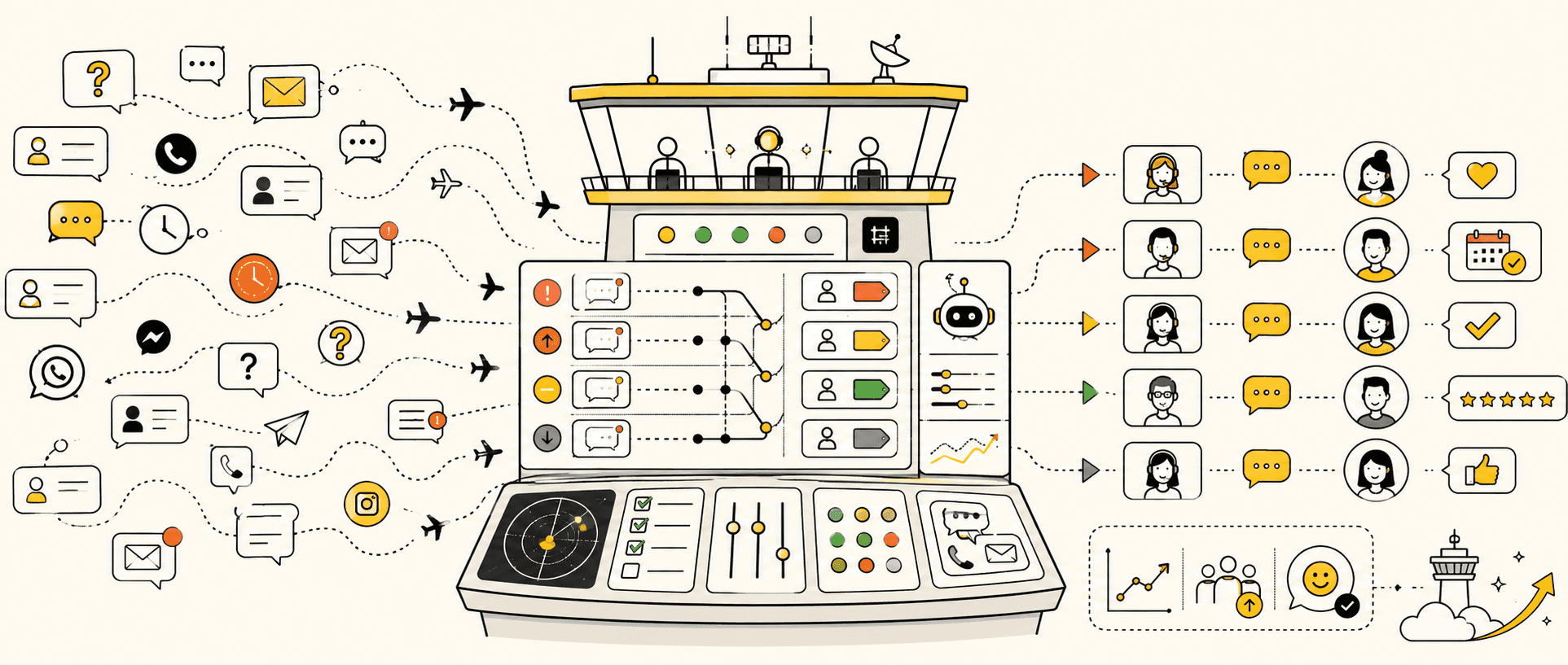
At 8:47 p.m., a customer opens your website chat and asks, “Can I book for Saturday?” At the same time, someone on Instagram asks for pricing, and a WhatsApp lead says, “I’m interested, but I’m not sure which option fits me.” None of these messages looks urgent alone. Together, they show where sales start to leak.
The challenge in 2026 is not only handling more conversations. It is knowing what each message means and what action should follow. Managed sales chats help teams turn scattered questions into qualified leads, bookings, quotes, follow-ups, or human handoffs before the customer loses interest.
Why Customer Conversations Become Hard to Manage at Scale
Small teams often start with a loose system. One person checks website chat. Another replies on Instagram. Someone else handles WhatsApp. This works when there are only a few messages a day.
As the business grows, three problems appear:
More channels: customers ask questions on websites, ads, WhatsApp, Instagram, and Messenger.
More intent types: some people need support, some compare prices, and some are ready to book.
More missed timing: a slow reply to “Do you have availability this Saturday?” can lose a customer who was already close to buying.
The hard part is not only answering messages. The hard part is deciding what each message means.
That is where a better conversation system becomes useful. It helps teams stop treating every chat the same and start turning customer messages into clear sales, support, or follow-up actions.
What managed chat Means and How It Differs from Regular Live Chat
Managed chat is not just a chat box on a website. It is a structured way to handle customer conversations across different channels.
In a basic setup, a business adds live chat to its website and waits for visitors to ask questions. That may help, but it depends on whether someone is available to reply. If the team is busy, the chat box becomes another place where leads get ignored.
Managed live chat vs Regular Live Chat
Area | Regular live chat | managed chat |
Main role | Reply to questions | Manage the conversation |
Best use | Simple support | Sales, booking, routing |
Team burden | Staff must watch chats | System handles first steps |
Next action | Often unclear | Quote, booking, follow-up, handoff |
This is why managed live chat matters for growing teams. Once customer messages spread across WhatsApp, Instagram, and Live Chat, the bottleneck is the team’s limited attention. Dealism is an AI messaging product with automated flows and a 24/7 AI Customer Agent for Instagram, WhatsApp, and Live Chat. It can handle routine questions with approved knowledge, preserve conversation context, qualify intent, and summarize what happened so the team can focus on the conversations that need judgment.
Why a conversational AI platform for customer engagement Is Becoming the New Layer
Traditional tools were built for records. CRM stores customer data. Forms collect requests. Tickets track problems. These tools still matter, but they usually start working after the customer has already taken a formal step.
Many buying decisions now start earlier, inside a simple conversation. A customer may not want to fill out a form or wait for an email. They may ask one quick question on WhatsApp, Instagram, or Web Chat and expect the business to understand what they mean.
This is why teams need more than a basic chatbot. A conversational AI platform for customer engagement adds a new layer between customer interest and business action.
It helps teams handle three things better:
Context: It remembers what the customer has already said, so the reply does not feel disconnected.
Intent: It can tell the difference between a support question, a price check, and a near-booking request.
Next step: It guides the customer toward a quote, booking, product match, follow-up, or human handoff.
Timing: It keeps the conversation moving before the lead becomes cold.
For example:
Customer: “I’m interested, but I’m not sure which option fits me.”
AI: “No problem. Are you looking for a quick consultation, a full service, or help comparing options?”
Customer: “Maybe a consultation.”
AI: “Got it. What goal are you trying to solve, and when would you like to start?”
Good conversational AI for customer engagement should not make the business sound robotic. It should help the team respond with context, ask useful questions, and reduce the gap between customer interest and action.
How Dealism Turns Conversations into Execution
Dealism brings together messaging automation, Unified Inbox, CRM, AI Agent, and an AI workspace (DealOnca) for small businesses that sell through conversation — with unlimited Active Contacts on the Free plan. Its AI Customer Agent can answer, qualify, recommend, book, and support follow-up using business knowledge and conversation context.
Dealism supports this workflow through several layers:
Knowledge operations: DealOnca, the built-in “ChatGPT for sales,” helps teams train and manage Agents, organize knowledge from websites and files, and update that knowledge when business information changes.
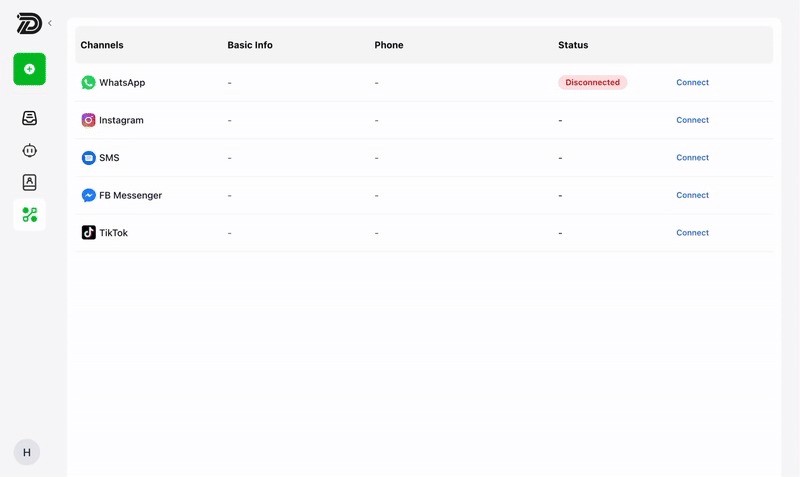
Cross-channel control: WhatsApp, Instagram, and Web Chat managed from one conversation layer, with fewer scattered messages and fewer missed leads.
Context memory: past conversations, customer needs, and service history carried into later replies, so the customer does not need to repeat everything.
Reviewed learning: teams can use approved business knowledge and reviewed conversation history to refine Agent guidance over time.
AI sales strategy support: chat data are used to suggest better next steps, prioritize high-intent leads, and help teams improve conversions instead of only tracking conversations.
Human focus: staff brought in when trust, negotiation, complex service fit, or closing needs real judgment.
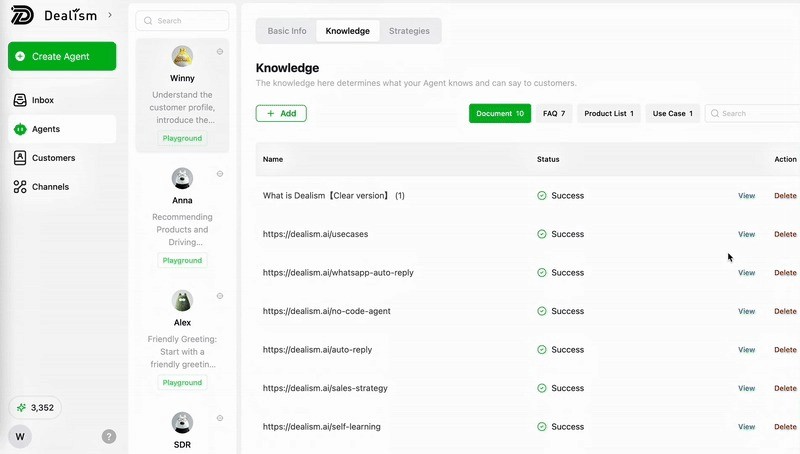
This is the stronger value of managed sales chat. Dealism includes core CRM, contact context, conversation history, tags, filters, and a Unified Inbox without requiring an enterprise CRM project. It helps reduce repetitive work and keeps the team focused on conversations that need human judgment. Dealism’s free plan includes unlimited active contacts, unlimited workflows, one AI Customer Agent, core CRM and 50 AI credits you can claim every day.
The Future of Customer Conversation Management
Customer conversations are becoming the new sales floor. A short message about price, availability, or service fit can be the moment a buyer decides whether to trust the business. That is why managed chat, managed live chat, and managed sales chat are moving from support tools to growth systems. The winning teams will not simply reply faster. They will turn every serious message into a clearer action.
Dealism is built for this shift. Dealism helps you build a conversation system that protects attention, reduces manual work, and moves more customers toward booking, quoting, and sales.
A Practical Workflow for Managing Conversations at Scale
A strong conversation system should follow a clear workflow. The process does not need to be complicated, but it does need to be consistent.
Step 1: Capture conversations from the right places
Customer conversations may come from website chat, WhatsApp, Instagram, Messenger, ads, or landing pages. The first job is to make sure those messages are not scattered across too many tools.
Step 2: Classify the intent
Not every message needs the same response. The system should separate support questions, price questions, booking requests, complaints, and sales opportunities.
Step 3: Ask useful follow-up questions
A weak reply answers only the surface question. A stronger reply helps the customer move forward.
For example:
Customer: “How much?”
Better reply: “It depends on the service and timing. Are you looking for a one-time session, a package, or a first consultation?”
This kind of reply keeps the conversation alive without sounding pushy.
Step 4: Route important leads
High-intent leads should not sit in the same inbox as low-priority questions. If someone asks to book, requests a quote, or shows urgency, the system should alert the right person.
Step 5: Create follow-up
Many customers do not decide in one message. They may compare, hesitate, or need time. A strong managed chat system should help the business follow up without relying on memory.
Step 6: Improve the knowledge base
Repeated questions show what customers do not understand. Businesses can use conversation data to improve website pages, FAQs, pricing explanations, service pages, and sales scripts.
Conclusion
At 8:47 p.m., a customer opens your website chat and asks, “Can I book for Saturday?” At the same time, someone on Instagram asks for pricing, and a WhatsApp lead says, “I’m interested, but I’m not sure which option fits me.” None of these messages looks urgent alone. Together, they show where sales start to leak.
The challenge in 2026 is not only handling more conversations. It is knowing what each message means and what action should follow. Managed chat, managed live chat, and managed sales chat help teams turn scattered questions into qualified leads, bookings, quotes, follow-ups, or human handoffs before the customer loses interest.