Most guides on how to sell on WhatsApp are painfully outdated. They talk endlessly about setting up profiles, uploading catalogs, and chasing faster response times.
But none of that answers the real problem keeping small and medium business (SMB) owners up at night:
Your WhatsApp is already full of conversations — yet your revenue remains completely inconsistent.
The harsh truth for modern healthcare clinics, therapy practices, coaching businesses, and local service brands is that the bottleneck is not communication. It is decision-making inside conversations. If your chats do not actively move people forward, you are not selling. You are just replying.
To truly increase sales and get customers, you must transition from chaotic chatting to a structured, execution-driven sales environment. Here is the framework to mastering WhatsApp commerce.
The Broken Funnel Behind WhatsApp Sales
In a messaging-first economy, the traditional website funnel is dead. The chat window is the funnel.
Every business owner shares the same ambition:
Increase Sales -> Get Customers -> Reply to Inquiries -> Automate Responses
However, most SMBs experience a massive bottleneck between replying and converting.
When you try to scale your WhatsApp sales, traditional software forces you into two broken extremes:
The Rigid, Rule-Based Bot
These tools excel at basic automate responses, but they break the moment a customer mixes questions or changes intent in a single paragraph. They sound like machines because they are machines, which immediately destroys the sales vibe.
The Heavy CRM System
These platforms excel at recording data, but they move nothing forward. For a lean team, filling out complex CRM cards feels like an administrative burden, not an efficiency upgrade. Data integrity does not mean your business is running.
So, can you sell on WhatsApp successfully without heavy tech or an expensive sales team? Yes — but it requires shifting your focus entirely toward pre-decision conversation logic.
Step 1: Don’t Just Reply to Inquiries. Understand Intent First.
The biggest misconception about how to sell on WhatsApp business is that selling begins after you give the answer. In reality, the sale is won or lost in how you manage the clarification before the answer.
Consider this high-frequency scenario. A prospect messages your service business asking:
"How much does the treatment cost?"
The Replying Mindset
Your staff immediately sends a generic price list. The customer says "Thank you," goes cold, and disappears. You have been ghosted because you treated the message as a support ticket rather than a transaction opportunity.
The Guiding Mindset
An elite front-line salesperson knows that the exact same question can stem from entirely different customer mindsets: an urgent emergency, long-term planning, or basic price comparison.
Without conversational clarification, every reply you send is random.
Before pushing a link or a price, your chat system must act like an expert receptionist: understanding the context, clarifying the specific pain point, and diagnosing the need.
By shaping intent first, you transform a cold inquiry into a qualified client.
Step 2: Capture High-Intent Traffic Before the Vibe Decays
Many merchants lose prospective clients before the WhatsApp conversation even begins. The leak in the funnel isn't bad marketing; it is the friction of time delay.
When a prospect interacts with your brand, their buying intent is at its absolute peak.
If they wait hours for a manual response, that intent evaporates.
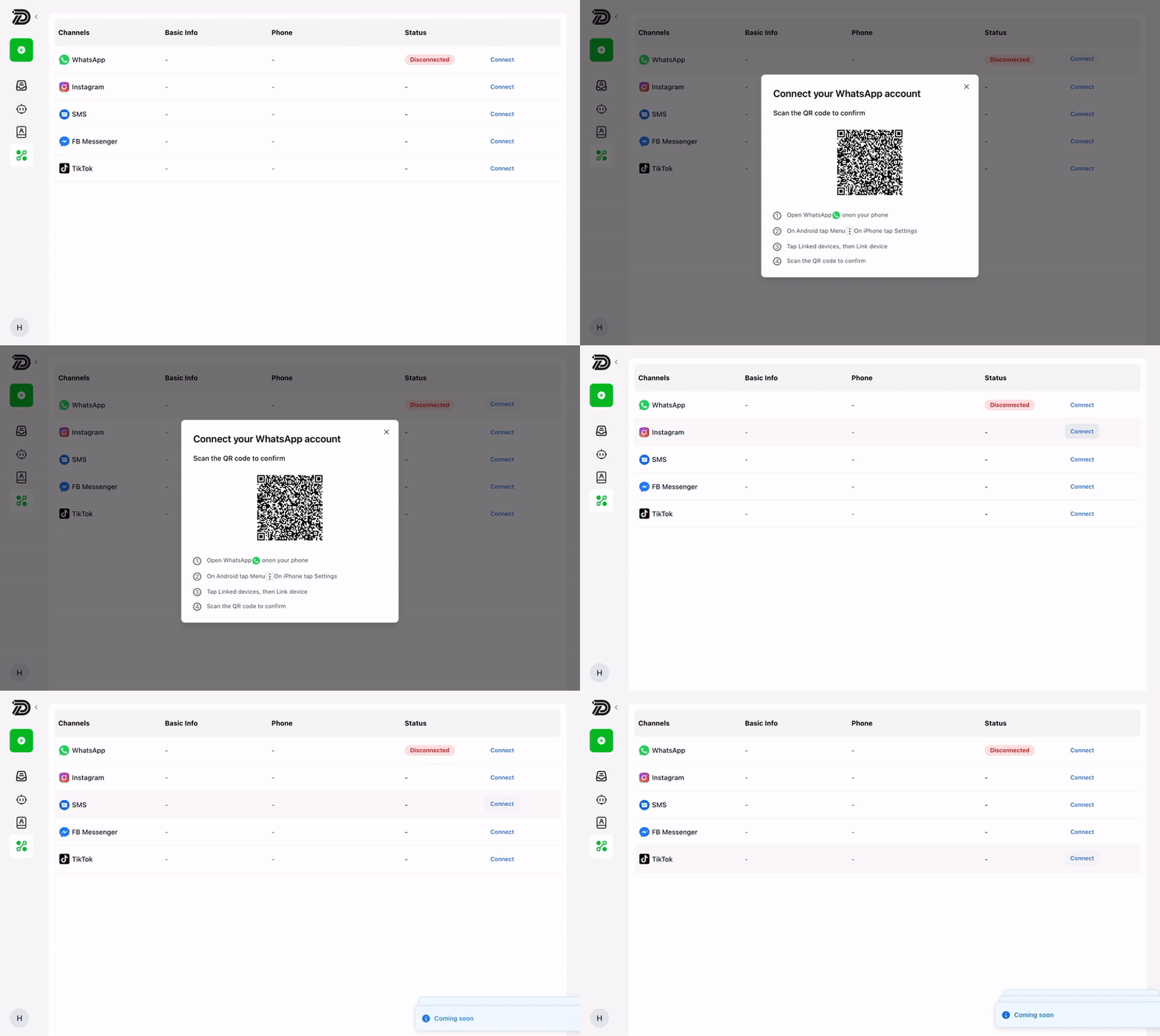
To effectively convert attention into a sales dialogue, you must bridge traffic into live conversations instantly:
Website Live Chat
Stop using passive support forms that put customers in an email queue. Instead, embed direct conversational widgets on your site that immediately transition the visitor into an active WhatsApp or Instagram thread. No app switching, no forms, no waiting.
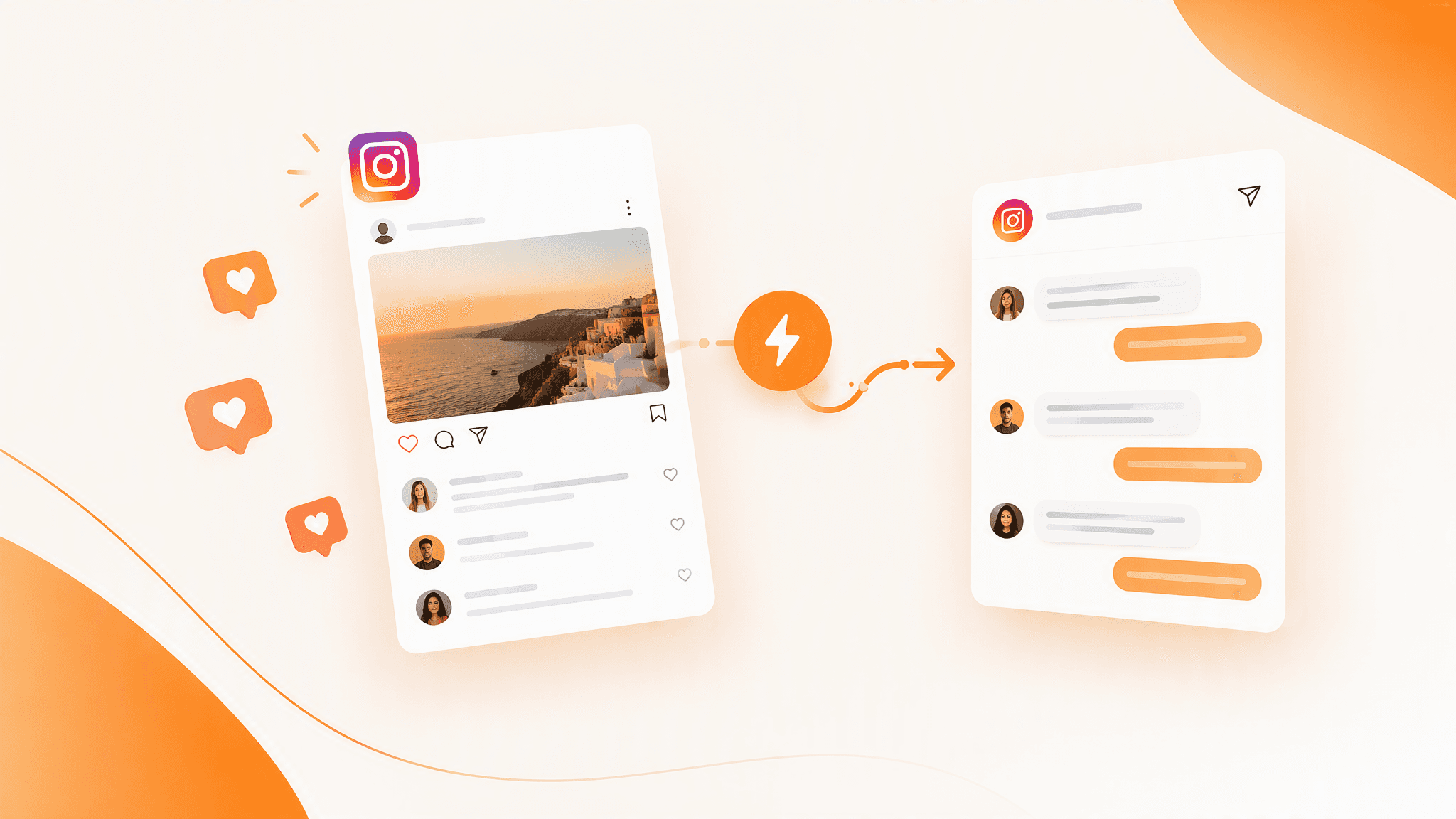
Instagram Comment-to-DM Loops
When someone interacts with your social media content, the clock is ticking.
By utilizing intelligent comment triggers, any user who drops a comment on your post or Reel can instantly receive a contextual private message with a direct link to start a chat.
This creates a zero-friction loop that converts public engagement into a private sales discussion while the buyer's interest is still hot.
Step 3: Replying Is Not Selling. Guiding Decisions Is Selling.
If you are trying to figure out how to sell products on WhatsApp efficiently, speed without direction is just noise. Having an "under 5-minute response time" means nothing if your team is just copy-pasting the same generic FAQ template.
High-converting WhatsApp execution requires your channels to actively guide the user toward a decision.
This means your conversation flow must dynamically execute a continuous loop:
understand the context
clarify deep needs
match the perfect solution
execute the next action
If a prospect is hesitant, the system must address the underlying objection naturally — not by pushing a hard sales pitch, but by aligning the value of the service to their specific situation.
This is the essence of vibe-based selling: it is flexible, context-aware, and deeply focused on the customer’s emotional reality.
Step 4: True Automation Replaces Delay, Not Thinking
This is where standard tutorials on how to sell products on WhatsApp business get automation wrong. They use automation to replace human interaction entirely, resulting in cold, rigid experiences.
True automation shouldn’t replace human thinking — it should eliminate human delay.
The real value of an advanced conversational system is its ability to maintain sales momentum when you or your team are unavailable — whether that is at 2:00 AM or during peak hours when you are physically serving clients.
An intelligent system acts like a capable AI colleague. It doesn't just scan for individual keywords; it maintains continuous context across multiple days.
It remembers what the client said yesterday, recognizes their intent when they resume the conversation tomorrow, and handles follow-ups automatically without ever losing its professional, empathetic tone.
Step 5: Every Chat Must End in a Structured Action
A WhatsApp conversation is not a casual chat; it is an active business pipeline.
Therefore, a conversation should never be archived simply because an inquiry was answered. A conversation is only successful when it results in a tangible, structured business outcome:
A confirmed booking slot in your calendar
A processed transaction or secure payment link
A clear qualification tier separating high-value leads from tire-kickers
A precise, automated follow-up mechanism for prospects who went silent
If nothing moves forward, your system has failed.
Most SMBs struggle with inconsistent cash flow not because they lack leads, but because they manage the chaotic volume of messages while failing to manage the outcomes of those messages.
Conclusion: Turn Your Messy Chats Into Real Actions
At the end of the day, your business doesn't have a communication problem; it has an execution problem inside the chat.
To significantly increase sales, you must stop looking at WhatsApp as a passive support inbox. It is the single most intimate, high-converting entry point to your business.
When you step away from the rigidity of traditional keyword bots and bypass the unnecessary weight of heavy CRMs, you unlock a streamlined system where every interaction is intentional.
Treat your conversations as an execution layer.
Once your chats can think, clarify, and guide decisions on their own, WhatsApp stops being just a messaging app.
It becomes your most predictable revenue engine.