
AiSensy offers a practical way to run WhatsApp campaigns, automate common replies, and manage customer conversations. However, as a business adds AI, more agents, multiple channels, or deeper sales workflows, the advertised plan may no longer reflect its actual cost or capabilities.
This guide compares nine leading AiSensy alternatives in 2026 across WhatsApp marketing, customer support, ecommerce, omnichannel messaging, and AI-powered sales. We examine core features, public pricing, add-on costs, team limits, and the type of business each platform serves best. You will also see how Meta messaging fees, AI usage, extra seats, and annual billing affect the final cost, helping you compare platforms based on the workflow you need rather than the lowest starting price.
Is AiSensy Still the Right WhatsApp Platform for Your Business?
AiSensy remains a practical option for:
WhatsApp marketing: broadcasts, approved templates, catalogs, and campaign management
Basic automation: shared inboxes and structured chatbot flows
India-focused operations: more than 210,000 businesses across 68 countries
However, additional costs can add up:
Keyword chatbot: ₹2,500/month
Pro + AI: ₹3,500/month for 7,000 AI messages
Marketing messages in India: ₹1.09 each
Utility and authentication messages: ₹0.145 each
Consider an alternative if you need autonomous lead qualification, AI follow-ups, stronger multichannel support, deeper Shopify workflows, or more predictable pricing.
Best AiSensy Alternatives by Business Need
Starting price alone does not show the full cost. Each platform packages users, AI capabilities, channels, messaging allowances, and Meta fees differently.
Alternative | Best for | Public starting price | Free access | Main trade-off |
Dealism | AI-led WhatsApp selling | $19/month | Free plan | Credit use varies by task |
Wati | Structured WhatsApp support | ₹999 one-time pay-as-you-go | 7-day trial; no free-forever plan | Full support tools require a subscription |
Interakt | Budget WhatsApp and Instagram | $55/month | Free trial | WhatsApp AI costs extra |
Gallabox | Shared inbox and chatbot flows | $89/month billed annually; $120 quarterly | Free start | WhatsApp and Instagram AI require Essential |
QuickReply.ai | D2C and Shopify retention | Quote required | Demo | No public base price |
Respond.io | Mid-market omnichannel work | $79/month | 7-day trial | AI Agents start on the $159 Growth plan |
BotConversa | Brazilian WhatsApp automation | R$189/month, paid annually | No free plan; annual plans have a 30-day refund period | Full-year payment required |
Gupshup | Enterprise API messaging | No public base price | Not publicly stated | Pricing and setup require consultation |
BotPenguin | Free chatbot testing | Free | Free forever | One chatbot and 1,000 shared messages |
This comparison considers five factors:
WhatsApp capabilities: broadcasts, templates, shared inboxes, automation, and API access
AI depth: keyword replies, branching flows, knowledge-based responses, and autonomous actions
Team scalability: includes users, routing, permissions, reports, and additional seats
Integrations: Shopify, catalogs, payments, CRMs, booking tools, webhooks, and APIs
Total cost: billing terms, usage limits, Meta fees, AI add-ons, taxes, and overages
The most suitable option should cover the main workflow without requiring a higher plan for one essential feature. A low entry price offers limited value when AI, automation, or team controls are only available several tiers above it.
The 9 Best AiSensy Alternatives in 2026
1. Dealism — Best for AI-Powered WhatsApp Selling
Overview:
Dealism is an AI-native sales platform that uses an AI sales agent to manage conversations across WhatsApp, Instagram, and web chat. It draws on business knowledge and chat history to answer questions, identify buying intent, and move leads toward booking, quotation, or purchase.
Creating an agent.mp4
Key Features:
Context-aware replies based on business knowledge
Lead qualification and automated follow-ups
An AI sales strategy for guiding the next action
Self-learning from conversations and corrections
Copilot for reviewed replies and Autopilot for independent handling
AI appointment booking and follow-up coordination
A no-code AI agent for easier setup
Pricing:
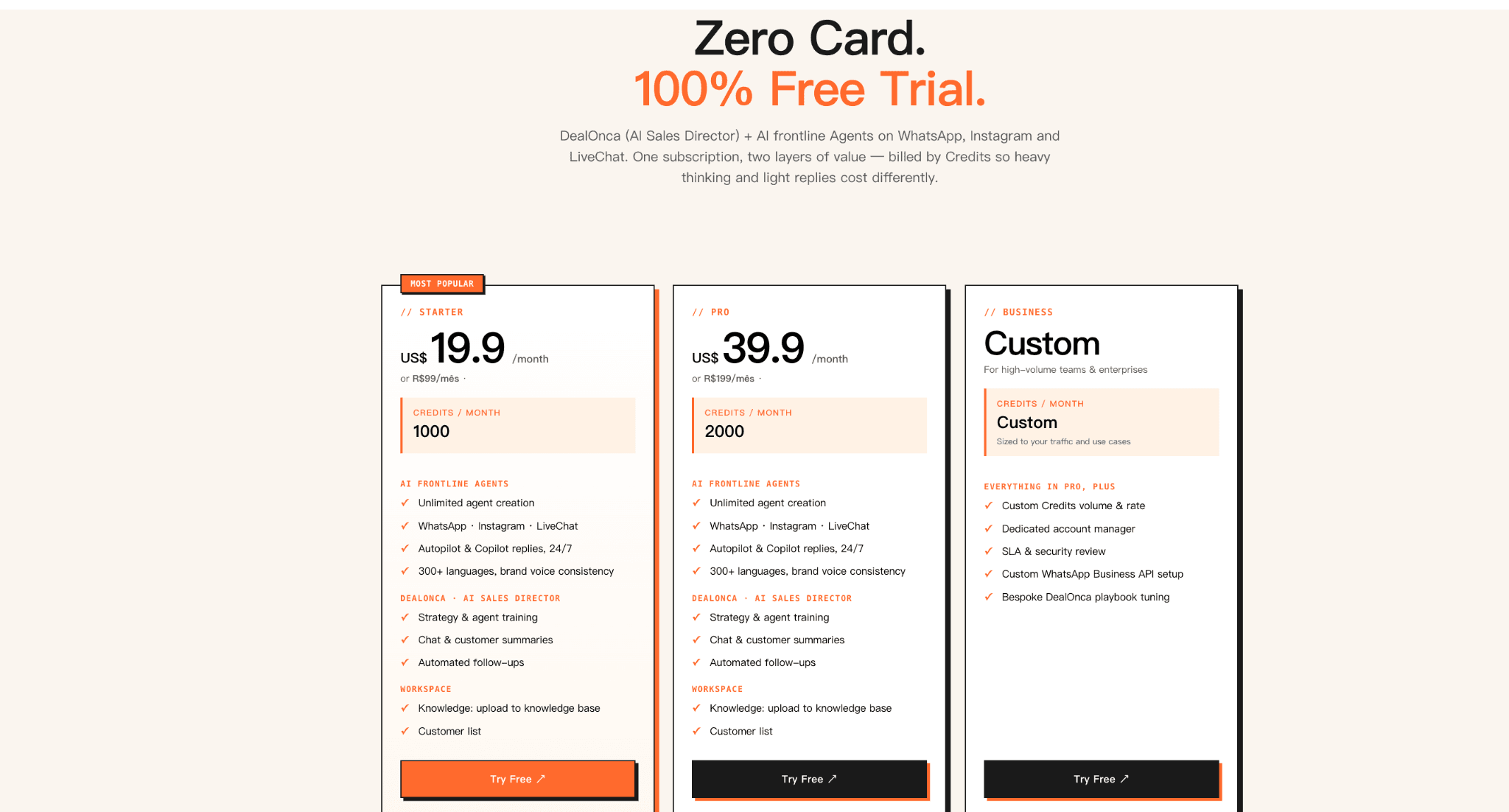
Light is free. Starter costs $19 per month with 100 AI credits/day. Pro costs $39 per month with 150 AI credits/day. Every plan includes Unlimited Active Contacts.
Main Limitation:
Credits are weighted by task complexity, so monthly usage can vary. Businesses should test Dealism with real conversations before estimating the required credit volume.
2. Wati — Best for Structured WhatsApp Customer Support
Overview:
Wati helps teams manage WhatsApp support, campaigns, routing, and automation from a shared workspace.
Key Features:
Shared team inbox and agent assignment
Broadcast campaigns and templates
Workflow automation and chatbot tools
CRM integrations, APIs, and AI assistance
Pricing:
The India pay-as-you-go option costs ₹999 once and includes the same amount in message credits, valid for three months. Subscription costs vary by users, contacts, automation, and integrations.
Main Limitation:
Current limits and subscription options are listed on the official Wati pricing page. The pay-as-you-go plan is mainly for basic campaigns. Full support, extra seats, integrations, and AI require paid subscriptions.
3. Interakt — Best Budget Option for Small Teams
Overview:
Interakt combines WhatsApp and Instagram messaging, campaigns, inbox management, and commerce tools for startups and smaller teams.
Key Features:
Shared WhatsApp and Instagram inbox
Broadcasts and customer segmentation
Catalogs, payments, and customer profiles
Automation and chatbot flows
Pricing:
The Instagram-only Starter plan costs $12 per month. WhatsApp Growth costs $55, while Advanced costs $69. The WhatsApp AI Agent add-on costs $74.99 per month.
Main Limitation:
AI is priced separately, so the total cost rises quickly when automated conversations are required.
4. Gallabox — Best for Shared Inbox and No-Code Chatbot Flows
Overview:
Gallabox combines a shared inbox with a visual chatbot and workflow-building tools.
Key Features:
WhatsApp, Instagram, and web inbox
No-code chatbot builder
Campaigns, forms, catalogs, and payments
AI credits, booking, and pipeline tools
Pricing:
Basic starts at $89 per month annually or $120 quarterly. WhatsApp and Instagram AI Agents begin on Essential, starting at $197 annually or $267 quarterly.
Main Limitation:
Teams needing channel-based AI or more users must move to a much higher-priced plan.
5. QuickReply.ai — Best for D2C and Shopify Retention
Overview:
QuickReply.ai focuses on ecommerce retention, cart recovery, order communication, and repeat purchases.
Key Features:
Cart and browse-abandonment recovery
Order and delivery updates
COD confirmation and prepaid conversion
Product recommendations and repeat-purchase campaigns
Pricing:
Public monthly prices are not displayed. Businesses must request a quote. Messaging and taxes cost extra, while additional agents cost ₹500 per month.
Main Limitation:
Quote-only pricing makes early cost comparison difficult, and its ecommerce focus may not suit service businesses.
6. Respond.io — Best for Mid-Market Omnichannel Operations
Overview:
Respond.io manages WhatsApp, Instagram, Messenger, email, web chat, and other channels in one workspace.
Key Features:
Omnichannel inbox and routing
Workflows, broadcasts, and AI Agents
Reporting, APIs, and webhooks
Permissions and workspace controls
Pricing:
Starter costs $79 per month for five users. Growth costs $159 for ten users and adds AI Agents, workflows, and broadcasts. Advanced costs $279.
Main Limitation:
Its most valuable automation features start on Growth, which may be excessive for smaller teams.
7. BotConversa — Best Budget Option for Brazilian Businesses
Overview:
BotConversa provides Portuguese-language WhatsApp automation with local-currency pricing.
Key Features:
Campaigns, keywords, and sequences
Visual chatbot flows
Contact and team management
AI, integrations, webhooks, and CRM on Pro
Pricing:
Starter costs the equivalent of R$189 per month, paid annually as R$2,268. Pro costs R$199 per month, paid as R$2,388.
Main Limitation:
The low monthly-equivalent price requires full annual payment upfront.
8. Gupshup — Best for Enterprise and High-Volume API Messaging
Overview:
Gupshup provides messaging infrastructure for businesses integrating WhatsApp into larger systems.
Key Features:
Programmable WhatsApp APIs
High-volume transactional and campaign messaging
Conversational workflows and AI
Multi-channel and backend integrations
Pricing:
No standard monthly price is published. Businesses must request a quote covering platform, implementation, support, message volume, and Meta fees.
Main Limitation:
Setup may require engineering resources, making it less practical for small teams seeking a ready-made inbox.
9. BotPenguin — Best Free Starter for Chatbot Testing
Overview:
BotPenguin offers a low-cost way to test chatbots across WhatsApp and other messaging channels.
Key Features:
WhatsApp, Instagram, Facebook, Telegram, and web chatbots
Unified inbox and live-chat handoff
Basic AI responses
Team features on paid plans
Pricing:
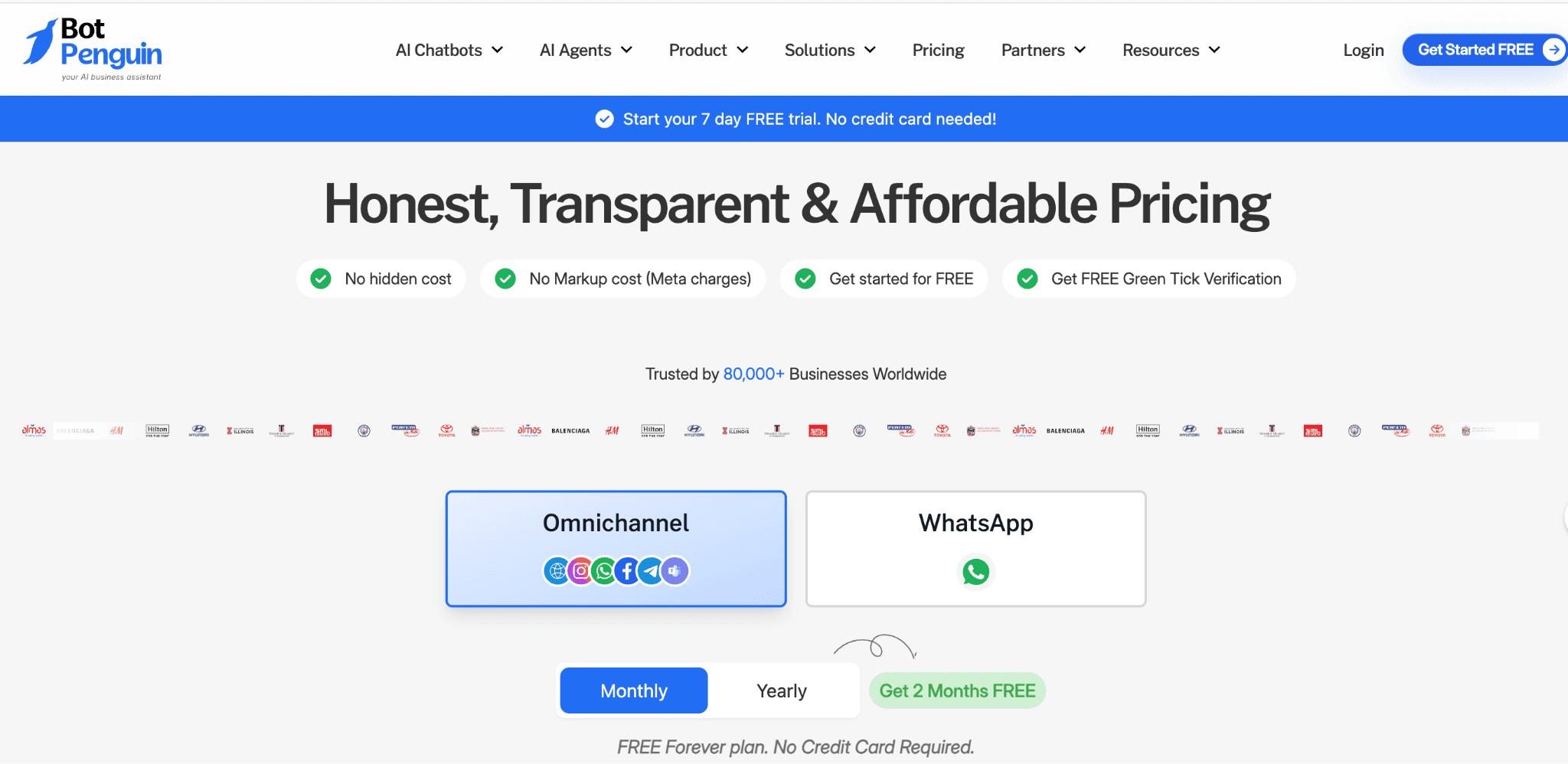
The Free Forever plan includes one chatbot and 1,000 shared messages. The visible Little plan costs $29 per month, although the FAQ still mentions plans starting at $15.
Main Limitation:
The free plan has strict message and chatbot limits, so growing teams may need to upgrade quickly.
What AiSensy Alternatives Really Cost
The advertised plan is only part of the final bill.
Real monthly cost = subscription + Meta message fees + AI usage + extra users and channels + tax and setup
Use the official WhatsApp Business Platform pricing page to model volume by country and category before choosing a vendor. Service replies within the 24-hour customer-service window may be free, while outbound marketing templates are charged separately.
For example, AiSensy Pro + AI adds ₹3,500 above the platform plan. Interakt Growth plus its listed AI add-on is about $129.99 before tax and messaging.
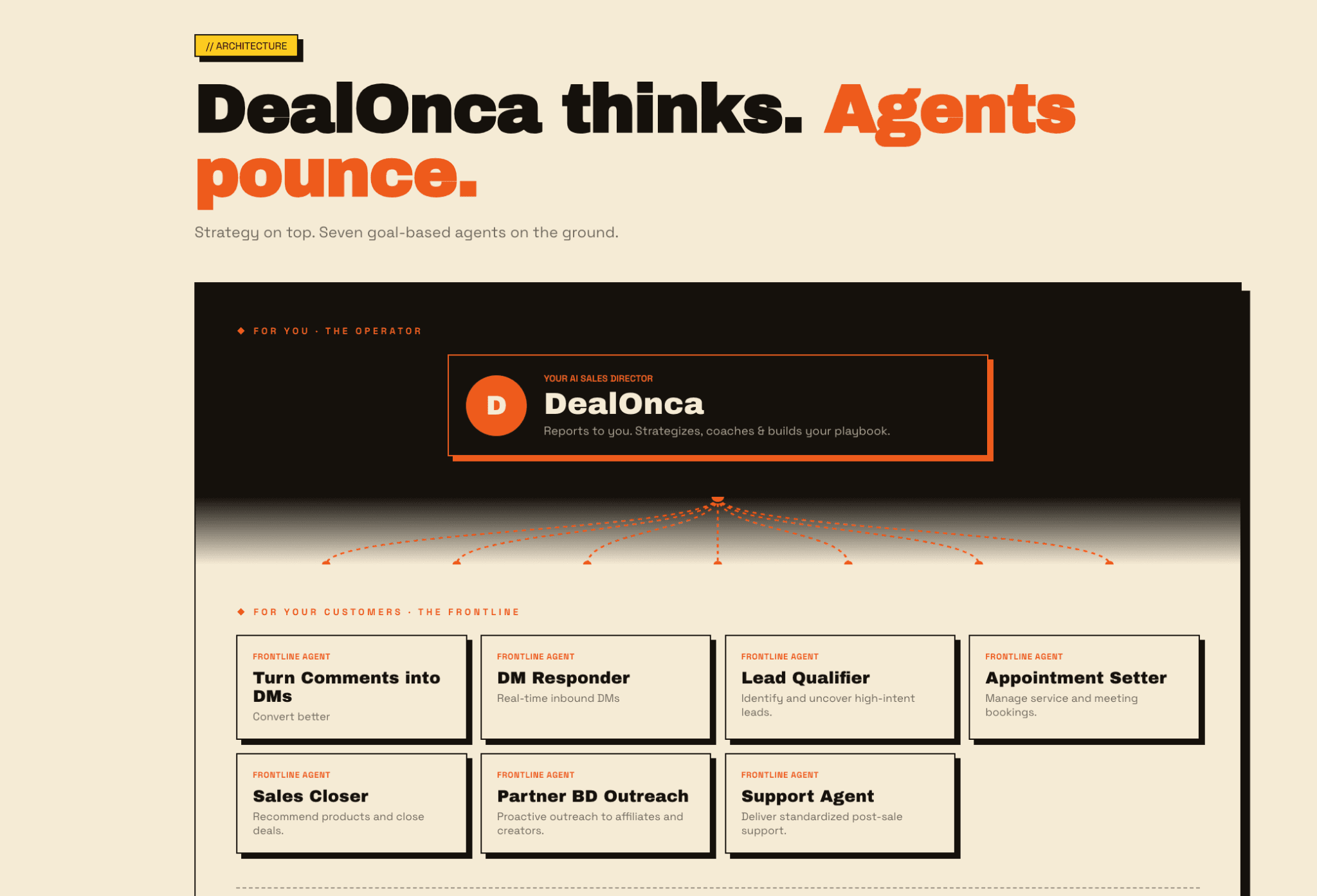
Dealism pricing begins at $19, but weighted credits cover AI Agent and built-in "ChatGPT for sales" work. Test the credit model against real conversations rather than converting every credit into a fixed message value.
Which AiSensy Alternative Fits Your Workflow?
Choose based on the main job WhatsApp needs to handle:
Broadcast marketing: AiSensy, Wati, Interakt, or Gupshup. Compare segmentation, template management, reporting, and message fees.
Customer support: Wati for WhatsApp-first teams, Gallabox for visual workflows, and Respond.io for complex omnichannel routing.
Shopify and D2C: QuickReply.ai for cart recovery and repeat purchases; Interakt for catalogs, payments, campaigns, and inbox management.
AI-powered sales: Dealism combines context-aware auto replies, lead qualification, follow-ups, and AI appointment booking.
Enterprise API messaging: Gupshup for high-volume infrastructure; Respond.io for a more ready-to-use omnichannel workspace.
For AI sales, test whether the platform can remember context, identify intent, ask useful follow-up questions, and move the conversation toward a clear next step.
FAQ
Do AiSensy alternatives require Meta Business verification?
Most official WhatsApp API platforms require a Meta Business Portfolio and a verified business account. The WhatsApp Cloud API documentation explains phone-number registration, webhooks, access tokens, and API setup requirements. Verification can affect phone-number limits, display-name approval, and outbound messaging capacity.
How should I test an AiSensy alternative before subscribing?
Use real conversation scenarios instead of testing only simple FAQs. Check response accuracy, follow-up quality, human handoff, message delivery, team routing, integration reliability, and the cost of running at your expected monthly volume.
Which performance metrics should I track during a trial?
Track first-response time, resolution rate, lead qualification rate, human takeover rate, booking or purchase conversion, failed-message rate, and cost per completed conversation. These metrics reveal more than the number of messages included in the plan.
How difficult is it to move from AiSensy to another provider?
The technical migration may be straightforward, but operational rebuilding takes longer. Export contacts and approved templates where possible, document chatbot logic, confirm number ownership, recreate integrations, test message delivery, and run a controlled handover before cancelling AiSensy.


