
Botpress can take a chatbot from simple FAQs to a working AI agent, but that flexibility also brings more setup, usage costs, and technical decisions. Once a project needs reliable knowledge retrieval, multiple messaging channels, workflow actions, or greater control over hosting, the platform may become harder or more expensive to manage than expected.
That is usually when teams start comparing Botpress alternatives. Yet “free” can mean a limited hosted plan, a temporary trial, or software you can self-host while paying for servers, models, and maintenance. This guide compares nine alternatives by the part of Botpress they replace best, including visual agent building, RAG, messaging, workflow execution, and infrastructure control. It also covers licensing, hidden costs, and the practical work involved in migration.
What Is Botpress?
Botpress is an AI agent platform with a visual Studio for building workflows, connecting knowledge bases, adding integrations, calling tools, and inserting custom code. According to the current Botpress pricing and usage limits, its Pay-as-you-go plan costs $0 plus AI spend. It includes a $5 monthly AI credit, one bot, one collaborator, and 500 incoming messages or events. Plus costs $79 per month with annual billing.
The current product is primarily cloud-based. Botpress also maintains an MIT-licensed public GitHub repository. It covers integrations, developer tools, SDK-based bot examples, and plugins; the older on-premise v12 product is separate. The repository also states that SDK-based examples do not replace Botpress Studio.
Pros | Cons |
Visual workflows plus code, APIs, tables, and knowledge bases | Cloud-first deployment limits infrastructure control |
Multiple LLMs, channels, and integrations | AI spend is charged separately |
Flexible enough for advanced conversational logic | Complex agents still require technical judgment |
Free plan for prototypes | One bot, one seat, and 500 incoming messages or events monthly |
Botpress starts with a $0 pay-as-you-go plan and a small AI credit. Paid tiers add human handoff, conversation insights, visual indexing, and watermark removal. Total cost can combine plan fees, message volume, storage, and model usage.
A different platform may fit better when you need:
A narrower outcome: Social DMs, website support, lead qualification, booking, or internal automation.
Less setup: Business-ready templates without designing a full agent architecture.
More control: Self-hosting, source access, or clearer license terms.
Simpler pricing: A permanent free plan or a billing model tied to contacts or executions.
Deeper channel specialization: Purpose-built tools for sales, live chat, voice, or social campaigns.
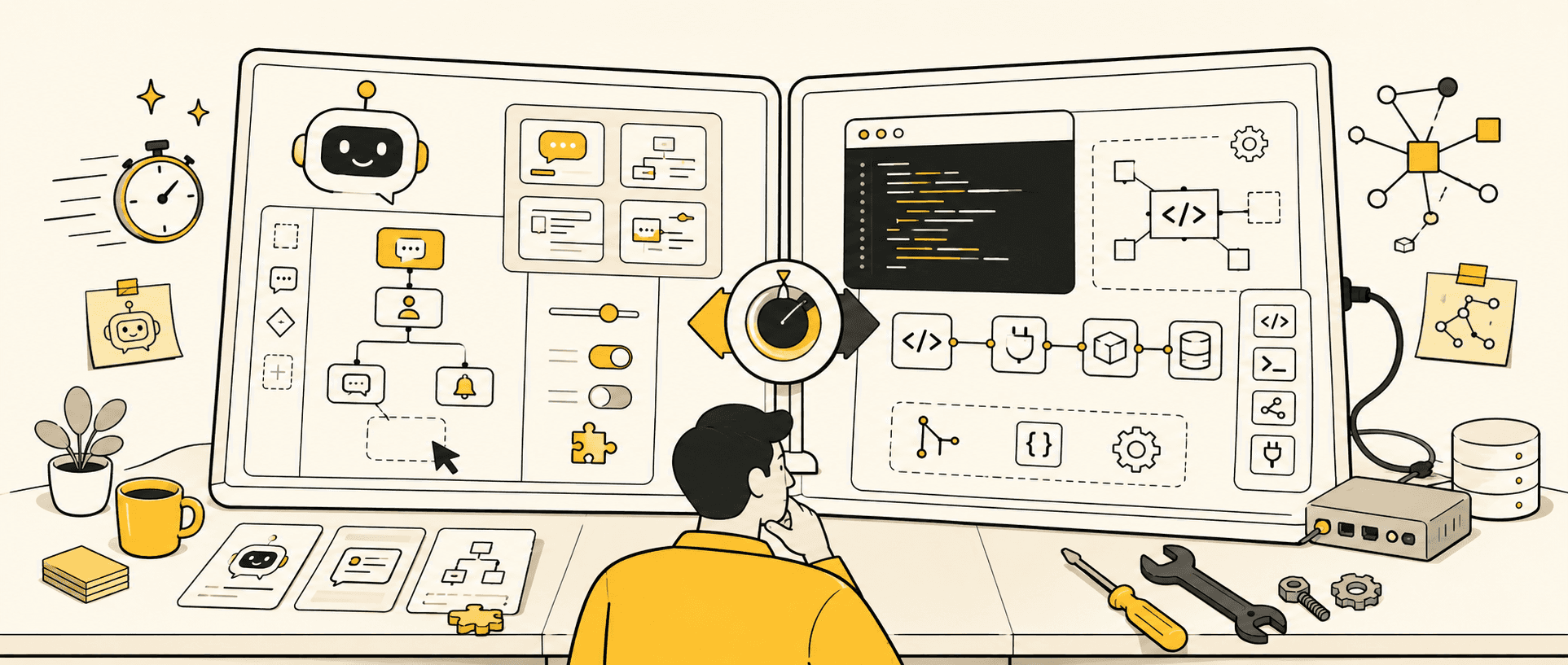
Quick Answer: The Botpress Alternative
Alternative | Best For | Free Status | Hosting / License | Main Limitation |
Dealism | WhatsApp, Instagram, and web-chat sales | Free plan | Hosted | Sales-focused |
Voiceflow | Chat and voice design | Free trial | Hosted | Usage-based costs |
Chatbase | Website knowledge agents | Free plan | Hosted | Very small free allowance |
ManyChat | Social marketing | Free plan | Hosted | WhatsApp requires paid tier |
Lindy | Business-task automation | 7-day trial | Hosted | Less chatbot-focused |
Tidio | Live chat and AI support | Free plan | Hosted | Separate AI and flow limits |
Rasa | Developer-controlled AI | Free self-hosting | Apache 2.0 | High engineering burden |
Typebot | Visual conversational forms | Free plan; self-hosting | Fair source | Limited autonomy |
n8n | AI workflow orchestration | Free self-hosting | Fair code | Often needs a chat frontend |
The 9 Best Botpress Alternatives in 2026
No single platform replaces every part of Botpress equally well. Some simplify sales, support, or social messaging, while others provide more control over conversation design, self-hosting, integrations, or backend execution. The following tools are compared by the specific Botpress use case they handle best.
1. Dealism — Best for No-Code AI Sales Agents
Dealism is a no-code AI sales agent platform designed for service businesses that manage inquiries through WhatsApp, Instagram, and website chat. It uses business knowledge and conversation history to clarify customer needs, qualify interest, and move conversations toward quotes, appointments, follow-ups, or human support.
Core strengths
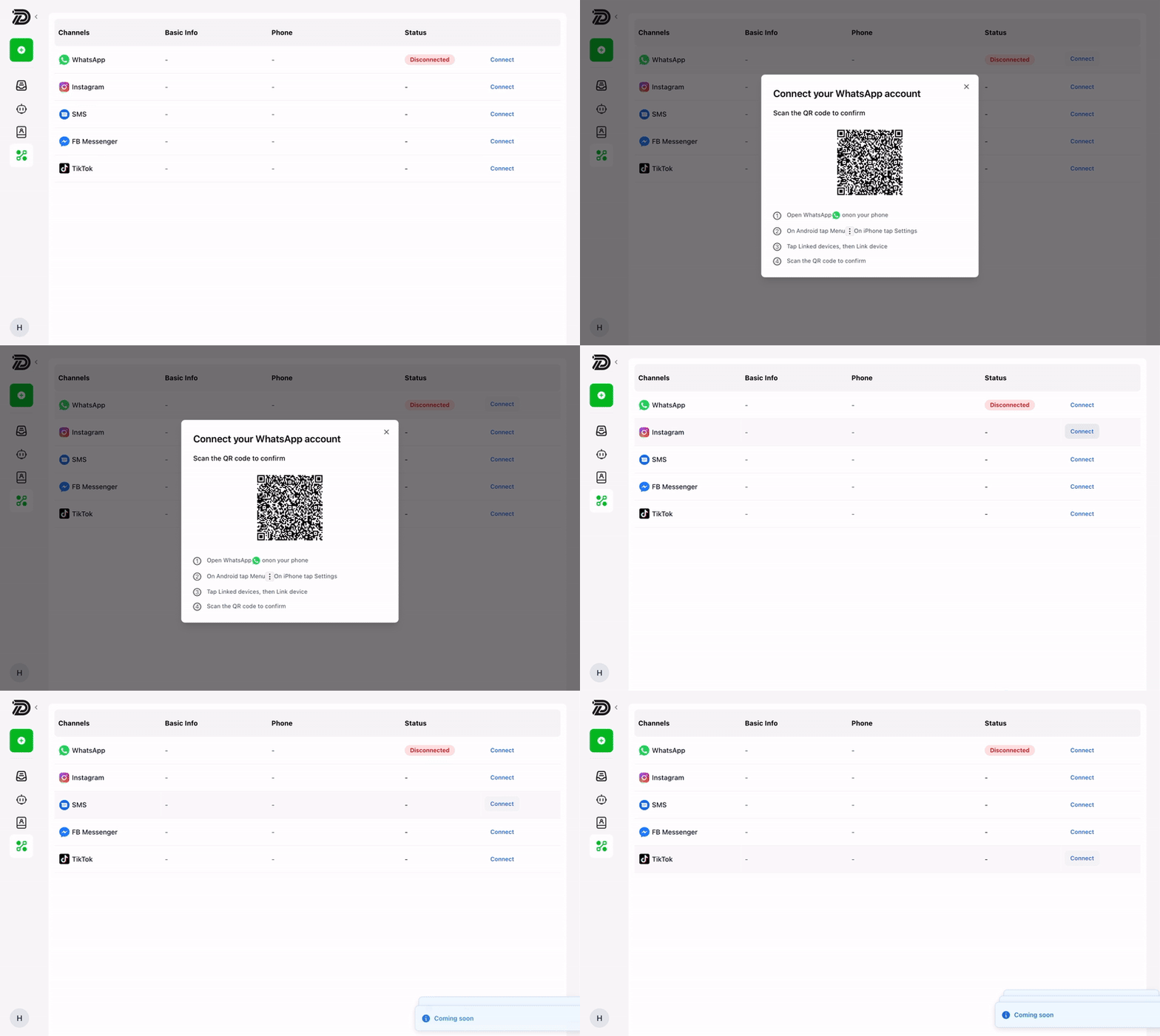
No-code setup: Teams can upload services, FAQs, policies, and sales guidance through the no-code setup, allowing Dealism to handle common inquiries without manually building every conversation path.
Cross-channel sales: Dealism can work as an AI Sales Assistant for Instagram, keeping customer context available as conversations continue across channels.
Sales execution: It can provide auto replies, collect booking details through its booking workflow, and follow up when potential customers stop responding.
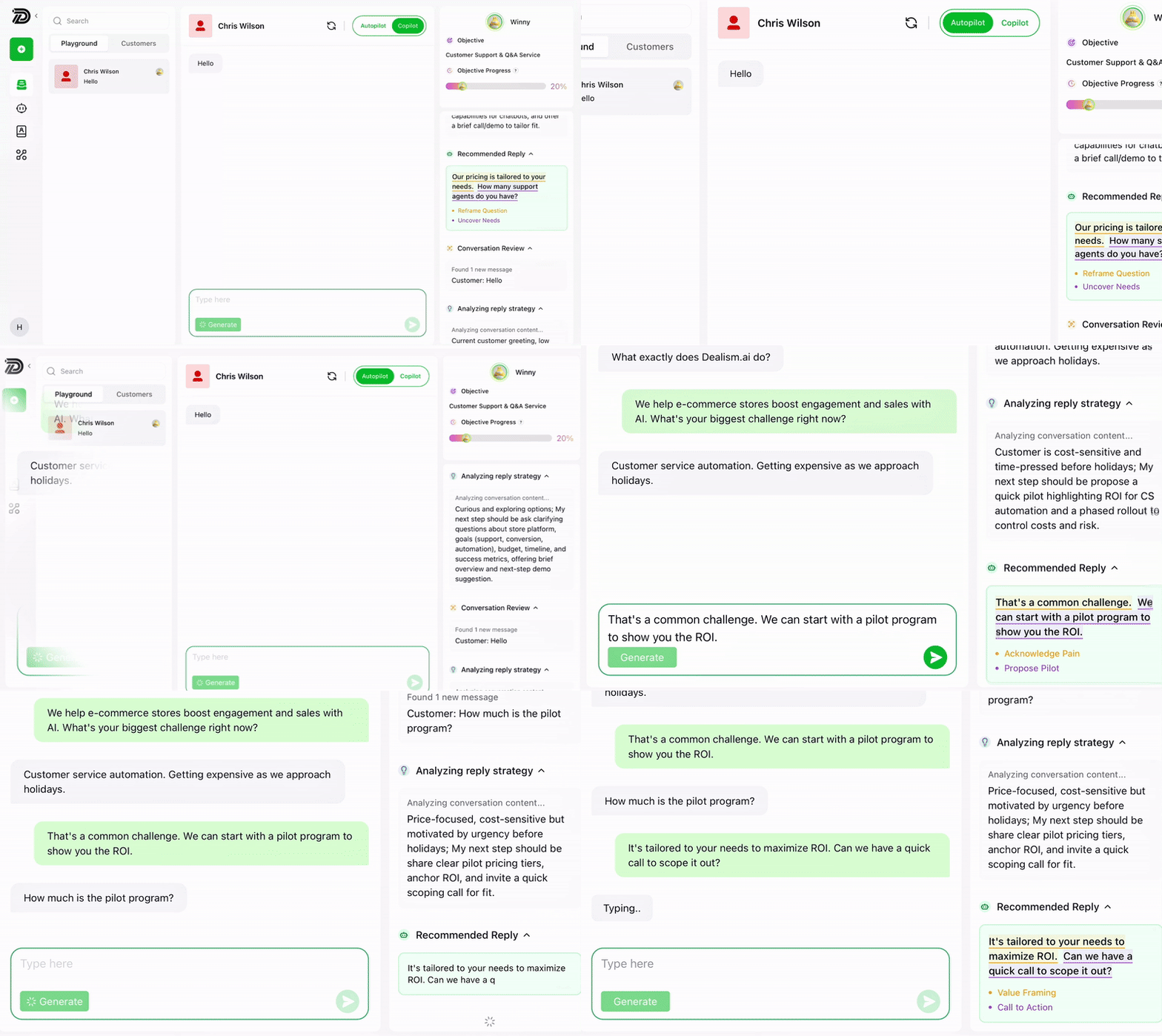
Strategy and control: Copilot supports staff-led conversations, while Autopilot handles suitable inquiries directly. Dealism's built-in "ChatGPT for sales" coordinates agents, highlights valuable conversations, and applies the company’s sales strategy.
Free access and deployment: Dealism is a hosted platform with a no-card Free plan. Light is free. Starter costs $19 per month with 100 AI credits/day, while Pro costs $39 with 150 AI credits/day. Every plan includes Unlimited Active Contacts; Agent capacity and channel access increase by plan.
Best for: Clinics, consultants, agencies, educators, and local service businesses that convert private conversations into bookings or sales.
Limitation: The platform focuses on customer-facing sales workflows. Broad internal AI applications and highly customized development projects may need a more general framework.
2. Voiceflow — Best for Conversation Design
Voiceflow is a collaborative platform for designing, testing, and deploying chat and voice agents. Product managers, designers, and developers can manage workflows, AI behavior, APIs, guardrails, and monitoring in one workspace.
Core strengths
Visual playbooks and structured workflows
Chat and voice deployment
Multiple model providers and APIs
Team permissions and observability
Free access and deployment: Voiceflow offers a no-credit-card trial, followed by usage-based billing. Business pricing is available on request.
Best for: Product teams, CX departments, and agencies that need detailed control over conversation design.
Limitation: Teams still need to configure business logic, integrations, safeguards, and operations.
3. Chatbase — Best for Website Knowledge Chatbots
Chatbase creates embedded website agents from webpages, documents, and other company knowledge. It suits businesses that need a simple assistant for product, service, or documentation questions.
Core strengths
Website and document-based knowledge
Customizable chat widget
Lead collection and analytics
Advanced integrations on higher plans
Free access and deployment: The free plan includes 50 monthly message credits and one member. Free agents are deleted after 14 days of inactivity. Hobby costs $32 per month with annual billing and includes 500 messages.
Best for: Small websites, help centers, and documentation assistants.
Limitation: The free allowance mainly supports testing, while higher traffic and advanced actions require paid plans.
4. ManyChat — Best for Social DM Automation
ManyChat automates DMs triggered by Instagram comments, Story replies, keywords, and follower activity. Its campaign flows help brands move social engagement into private conversations and collect leads.
Core strengths
Comment-to-DM automation
Instagram, TikTok, Messenger, and Telegram
Marketing templates and contact tagging
WhatsApp, broadcasts, and AI on Pro
Free access and deployment: The free plan includes 25 active contacts, four automations, one user, and two eligible channels. Pro starts at $29 per month with annual billing and includes 2,500 active contacts.
Best for: Creators, ecommerce brands, and social lead-generation campaigns.
Limitation: Contact-based pricing becomes more significant at scale, while deeper qualification may require another sales tool.
5. Lindy — Best for Business-Task Automation
Lindy automates email, scheduling, meeting preparation, notes, and follow-ups across business applications. It functions more as an AI work assistant than a public-facing chatbot.
Core strengths
Email and inbox management
Scheduling and meeting support
SMS and iMessage interaction
More than 100 integrations
Free access and deployment: Lindy offers a seven-day trial. Plus costs $49.99 per month and supports two inboxes, email drafting, scheduling, meeting notes, and follow-ups.
Best for: Founders, recruiters, executives, and operations teams automating routine work.
Limitation: It offers less support for public chatbots, knowledge retrieval, and customer messaging journeys.
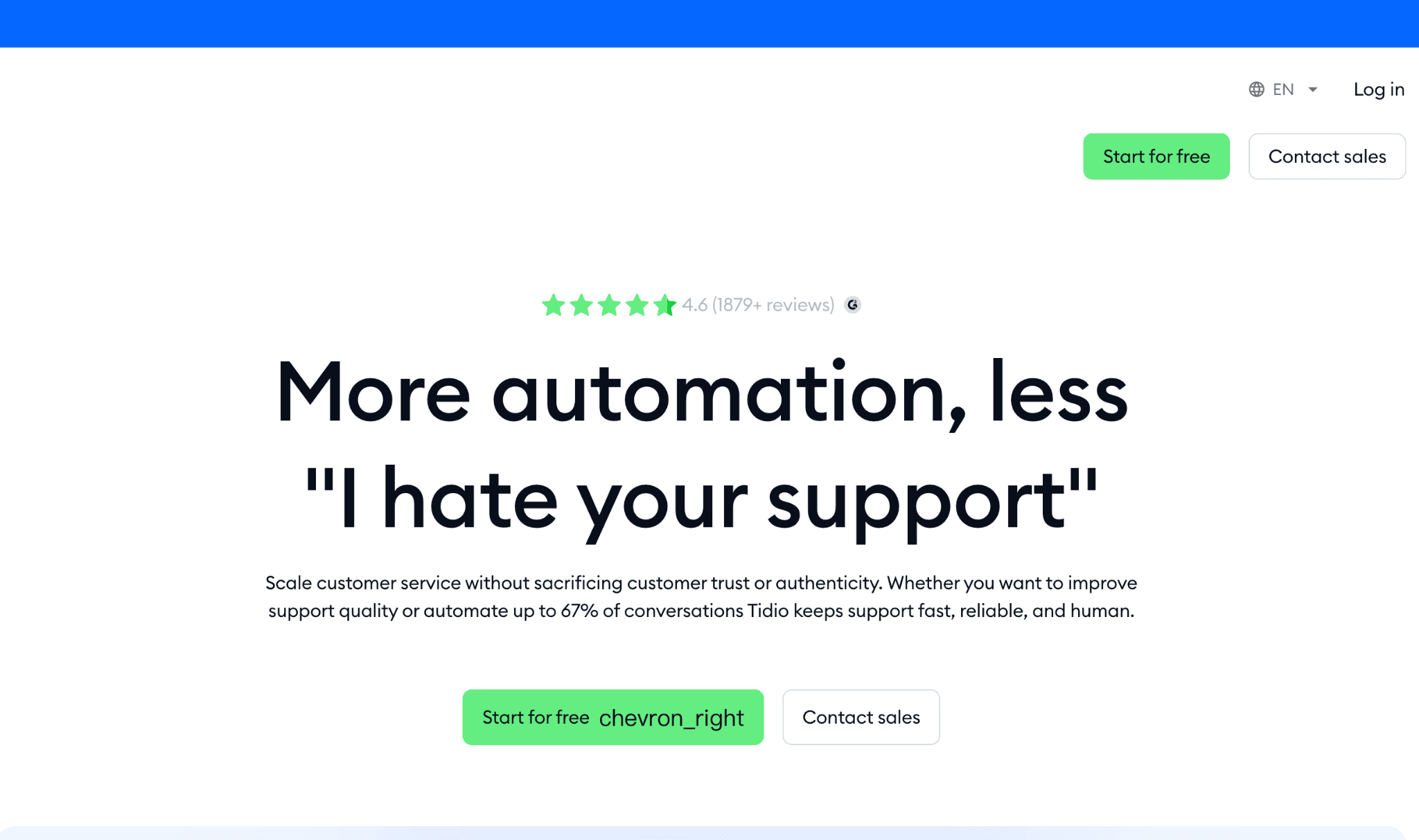
6. Tidio — Best for Live Chat and AI Customer Support
Tidio combines live chat, ticketing, automation Flows, and the Lyro AI Agent. Support teams can automate common questions and transfer complex conversations to staff in the same inbox.
Core strengths
Live chat and ticketing
Knowledge-based AI replies
Human handoff
Proactive support Flows
Free access and deployment: Tidio has a $0 plan with 50 billable conversations. Starter costs $24.17 per month with annual billing and includes 100 conversations, 100 Flow visitors, and 50 one-off Lyro conversations.
Best for: Small and midsize businesses combining AI support with live agents.
Limitation: Conversations, AI usage, and Flow visitors use separate quotas, making costs harder to predict.
7. Rasa — Best Open-Source Option for Developers
Rasa gives engineering teams control over dialogue logic, business flows, custom actions, integrations, and private deployment. It suits projects that prioritize infrastructure ownership and deterministic processes.
Core strengths
Custom dialogue and business logic
Text and voice channels
Custom actions and integrations
Apache 2.0 self-hosting
Free access and deployment: Rasa Open Source can be self-hosted under Apache 2.0. The classic project is now in maintenance mode, with development shifting toward Hello Rasa and CALM.
Best for: Engineering teams with strict compliance, infrastructure, or dialogue requirements.
Limitation: Development and maintenance require substantial technical resources, and new projects must review Rasa’s roadmap.
8. Typebot — Best Free Visual Conversation Builder
Typebot is a visual builder for lead forms, surveys, quizzes, onboarding, and guided conversations. Its block-based interface supports conditional logic, payments, webhooks, and custom code.
Core strengths
Drag-and-drop conversation builder
More than 45 content blocks
Forms, payments, and analytics
Website and WhatsApp deployment
Free access and deployment: The free plan includes unlimited typebots, 200 monthly chats, integrations, webhooks, and custom JavaScript or CSS. Self-hosting is available under a fair-source license.
Best for: No-code teams building lead capture, surveys, and structured qualification flows.
Limitation: Typebot relies more on predefined paths than on autonomous reasoning, limiting open-ended decisions.
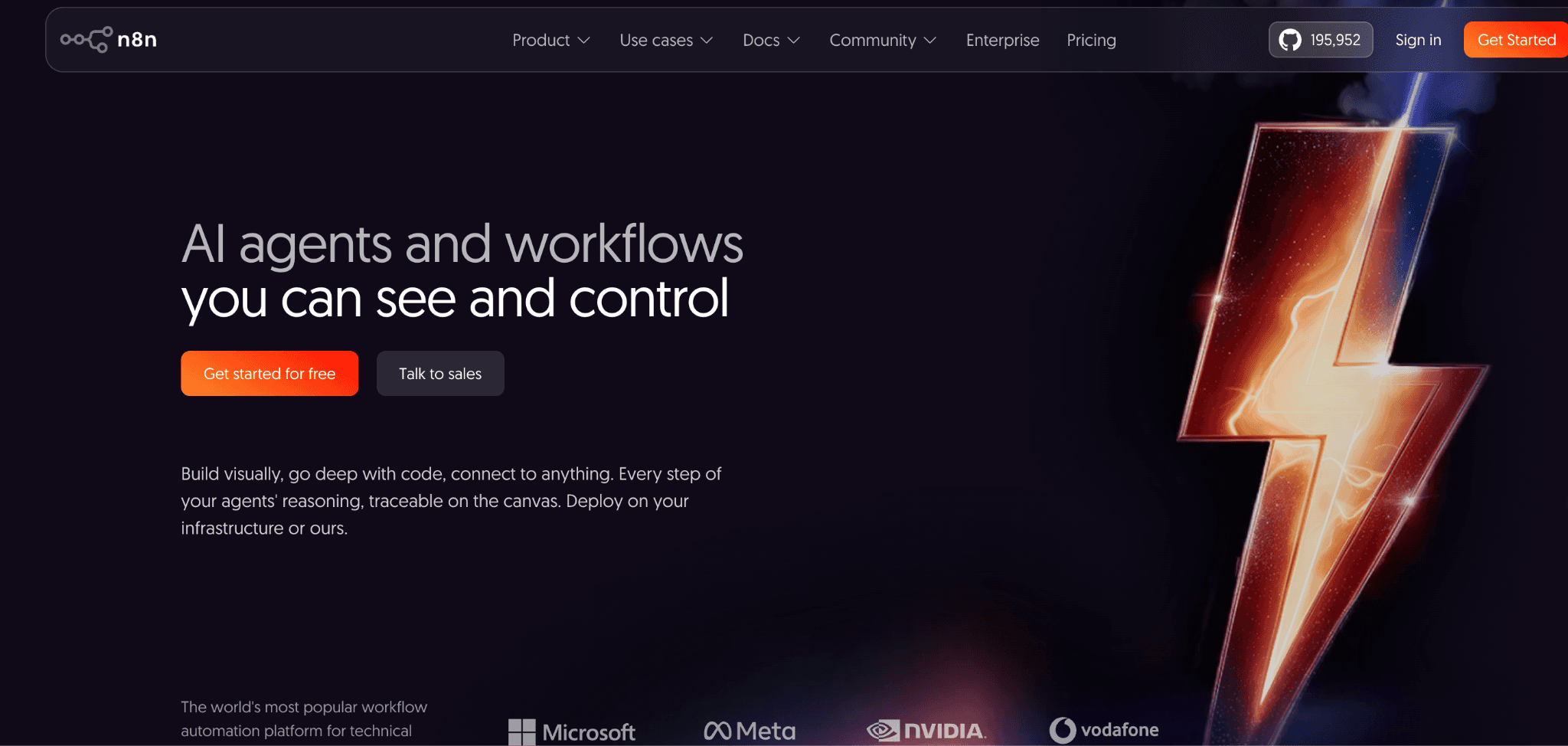
9. n8n — Best for AI Workflow Execution
n8n connects AI systems with APIs, databases, CRMs, messaging tools, and internal applications. It works best as an execution layer for actions such as updating records, sending notifications, and creating tasks.
Core strengths
Visual workflow automation
APIs, webhooks, and databases
JavaScript and Python steps
AI agents and human approvals
Free access and deployment: The Community Edition is free to self-host. Cloud Starter costs €20 per month with annual billing and includes 2,500 workflow executions. n8n uses a fair-code Sustainable Use License.
Best for: Technical teams connecting AI outputs with multiple business systems.
Limitation: A complete Botpress replacement may still require a chat interface, knowledge base, memory, and conversation-state layer.
Best Free and Open-Source Botpress Alternatives
Free Botpress alternatives fall into three groups:
Hosted free plans: Chatbase, ManyChat, Tidio, and Typebot include limited monthly usage.
Free plans: Dealism and Voiceflow allow teams to test paid features before subscribing.
Free self-hosting: Rasa, Typebot, and n8n can run on private infrastructure.
Rasa uses the Apache 2.0 open-source license. Typebot and n8n support self-hosting under fair-source or fair-code licenses with additional restrictions. Self-hosting also creates costs for servers, model APIs, security, updates, and technical maintenance.
No-Code vs. Developer Botpress Alternatives: Which Should You Choose?
The main difference is how much of the building and maintenance work your team wants to handle.
Choose a no-code alternative when speed and ease of use matter most: Platforms such as Dealism, Voiceflow, Chatbase, ManyChat, Tidio, and Typebot provide hosted infrastructure, visual setup, and ready-made workflows. They are better suited to business teams that want to launch sales, support, social messaging, or website chat without managing servers or writing extensive code. The trade-off is less control over deployment, customization, and long-term pricing.

Choose a developer-focused alternative when control matters most: Rasa and n8n give technical teams more freedom over workflow logic, integrations, data handling, and infrastructure. They are a stronger fit when the agent must connect deeply with internal systems, follow custom business rules, or run on private infrastructure. This flexibility comes with additional responsibility for deployment, security, testing, monitoring, and maintenance.
The right option depends on who will build and operate the system after launch. Business-led teams usually benefit from no-code tools, while engineering-led projects are better suited to developer platforms.
Final Thoughts
The right Botpress alternative depends on what you need to simplify: conversation design, website support, social messaging, self-hosting, or backend automation. Compare the full workflow, including channels, integrations, human handoff, usage limits, and maintenance, rather than choosing by the lowest starting price.
For businesses focused on turning WhatsApp, Instagram, and website inquiries into bookings or sales, Dealism provides a more direct no-code path. Start with the Free plan, upload your business knowledge, and test how it handles qualification, follow-ups, and customer handoff before committing to a paid plan.
FAQ
1. Can I move an existing Botpress bot to another platform?
Usually not with one-click migration. Knowledge files and prompts may be reusable, but workflows, variables, API connections, channel settings, and conversation history often need to be rebuilt or reconfigured.
2. Which Botpress alternative is easiest for non-technical teams?
Chatbase is straightforward for website knowledge chat, ManyChat for social automation, Tidio for customer support, and Dealism for sales conversations. The easiest option depends on the workflow you need to launch.
3. Is a free self-hosted alternative really free?
The software may be free, but the full system still requires servers, model APIs, databases, security, monitoring, backups, and maintenance. Engineering time can cost more than a hosted subscription.
4. Which alternative is best for WhatsApp and Instagram sales?
Dealism is the most specialized option in this comparison for managing sales inquiries, qualification, follow-ups, and bookings across WhatsApp, Instagram, and website chat.
5. What should businesses compare besides subscription price?
Compare AI usage, message limits, active contacts, workflow executions, seats, storage, integrations, hosting, and maintenance. A low starting price may increase quickly when usage grows.


