
Most businesses don’t have a lead problem.
They have conversations that go nowhere.
Messages are everywhere. Instagram comments, DMs, WhatsApp inquiries, website chats. But despite constant activity, conversions remain inconsistent.
The issue isn’t traffic.
It’s what happens inside those conversations that determines whether leads convert or disappear.
What “Lead Generation Chatbots” Actually Do (and Don’t Do)
When people search for the best chatbot for lead generation, they usually expect tools that can:
reply instantly
capture contact details
send links or offers
And most chatbots do exactly that.
They automate replies.
They structure conversations.
They collect leads.
But they don’t actually generate outcomes.
A real lead is not just a message or a phone number.
It’s someone who has been:
understood
clarified
guided toward a decision
Without that, you’re not generating leads.
You’re just collecting conversations.
What Makes a Chatbot “Best” for Lead Generation?
The definition needs to change.
Lead generation doesn’t start on your website.
It starts where your customers already are—especially when using live chat for lead generation.
Instagram comments
DMs
WhatsApp chats
In 2026, the highest-converting entry point is no longer a form or landing page.
It’s IM (instant messaging).
Because IM is the closest point to decision-making.
It’s where intent shows up in raw form.
The best systems don’t try to pull users into funnels.
They meet them inside conversations and move things forward from there, following a structured conversation workflow.
To truly generate leads, a system must:
understand intent
clarify real needs
drive the next action
Anything less is just automation.
The Most Popular Tool: ManyChat
One of the most widely used tools in this space is ManyChat.
It helps businesses automate Instagram and Messenger conversations through:
keyword triggers
predefined flows
automated replies
basic segmentation
For many SMBs, it’s a practical starting point.
But its limitations are not just technical.
They are experiential.
Most rule-based chatbots, including ManyChat, share a common issue:
They feel like robots.
They don’t just sound robotic.
They make users feel like they’re talking to a system, not being understood.
Not because they reply slowly,
but because they don’t understand the situation.
They respond to keywords, not intent.
They follow flows, not context.
They push users through steps instead of helping them make decisions.
For service businesses especially, this creates friction:
conversations feel scripted
users repeat themselves
trust drops quickly
And this is where most automation breaks.
Because in real scenarios, especially in healthcare, consulting, or local services, conversations are not linear.
They are emotional.
They are ambiguous.
They require judgment.
Why Most Chatbots Fail at Lead Generation
The real problem is not automation.
It’s the lack of something deeper:
Vibe.
Good selling is not about scripts.
It’s about sensing:
when to ask
what to clarify
when to move forward
Most chatbots don’t have this layer.
They don’t recognize hesitation.
They don’t detect uncertainty.
They don’t adapt tone or direction.
So even if they respond correctly,
they don’t move the conversation forward.
And when conversations don’t move, leads don’t convert.
From Chatbots to Execution
This is where a new category is emerging.
Instead of treating chat as a support tool,
it becomes a decision and execution layer.
Not just replying, but:
understanding context
clarifying needs
making judgments
driving outcomes
Lead generation, in this model, is no longer about capturing attention.
It’s about running the interaction.
Dealism: From Conversation to Action
Dealism is built around this shift.
It is not a chatbot in the traditional sense.
It acts more like an AI agent that operates your front-line conversations.
Instead of following scripts, it performs something closer to Vibe Selling:
understanding intent and emotion
asking the right follow-up questions
guiding users naturally toward the right action
One of the most important differences is where conversations begin.
With Dealism, lead generation starts the moment someone engages with your content—
even something as simple as an Instagram comment.
It starts the moment someone engages with your content—
even something as simple as an Instagram comment.
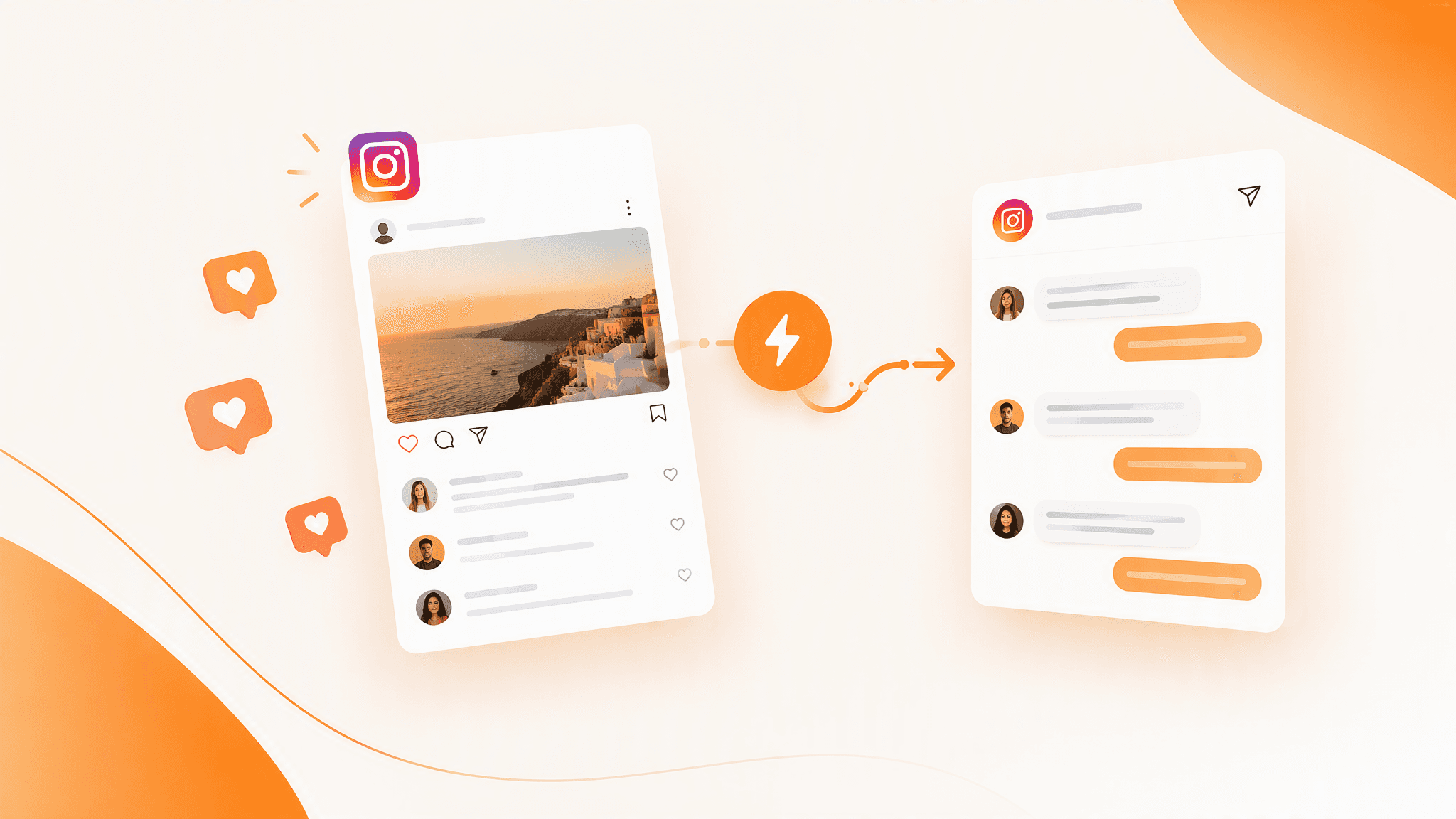
For example, when someone comments on your Instagram post:
“How much is this?”
Instead of waiting or sending a generic reply, the system can:
instantly initiate a DM
provide relevant context
clarify what the user actually needs
guide the conversation forward
From there, the conversation continues in the channel users are most comfortable with—
typically WhatsApp or Instagram DM—
whether it started from a comment, a DM, or your website.
Built for the "I’m Too Busy" Business Owner
For many SMBs, whether you’re running a dental clinic, a coaching program, or a local service business, the bottleneck isn’t a lack of tools. It’s a lack of bandwidth.
You’re tired of your WhatsApp buzzing all day with the same questions, yet you can’t afford to let a single lead slip. Most lead generation chatbots add more to your workload because you have to build their logic. Dealism does the opposite.
Imagine a patient asking about a complex procedure at 11 PM. A traditional bot would say, “We are closed. Leave your email.” A Dealism agent understands the urgency, clarifies the situation, and guides them to book a consultation for the next morning.
It doesn’t just record the lead. It qualifies and prioritizes it.
You wake up not to a list of names, but to a calendar of qualified appointments.
Live Chat, Reimagined
Traditional live chat tries to keep users on a website.
But in reality, that’s not where decisions happen.
The most effective approach today is different.
Instead of trapping users in a widget,
you move them into IM, where real conversations continue.
Dealism’s live chat works as an embedded entry point on your website.
But instead of acting like a traditional chatbox, it routes users into:
WhatsApp (primary)
Instagram DM
This matters because:
users are already comfortable there
conversations persist
follow-ups become natural
And most importantly,
that’s where conversions actually happen.
A New Way to Think About Selling
There’s a deeper shift happening here.
In the past, businesses needed:
sales scripts
training
manual follow-ups
Now, the model is changing.
Just like Vibe Coding allows you to build software without writing code,
this approach allows businesses to run sales without mastering sales.
You don’t need to:
design complex flows
write perfect scripts
manage every conversation
You only need to define:
your services
your context
your desired outcome
And the system handles the rest.
Conclusion
Most chatbots are built to handle messages.
The best systems are built to handle decisions.
If your current setup only captures leads,
you’re still doing half the job.
The next evolution of lead generation is not better automation.
It’s better execution.
And execution begins inside the conversation.
If your conversations aren’t moving leads forward,it might be time to rethink what your “chatbot” is actually doing.