

Most businesses do not lose customers because people are not interested. They lose them in the gap between a question and an answer. A visitor wants to ask about price, timing, availability, or what to do next. If the reply is slow, vague, or disconnected, the moment is gone. That is why customer chat support matters so much today. It is not only a service tool. It is often the bridge between interest and action. With stronger AI support, businesses can respond more clearly, more consistently, and with less delay.
Why Customer Chat Support Affects Response Quality and Conversions
When people start a chat, they are often already close to taking action. Some are comparing options. Some want to check fit. Others just need one clear answer before they book, buy, or reply. That is why support and conversion are closely connected.
Strong customer chat support improves both in a few clear ways:
Faster replies help keep interest from fading.
Clear answers reduce confusion and build confidence.
Better context makes the conversation feel more relevant and useful.
A guided next step makes it easier to move toward booking, purchase, consultation, or follow-up.
For businesses that rely on messaging, chat is not a side feature. It shapes trust, speed, and momentum. Even a short conversation can influence whether a customer stays engaged or leaves.
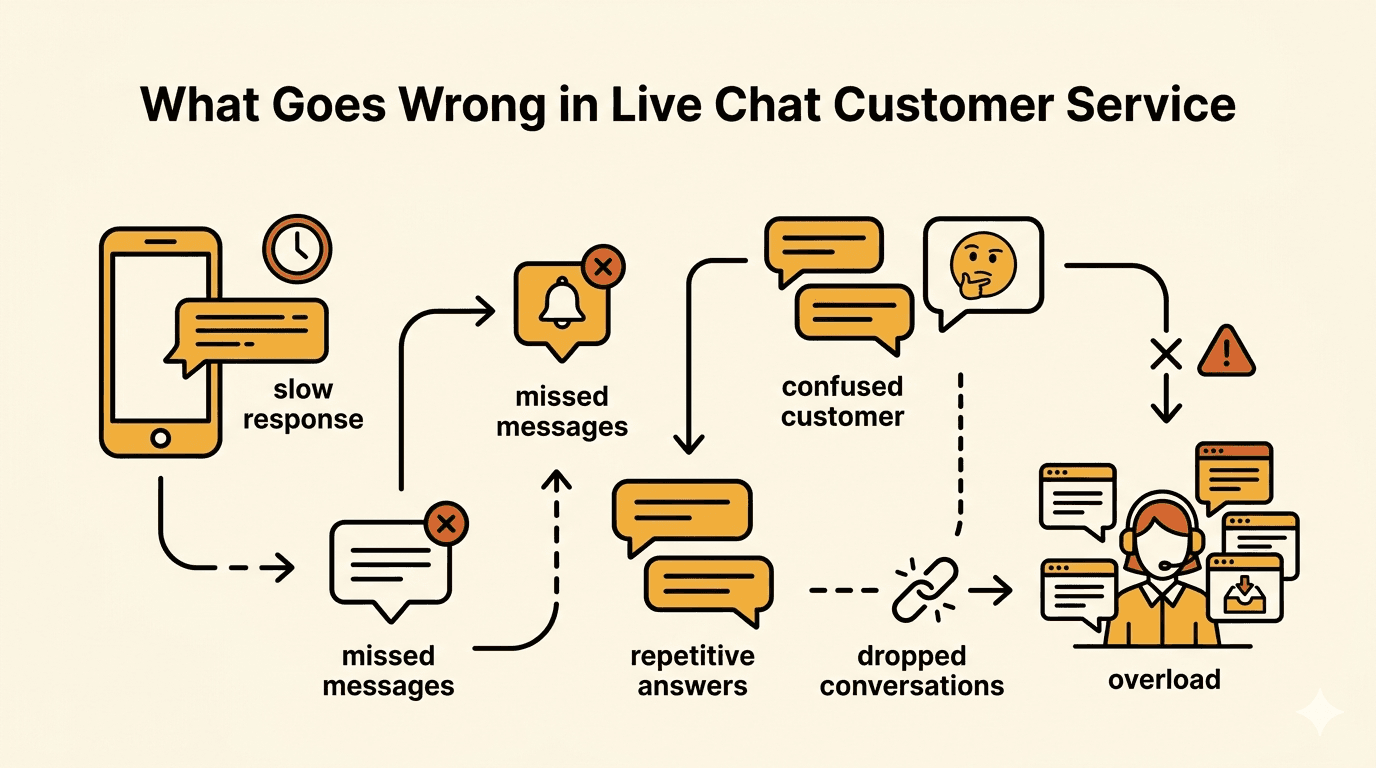
What Goes Wrong in Live Chat Customer Service
Many teams already have a chat box, but the results are still weak. The issue is usually not the channel itself. More often, the problem comes from how the chat is managed day to day. When support is slow, repetitive, or unclear, chat stops feeling convenient and starts feeling frustrating. Instead of helping people move forward, it adds friction at the exact moment they want a quick answer.
Slow First Replies
People choose chat because they expect speed. When the first reply takes too long, the advantage of chat quickly disappears. A delayed answer can make the business seem disorganized, unavailable, or simply not ready to help. Even a useful reply loses impact when customer interest has already cooled.
Repetitive Back-and-Forth
One of the biggest problems in live chat customer service is repetition. Customers explain what they need, then get asked the same questions again or receive answers that ignore what they already said. That kind of back-and-forth makes support feel draining, especially when the person reached out for something simple.
Robotic Answers
Customers notice when a reply sounds copied, stiff, or too generic. They do not expect perfect wording, but they do expect relevant help. A natural response with clear direction usually feels far more trustworthy than a polished message that says very little. Good chat support should sound helpful, not mechanical.
No Next-Step Guidance
Some teams answer the question, but stop there. The customer gets information, yet still has no clear sense of what to do next. Should they book, wait, send more details, or speak to someone else? Good chat support should remove uncertainty and guide the conversation forward instead of leaving it hanging.
How Managed Live Chat Helps Small Teams Improve Response and Conversions
For small teams, chat often fails not because demand is low, but because attention is scattered. A clinic, beauty service, counseling practice, education consultant, or local business may be handling calls, bookings, operations, and sales at the same time. In that kind of workflow, messages can be missed, delayed, or answered too late.
That is where managed live chat becomes useful. Rather than leaving chat to whoever happens to be available, managed live chat creates a more structured support process. The goal is simple: make sure inquiries are seen, answered on time, and moved toward the right next step.
Why Small Teams Need It
Small businesses usually do not struggle with nonstop volume all day. The bigger issue is uneven attention.
One hour may be quiet.
The next may bring several inquiries at once.
A high-intent message can arrive while the team is busy with calls, walk-ins, or scheduling.
Without structure, response quality becomes inconsistent. Once replies slow down, customer interest starts to fade. When that happens, conversion opportunities are much easier to lose.
How Managed Live Chat Improves Response
A stronger managed setup helps small teams protect response quality in practical ways:
fewer missed or delayed messages
better coverage during busy hours or after-hours periods
faster handling of repetitive questions
clearer routing to the right person or workflow
more consistent support across different inquiry types
That consistency matters because chat is often judged in seconds. A fast, relevant reply creates momentum. A slow or unclear reply creates doubt.
How Managed Live Chat Supports Conversions
Response speed is only part of the value. Managed live chat also helps more conversations turn into real outcomes.
More leads stay engaged while intent is still high.
More questions get answered before the customer leaves.
More chats move toward booking, consultation, purchase, or follow-up.
More high-intent inquiries reach the right next step instead of stalling.
In other words, managed live chat does not just make support more organized. It makes the path from question to action smoother.
What the Best Setup Looks Like
The strongest approach combines speed with judgment.
Automation should handle repetitive and simple inquiries.
Human support should step in when the conversation is nuanced, emotional, or high value.
That balance is what makes managed live chat effective for small teams. Better structure protects response quality. Better response quality supports stronger conversions.
Dealism is useful when businesses need more than a basic chat box or simple auto-reply. It helps small teams handle inbound conversations with better context, more consistent replies, smarter follow-up, and clearer movement toward booking, consultation, or sales progress. For chat-heavy businesses that rely on WhatsApp, Instagram, or website inquiries, Dealism makes managed live chat more practical, more scalable, and more conversion-focused. It also helps teams use AI sales strategy to guide next-step actions instead of stopping at the first reply.
A Better Tool Fit for Chat-Led Support, Follow-Up, and Sales
Dealism fits best when chat is not just about answering questions. It works better for businesses that need conversations to explain services, qualify demand, support booking, and move people toward the next action.
Best for High-Explanation Businesses
Dealism is especially suitable for businesses where customers usually need clarification before they decide, such as:
clinics
counseling practices
beauty services
education consulting
other service businesses with consultative chats and website inquiry flows
In these cases, support, qualification, and conversion often happen in the same conversation.
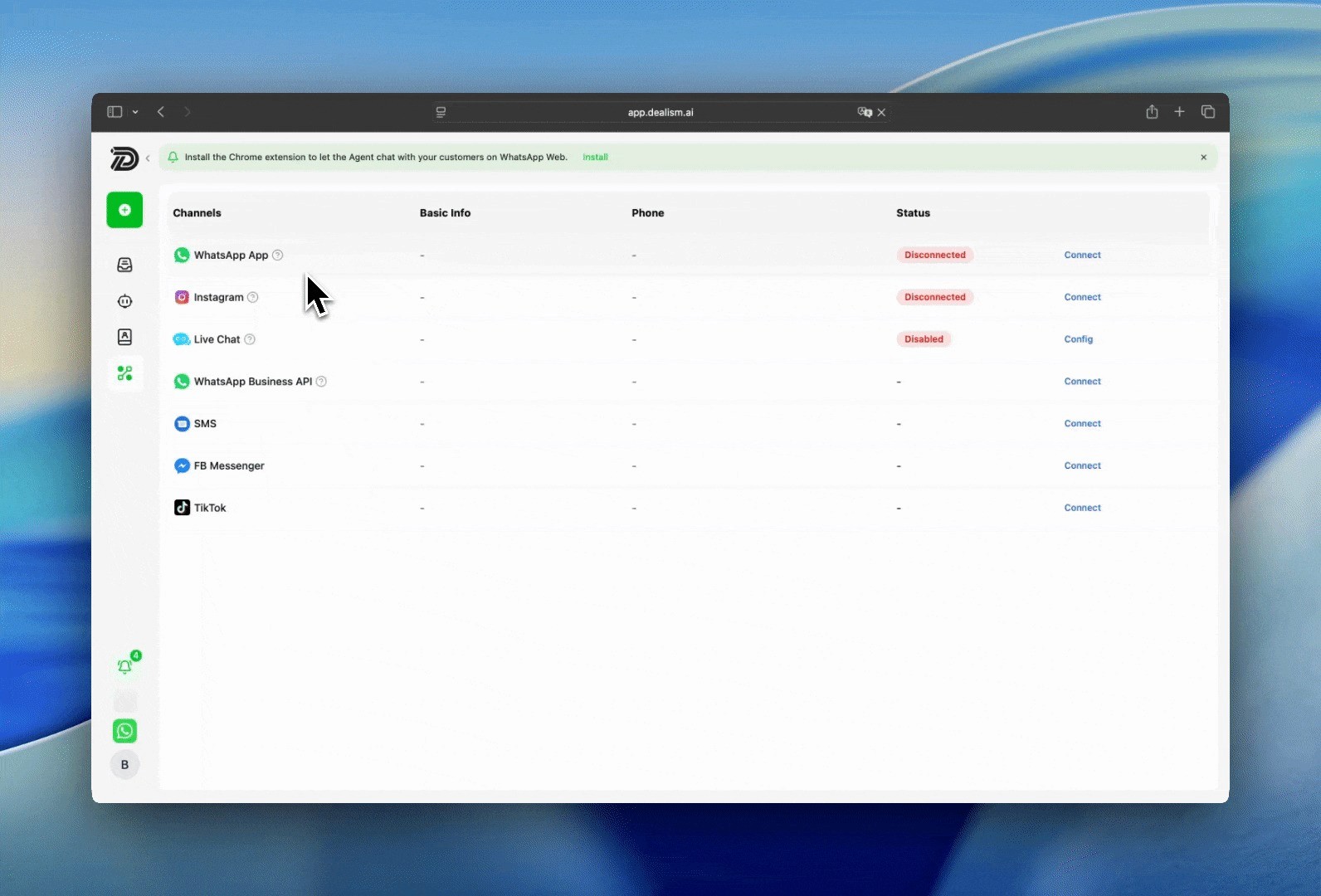
Dealism is not a typical website chatbot or a standard on-site support box. Its Live Chat works more like a website entry point for businesses that already use WhatsApp or Instagram to handle inquiries, bookings, or sales.
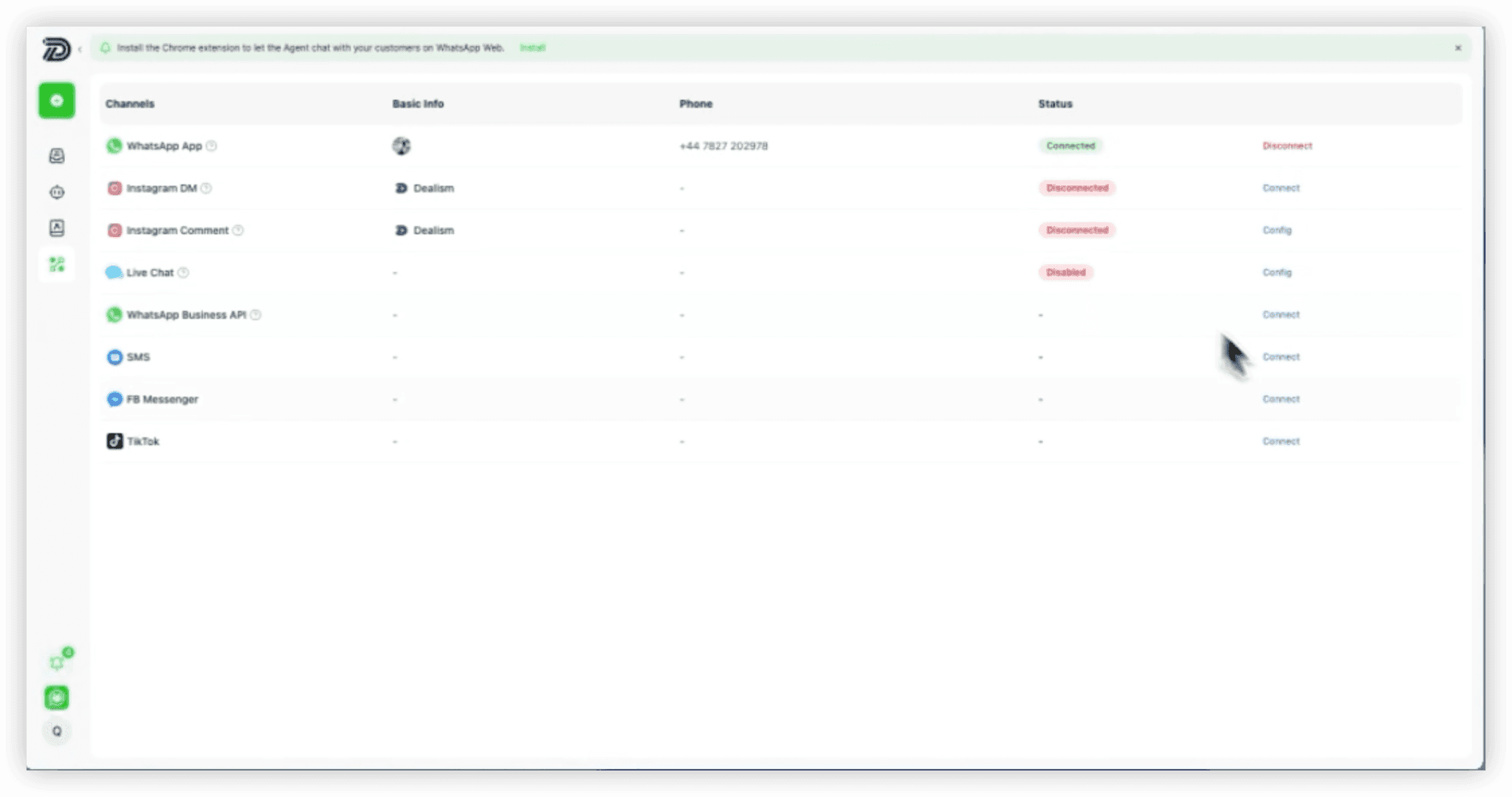
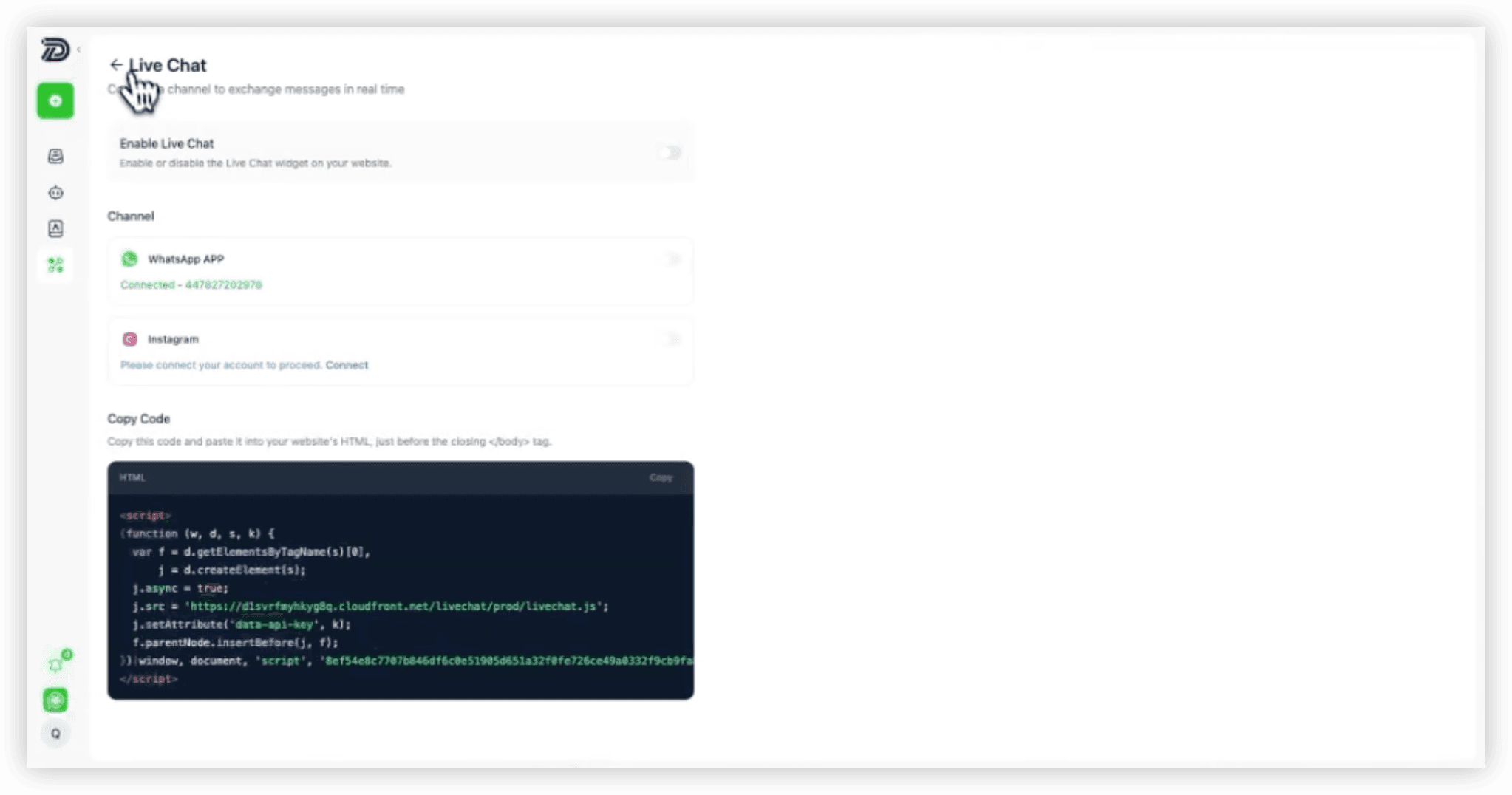
The setup is simple: connect your WhatsApp or Instagram account to Dealism, add the Live Chat script or embed code to your website, and direct visitors into the messaging flow you already use. From there, conversations can continue in WhatsApp or Instagram while still being managed in Dealism.
Key strengths include:
knowledge-based replies and self-learning support
AI Sales Agent support for next-step guidance
follow-up after the first inquiry
Copilot or Autopilot modes
human takeover when needed
The result is better continuity, less repeated back-and-forth, and a smoother path from inquiry to booking or sale.
If you want to explore more, please visit the Guides for more information on improving response quality and conversions.
What to Measure to Improve Chat Customer Service
Improving chat support is not just about replying faster. The real question is whether stronger replies also help improve ad conversions. Once response flow and support quality are in place, the next step is measurement. Otherwise, a business may see more chats coming in without realizing that too few of them lead to real action.
Strong chat customer service should be measured from two angles: response performance and business results.
First Response Time
How quickly does the first helpful reply arrive?
A faster first response helps keep interest high and builds confidence early.
Chat-to-Lead and Chat-to-Action Rate
How many conversations turn into real leads, bookings, or purchases?
These metrics show whether chat is only answering questions or actually supporting conversion.
Drop-Off After First Reply
How many people disappear after the first answer?
A high drop-off rate may point to replies that are too slow, too vague, or not useful enough.
Follow-Up Response Rate
If you send a second message, how often does the customer respond?
This shows whether your follow-up is timely and relevant.
Repeat Question Patterns
Which questions appear again and again?
Repeated questions often reveal gaps in your website, pricing explanation, onboarding, or support flow.
When these numbers improve, chat is doing more than handling messages. It is helping the business convert more interest into real results.
Common Mistakes in Managed Live Chat and Support Workflows
Using Chat Without a Clear Purpose
Not every page needs the same chat setup. High-intent pages need more support than low-intent ones.
Relying Too Much on Canned Replies
Saved responses can improve speed, but generic answers weaken trust and relevance.
Missing Handoff and Review
Some conversations need to move from support to sales, from automation to a human, or into a better messaging channel. Chat transcripts also need regular review, because they show where people get confused and where opportunities are lost.
Treating Managed Live Chat as an Add-On
Managed live chat works best when it is part of the full customer journey, connected to lead flow, booking, and follow-up.
Final thoughts
Improving customer chat support is not only about replying faster. The real goal is to improve response quality and conversion outcomes at the same time. A better system helps teams answer with more speed, more context, and more direction, so customers do not get stuck after the first question. When chat is handled well, fewer inquiries are missed, more conversations stay active, and more people move toward the next step, whether that is a booking, consultation, or purchase.
That is exactly where Dealism fits. For businesses that manage inquiries through their website, WhatsApp, or Instagram, Dealism helps turn chat into a stronger response and conversion workflow instead of just a reply channel. With connected Live Chat, cross-channel continuity, knowledge-based replies, follow-up support, and human takeover when needed, it gives teams a more practical way to improve both response and conversions. If your business depends on chat to win customers, Dealism is a smart next step.