

Customer service is no longer only about answering questions. It now shapes trust, buying decisions, and repeat business. When customers reach out, they usually want more than a quick reply. They want clarity, speed, and a clear next step. That is why more businesses are adopting ai tools for customer service to manage support at scale while keeping conversations helpful and human.
At first, many teams turn to automation to reduce manual work. But the real value goes further. The right platform can reduce confusion, improve response quality, and move more conversations toward booking, purchase, or follow-up. In that sense, the best ai tools for customer service do more than save time. They help turn customer support into a stronger part of the overall customer journey.
Why Customer Service Automation Matters More Now
Customers now expect fast replies across chat, messaging apps, email, and websites. They also expect businesses to remember context. If they have to repeat themselves every time they return, the experience quickly feels frustrating.
That is why customer service automation matters more than before. Older tools relied on fixed rules, canned replies, and simple if-then logic. They worked for basic FAQs, but often failed when questions were unclear or slightly more complex. Modern AI systems are far more capable. They can understand intent, use context, search knowledge, and guide the next step, making them much more effective for busy teams handling large volumes of customer conversations.
What Are ai tools for customer service?
Ai tools for customer service are software systems that help businesses manage customer conversations more efficiently. They can answer common questions, assist support teams, route customers to the right path, and in some cases complete actions such as collecting details, qualifying leads, or helping with booking.
These tools usually fall into a few groups:
AI chatbots
These handle common questions and simple support flows. They are often used on websites or messaging channels.
AI copilots
These support human agents by suggesting replies, surfacing knowledge, and helping summarize conversations.
AI agents
These are more advanced. They do not just reply. They can guide a process, ask follow-up questions, and help move the conversation toward resolution.
AI routing and triage tools
These tools look at customer messages, detect urgency or topic, and send the conversation to the right queue, team, or workflow.
AI analytics tools
These tools study support conversations to show patterns, weak points, customer pain, and agent performance.
The strongest platforms often combine several of these functions in one workflow.
How AI Customer Service Tools Actually Work
Many people think AI support tools are just smart auto-reply systems. That is too simple. A modern tool usually works through four layers.
1. Intent recognition
The system reads the message and tries to understand what the customer wants. Is this person asking for help, pricing, booking, refund support, or product details?
2. Context understanding
The tool looks at the message history, customer profile, or earlier interactions. This helps it avoid answering in a disconnected way.
3. Knowledge retrieval
The system checks a knowledge base, internal documents, or product information so it can answer with useful details.
4. Workflow action
Once the intent is clear, the tool can take the next step. It may answer directly, ask a clarifying question, collect a phone number, suggest a booking link, or hand the case to a person.
This is where automation starts to feel valuable. The goal is not just speed. The goal is a better path to resolution.
Why These Tools Improve More Than Response Time
Fast replies matter, but speed alone does not fix customer support. A fast but incomplete answer still creates frustration, extra follow-up, and lost trust. That is why businesses should focus on outcomes such as clarity, resolution, and conversion, not just response time.
The best tools improve service by giving more consistent answers, reducing manual work, and collecting the right information early. They also support better follow-up and improve resolution quality by reducing unnecessary back-and-forth. This is why more businesses now look for ai tools for improving customer service resolution rate, not just tools that reply faster.
Top 5 AI Tools for Customer Support, Including Dealism for Chat-First Customer Journeys
Not all AI customer support tools solve the same problem. Some are built for formal helpdesk operations, while others are better for businesses that rely on WhatsApp, Instagram, and website chat. That is why the right choice depends not just on features, but on workflow, channel fit, and the kind of customer journey your business needs to manage.
Below are five AI tools worth considering, each with a different strength.
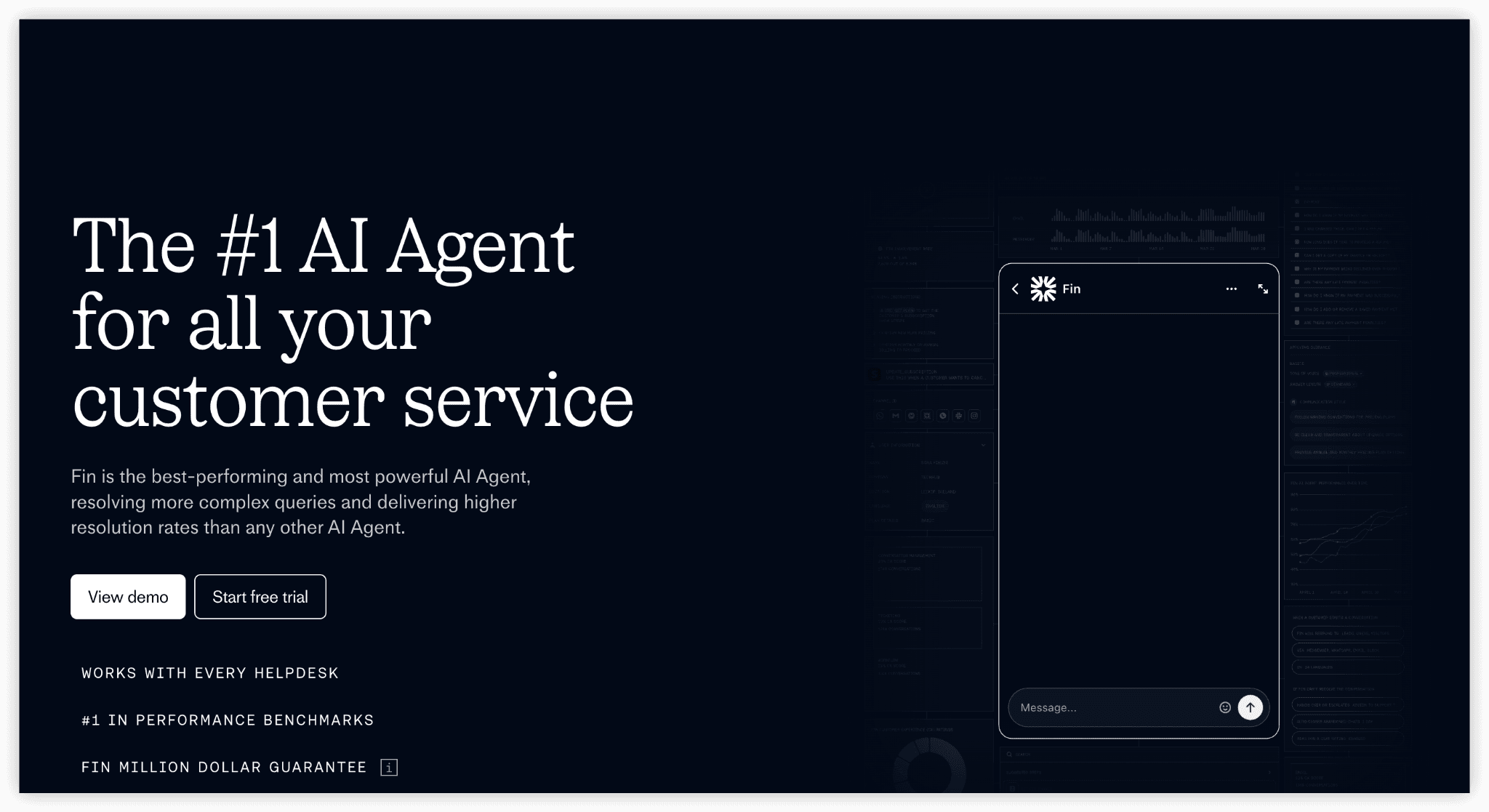
1. Intercom Fin
Best For:
Teams that want AI deeply integrated into a modern helpdesk workflow.
Key Features:
AI agent for end-to-end support resolution
Native support workflow integration
Multi-channel support handling
Strong helpdesk ecosystem
Why It Stands Out:
Intercom Fin is a strong choice for businesses that already work in structured support flows. It fits well into modern helpdesk environments and is especially useful for SaaS and support-heavy teams.
Potential Limitation:
It is better suited to help desk-centered teams than to informal, chat-first customer journeys.
2. Zendesk AI
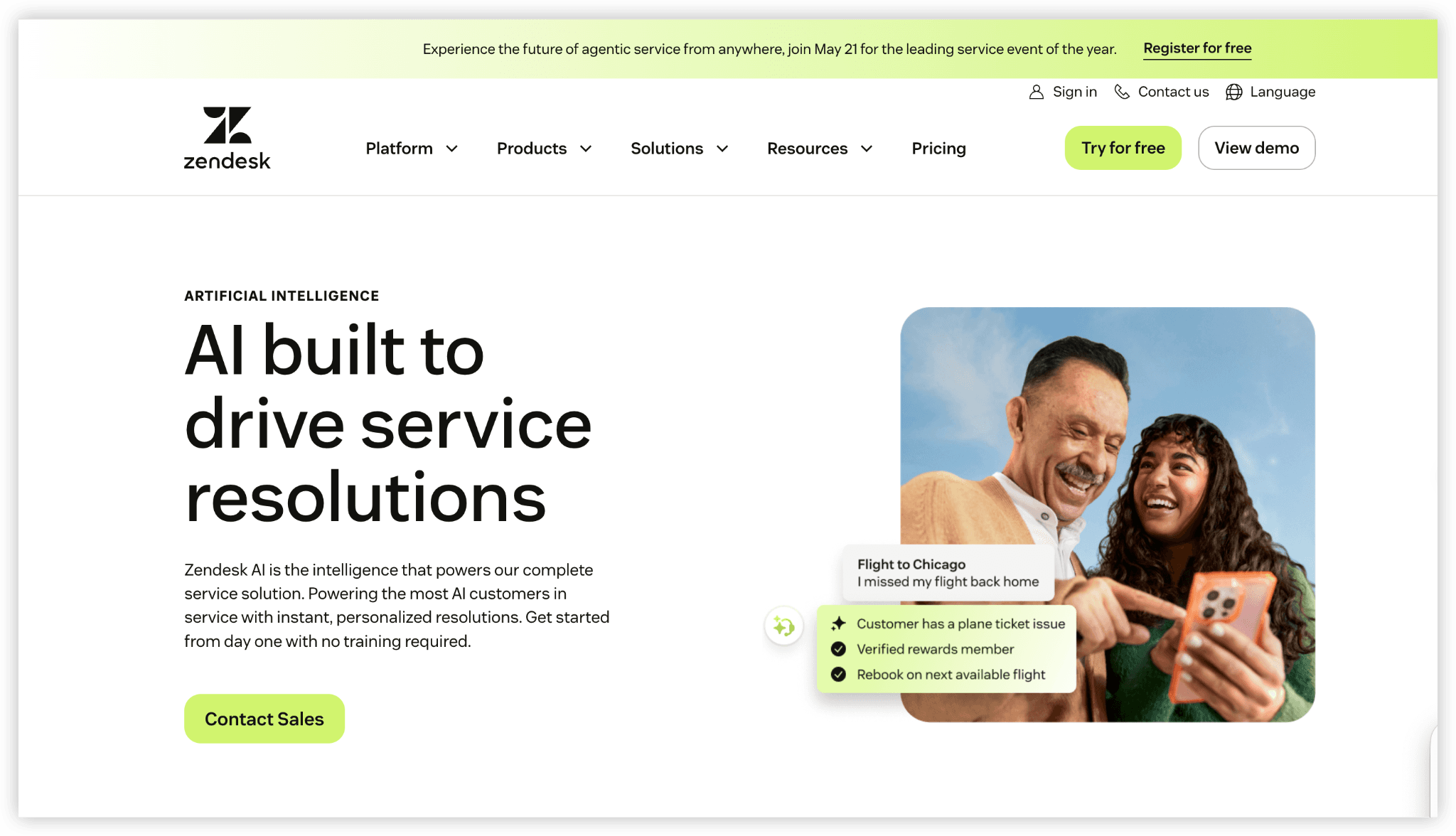
Best For:
Larger support teams that need scale, reporting, and enterprise-grade operations.
Key Features:
AI-powered support automation
Omnichannel ticket and conversation management
Agent assistance and knowledge integration
Reporting and resolution workflows
Why It Stands Out:
Zendesk AI is a strong fit for companies with mature support operations. It offers broad channel coverage, strong reporting, and a more complete service stack in one platform.
Potential Limitation:
It can feel heavier than necessary for smaller or more chat-first businesses.
3. Ada
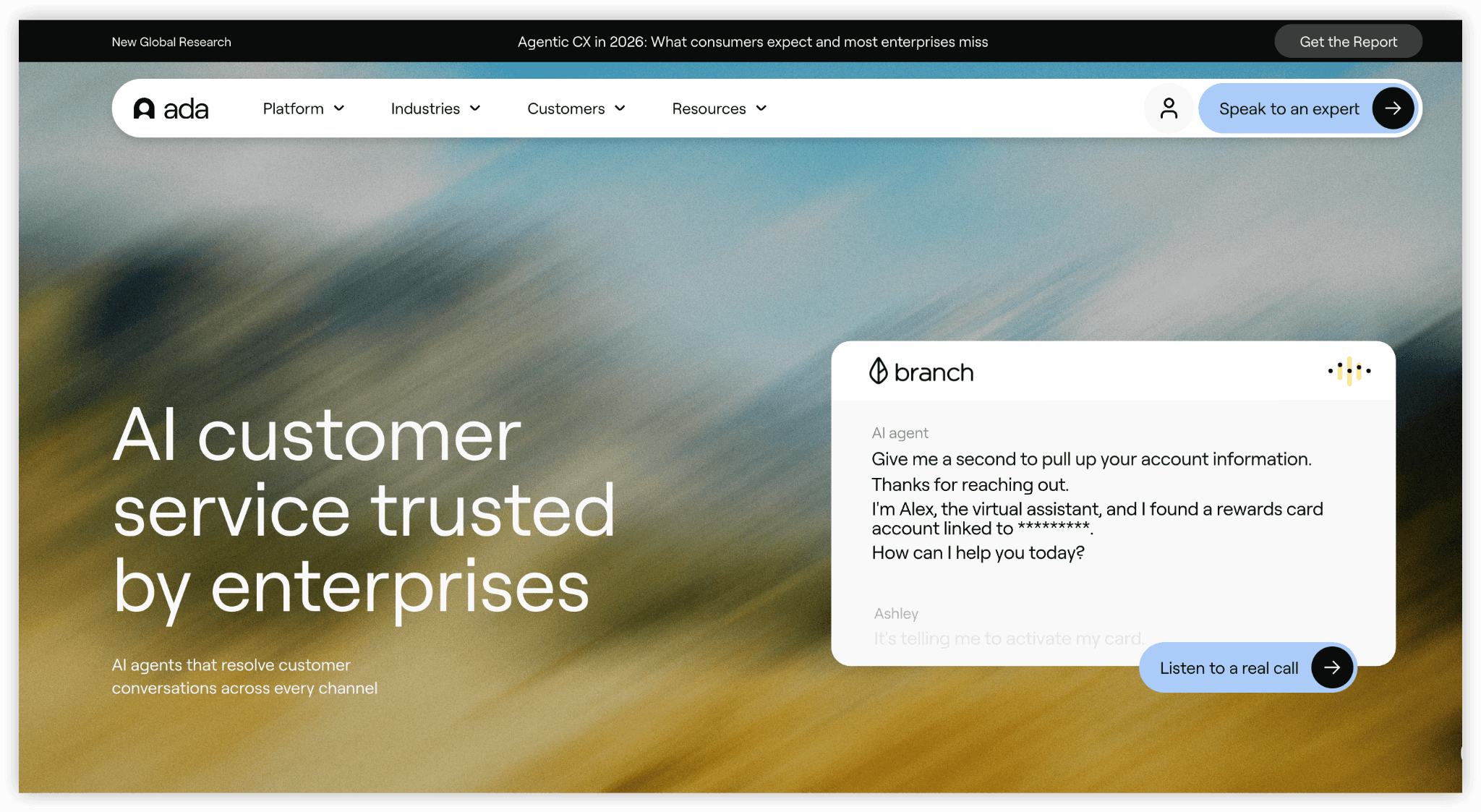
Best For:
Businesses focused on automated resolution across multiple channels and languages.
Key Features:
AI customer service automation
Omnichannel deployment
Multilingual support
Resolution-focused workflows
Why It Stands Out:
Ada is especially useful for teams that want AI to resolve more issues directly, not just assist human agents. It is a strong option for businesses managing support at scale across markets.
Potential Limitation:
It is often a better fit for larger automation goals than for smaller teams needing a lighter setup.
4. Forethought
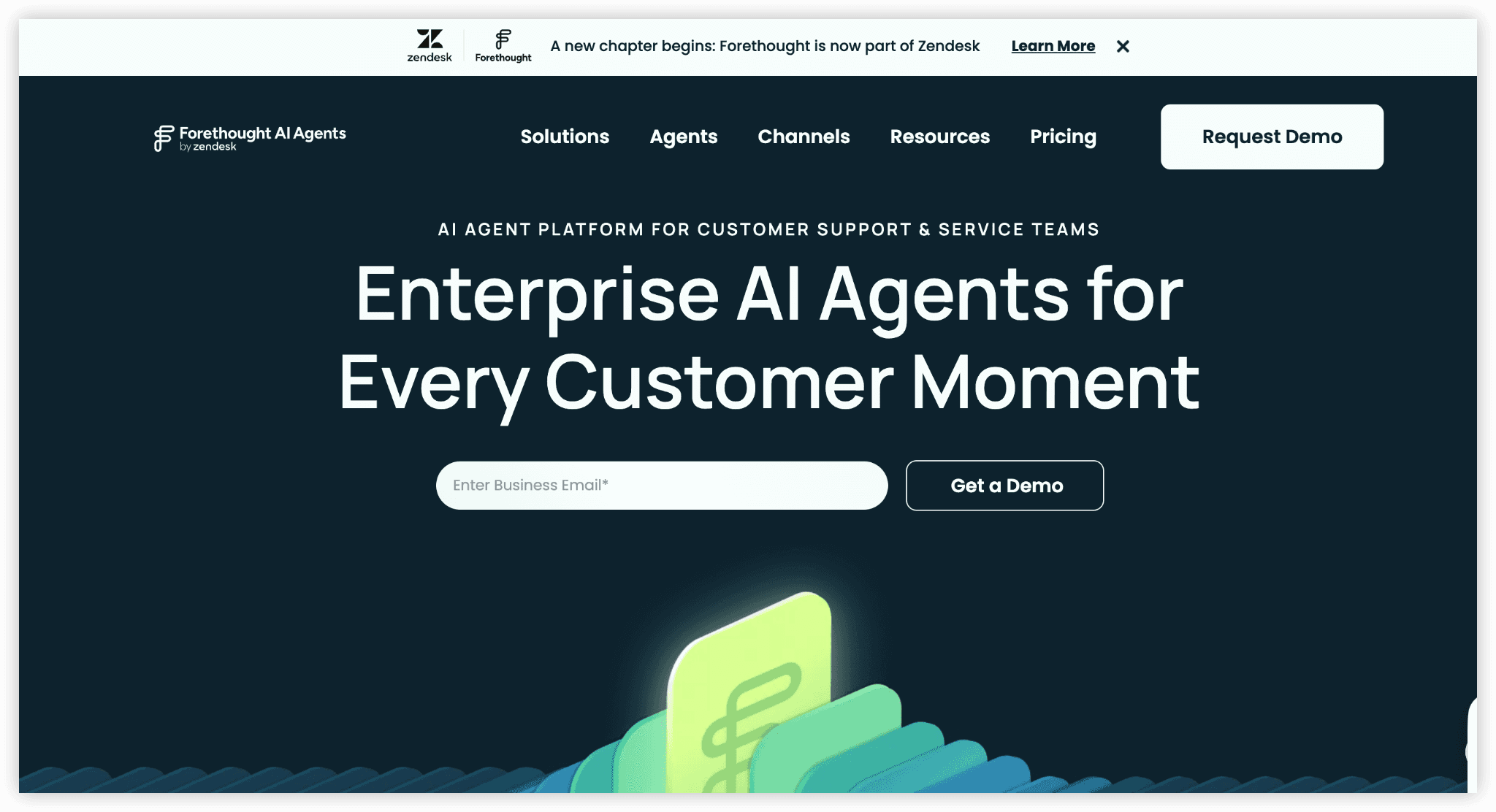
Best For:
Support teams that want AI added to an existing service operation to improve efficiency and ROI.
Key Features:
AI automation for support teams
Workflow and ticket handling support
Resolution and response-time improvement
Enterprise support optimization
Why It Stands Out:
Forethought is a good fit for organizations that already have formal support systems and want better efficiency without changing their entire service model.
Potential Limitation:
It is more enterprise-oriented than tools built for chat-first service workflows.
5. Dealism
Best For:
Small and mid-sized service businesses that rely on WhatsApp, Instagram, and website chat for support, qualification, booking, and follow-up.
Key Features:
AI agent built for chat-first customer journeys
Cross-conversation context memory and continuity
Intent and emotion recognition for more accurate replies and routing
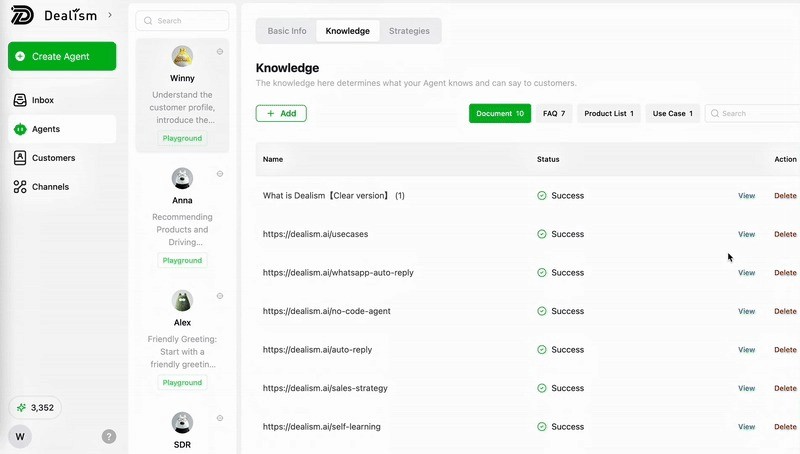
Knowledge-base-powered responses with self-learning support
Lead qualification, prioritization, and next-step guidance
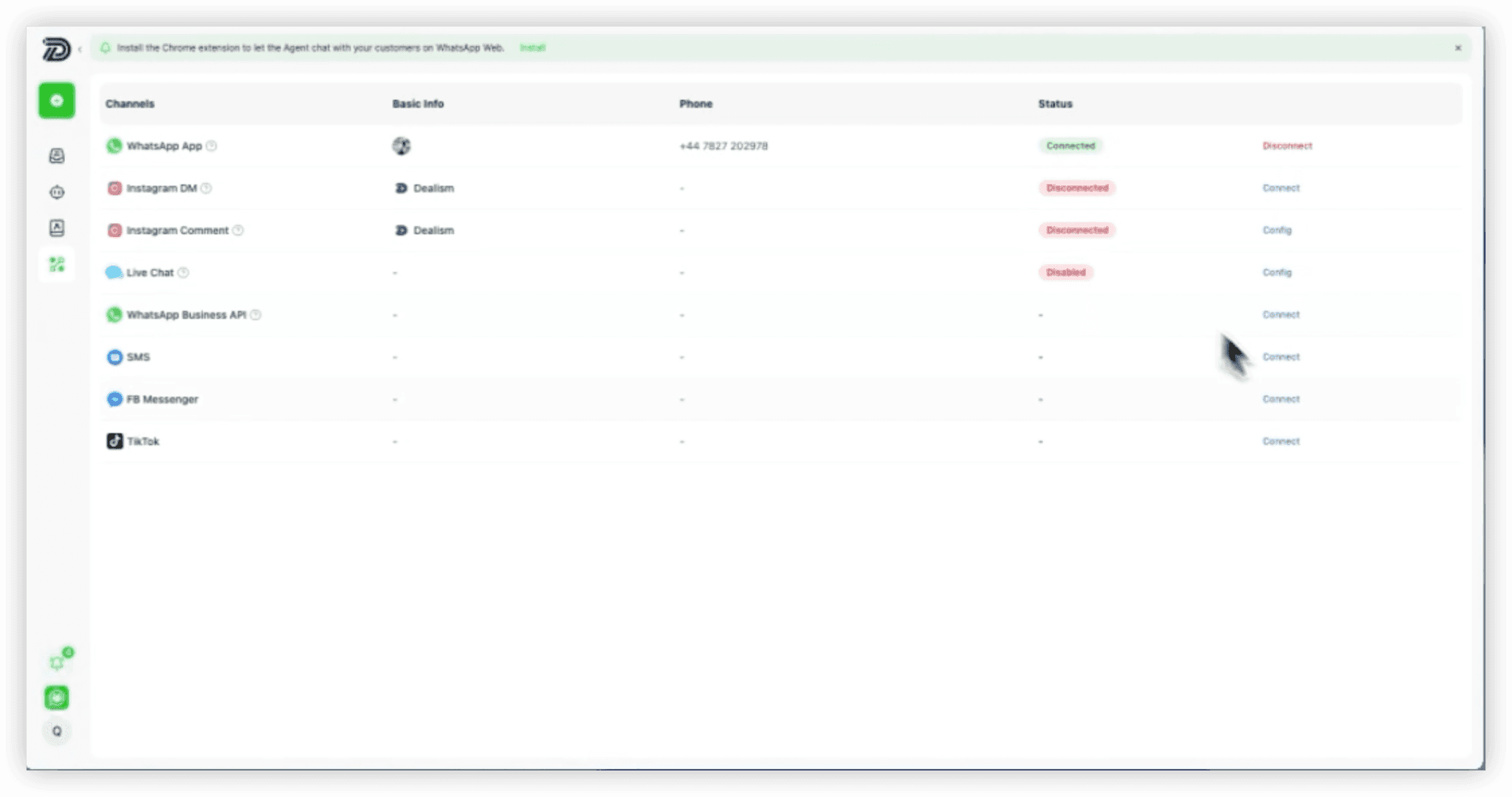
Live Chat entry point for turning website visitors into connected WhatsApp or Instagram conversations
Why It Stands Out:
Built for businesses where support, qualification, and conversion often happen in the same chat
Goes beyond basic auto reply by using context, intent recognition, and knowledge retrieval to guide the conversation
Better suited to repetitive but slightly nuanced inquiries than rule-based bots or simple scripted workflows
Helps identify high-intent leads, route conversations more intelligently, and move chats toward booking, follow-up, or other business actions
Works especially well for clinics, counseling practices, beauty services, education consulting, ecom brands, and other high-explanation businesses.
Live Chat is not just a website chat box, but an entry point into the broader Dealism workflow, where the AI agent can continue handling, managing, and following up on conversations more effectively
Potential Limitation:
Not built as a traditional enterprise helpdesk-first platform
Less suitable for teams that need a highly structured, ticket-based service environment above all else
For a deeper look at how chat-first AI workflows support these use cases, explore the Dealism Guides.
How to Choose the Right Tool for Your Business
The right platform depends on your support workflow, not just your budget. Before choosing a tool, look at how your customer conversations actually happen and what role chat plays in your business.
If your team mainly handles simple FAQs, a basic chatbot may be enough.
If your support team is overloaded, an AI copilot can help agents reply faster and more consistently.
If chat is used to qualify, guide, and convert customers, a more advanced AI agent workflow is usually the better choice.
If you work across WhatsApp, Instagram, website chat, or other messaging channels, choose a tool that supports continuity, not just isolated replies.
For example, platforms like Dealism are especially relevant for businesses that rely on chat-first customer journeys. Its AI sales agent approach is better suited to conversations that involve qualification, consultation, booking, or follow-up, not just basic support. Dealism also provides a Live Chat feature for websites, giving visitors a direct entry point into connected WhatsApp or Instagram conversations. This makes it easier for businesses to move website inquiries into more natural messaging channels, manage those conversations in one place, and use AI for automating messages, follow-up, service handling, and sales workflows more efficiently.
In general, the more complex and action-driven your conversations are, the more capable your customer service tool needs to be.
Key Features to Compare
Ease of setup: Can your team launch and manage it without a long technical project?
Automation depth: Does it only answer questions, or can it also guide the next step and support actions?
Human control: Can staff review, edit, approve, or take over when needed?
Channel fit: Does it support the platforms your customers already use?
Integration quality: Can it connect with your CRM, booking System, knowledge base, or support stack?
Reporting: Can you clearly see what improves resolution and where customers drop off?
Scalability: Will it still work well as message volume grows?
Teams that want both efficiency and control should pay close attention to this balance. Some tools are too limited and only handle simple replies. Others are too rigid and make automation feel disconnected from real customer needs. The strongest options usually let AI handle repeatable tasks while keeping human support available for sensitive, high-value, or more nuanced conversations.
Conclusion
Customer service automation is no longer just about replying faster. The real value of ai tools for customer service lies in helping businesses create clearer conversations, better resolution paths, and stronger next-step actions. For service businesses that rely on chat, Dealism stands out by combining AI agent capabilities, context continuity, intent recognition, knowledge-based responses, and lead guidance in one workflow.
If your business needs more than simple automation and wants chat to support qualification, follow-up, and conversion more naturally, Dealism is a strong option to explore.