
For many businesses, the real problem is not a lack of effort. It is that customer questions do not arrive on a clean schedule. They come in after work, during weekends, between appointments, and across different time zones. That is why more teams are trying to improve service quality without adding more agents, more shifts, or more overhead.
Today, strong support is less about having a large team online at all times and more about building a system that can keep conversations moving. Good support should answer common questions, guide people to the next step, and know when a human should step in. This is where 24/7 customer support, 24/7 customer support with ai, and smarter chat workflows are becoming a practical option for small and mid-sized businesses.
Why Fast Support Matters More Than Ever
Customers are used to quick replies. If they ask about price, booking, availability, returns, or next steps, they do not want to wait until the next business day just to get a basic answer. In many cases, they move on before your team even sees the message.
This matters even more in service businesses. A support message is often not just a support message. It may also be a buying signal, a consultation request, or the start of a booking journey. That means late replies do not only hurt satisfaction. They can also hurt conversion.
This is why more companies are treating 24/7 customer support as a business system, not just a staffing issue.
Why Hiring More Agents Does Not Automatically Mean Better 24/7 customer support
When businesses think about How to Offer 24/7 customer support Without Hiring More Agents, the first instinct is often to add more people. That may improve coverage, but it does not always improve the support system. In many cases, the better answer is not more labor, but better structure that can automate messages, reduce repetitive support work, and keep conversations moving more efficiently.
More staffing raises cost faster than quality
Hiring more agents adds payroll, training, supervision, scheduling pressure, and quality control work. As teams grow, it often becomes harder to keep replies consistent across channels. Higher cost does not always create a better support experience.
Repetitive support volume is usually a system problem
Many support requests are repeat questions about pricing, availability, booking, delivery, returns, or policies. If every one of these still needs a human reply, the business is scaling manual work instead of improving the workflow.
AI is most useful when it removes routine load
This is why more businesses are using 24/7 customer support ai and 24/7 customer support with ai. AI can handle common questions, organize incoming requests, and support customers after hours, while human agents focus on cases that need judgment or empathy.
Real support should create progress
Real 24/7 customer support should do more than send an after-hours acknowledgment. It should help customers move forward, whether that means giving an answer, guiding the next step, or collecting context for follow-up.
Outsourcing can help, but it also reduces control
Some businesses try outsourcing chat support or outsource support 24/7 live to expand coverage. That can increase availability, but it may also weaken brand consistency, context continuity, and quality control.
In the end, better support comes from a system that resolves common questions efficiently, escalates complex cases clearly, and stays useful even when your team is offline.
The Best Ways to Offer Support Without Expanding Headcount
There is no single model that fits every business. Most teams use one of these approaches, or a mix of them.
1. Build support around AI and automation
This is often the most scalable path for businesses that receive many repeated inquiries. A well-trained AI setup can:
answer common questions
collect lead details
guide customers toward booking or purchase
sort inquiries by urgency or intent
support customers outside office hours
This is where an Ai support for 24/7 customer support chat becomes valuable. It is not just about replying fast. It is about keeping the conversation useful.
For chat-first businesses, Dealism is especially relevant because it does more than automate replies. It helps handle WhatsApp, Instagram, and web chat conversations with better context, intent recognition, and next-step guidance.
2. Strengthen self-service
If your business has many common questions, your site should help customers solve them without waiting for an agent. A better FAQ, clearer service page, or easier booking flow can reduce support load before a conversation even starts.
3. Use asynchronous follow-up for complex issues
Not every message needs a live answer in real time. For more complex requests, the system can collect key details, set expectations, and prepare the case for next-day review.
This works well when the customer feels guided rather than ignored.
4. Add human coverage only where it matters
Some teams choose a hybrid model. They automate the large volume of simple questions and keep humans focused on sensitive or high-value conversations. This is usually more efficient than trying to keep full live coverage on every channel.
5. Use outsourcing carefully
In some situations, outsourcing chat support can be useful, especially if you need coverage fast. But it also comes with trade-offs. External teams may not fully understand your service, tone, or customer journey. When support overlaps with selling, consulting, or booking, those gaps matter more.
That is why many businesses now prefer a system-first model before they try to outsource support 24/7 live. They first automate what can be automated, define clear escalation paths, and only add outside support where it truly helps.
How to Build a 24/7 Support Workflow Step by Step
A better support setup starts with structure. Here is a simple framework.
Step 1: List your most common after-hours questions
Review support logs and identify repeat themes:
pricing
service details
availability
appointment requests
rescheduling
order or status questions
policy questions
This gives you the first layer of what automation should handle.
Step 2: Decide what AI can answer, assist, or escalate
Split support into three groups:
fully answerable by AI
partly handled by AI, then passed to a human
always handled by a human
This prevents over-automation and improves customer trust.
Step 3: Connect support to real next actions
A support reply should not stop at information. It should help people move forward.
For example:
if someone asks about availability, guide them to booking
if someone asks if the service fits their case, collect qualification details
if someone needs follow-up, route them properly
This is where a platform like Dealism becomes useful. In many businesses, support is part of a wider conversation flow. It leads into qualification, booking, or next-step guidance. A system that understands that flow is often more helpful than a tool that only sends answers.
Step 4: Create clear rules for escalation
Customers should know what happens next. If a case cannot be solved right away, the system should:
collect the right context
explain when a human will follow up
send the case to the right person
avoid dead ends
Step 5: Improve from real conversation data
Your support system should get better over time. Review:
repeated unanswered questions
failed handoffs
customer drop-off points
frequent booking blockers
common confusion in service pages
This turns support into a source of business insight, not just a response function.
Better 24/7 customer support with Dealism Live Chat
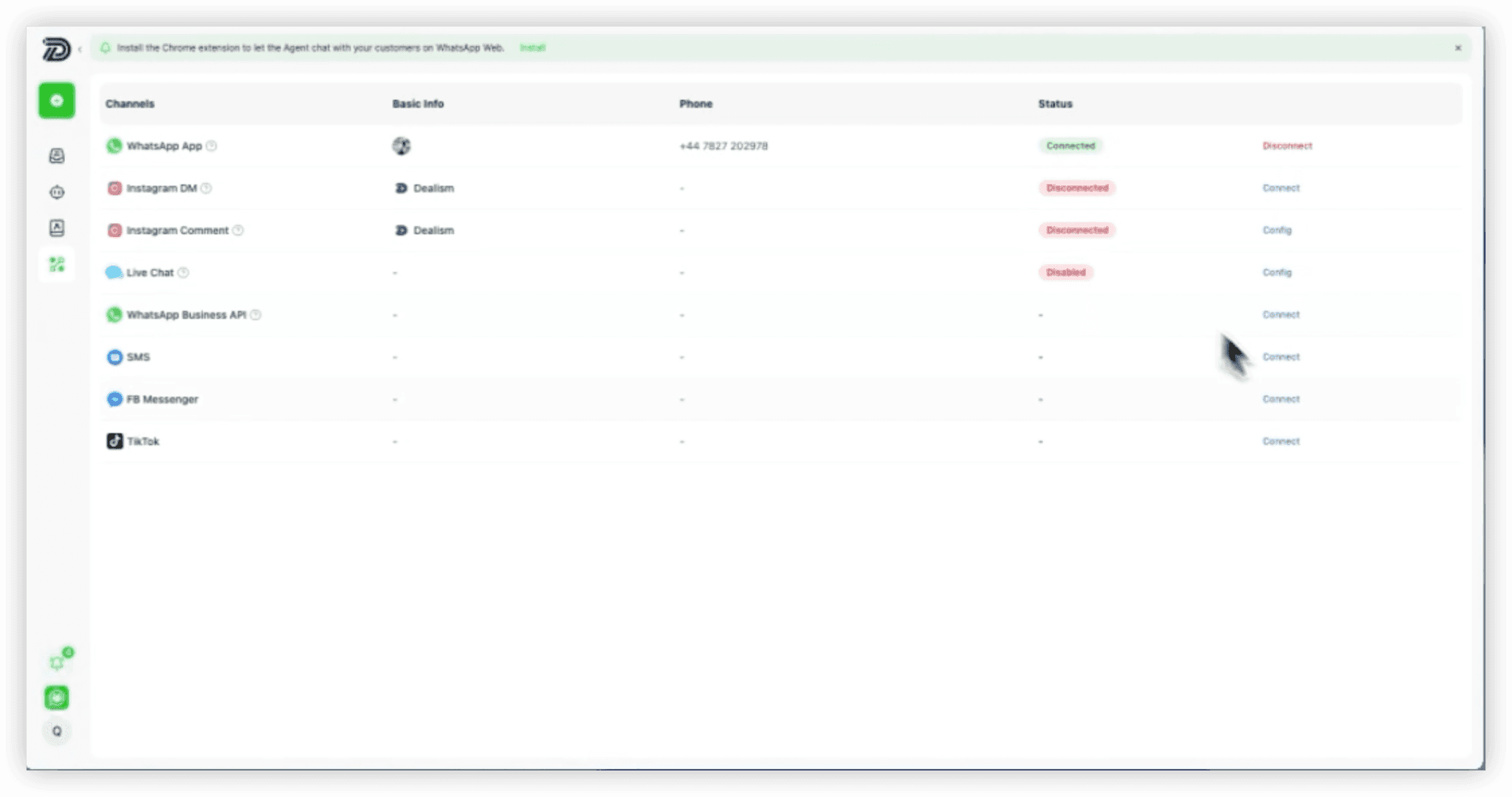
For chat-first businesses, support works better when it continues beyond the website. Dealism Live Chat acts as a website-to-chat entry point, guiding visitors into WhatsApp or Instagram so Dealism can keep the conversation moving with automation, context understanding, and next-step support.
It turns a website chat entry into an ongoing support flow
Dealism Live Chat does not keep the conversation trapped inside a pop-up widget. It moves the inquiry into WhatsApp or Instagram, where the customer can continue the conversation in a more familiar channel. From there, the business can keep using Dealism to support replies, qualification, follow-up, and next-step actions in one continuous flow.
It supports more than simple auto replies
Many tools stop at basic website chat or scripted FAQ responses. Dealism goes further than a standard Auto Reply system because it is built as a Dialogue-as-Execution platform. The idea is that chat is not just communication. It is part of the business process itself, where the conversation helps with judgment, decision-making, and action.
That makes Dealism more useful when support needs to do more than answer one question. It can help clarify needs, guide the visitor toward booking or inquiry submission, and keep the conversation moving after the first contact.
Its strongest advantage is context, intent, and follow-through
Once the visitor enters WhatsApp or Instagram, Dealism can continue using its core capabilities across the conversation:
context understanding across messages
intent recognition based on what the customer is really asking for
clarification of unclear needs before the next step
follow-up and progression instead of one-time replies
human-in-the-loop takeover at important decision points
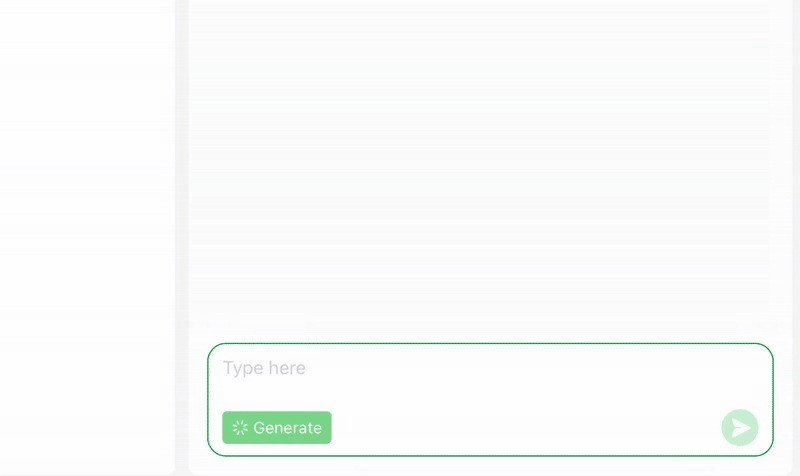
This is why Dealism is not best understood as a CRM, a basic chatbot, or a rule-based automation tool. It is closer to an AI Vibe-Selling Agent that can work inside messaging channels like a teammate, helping the business understand, decide, and move the conversation forward.
It fits businesses where support and conversion happen in the same chat
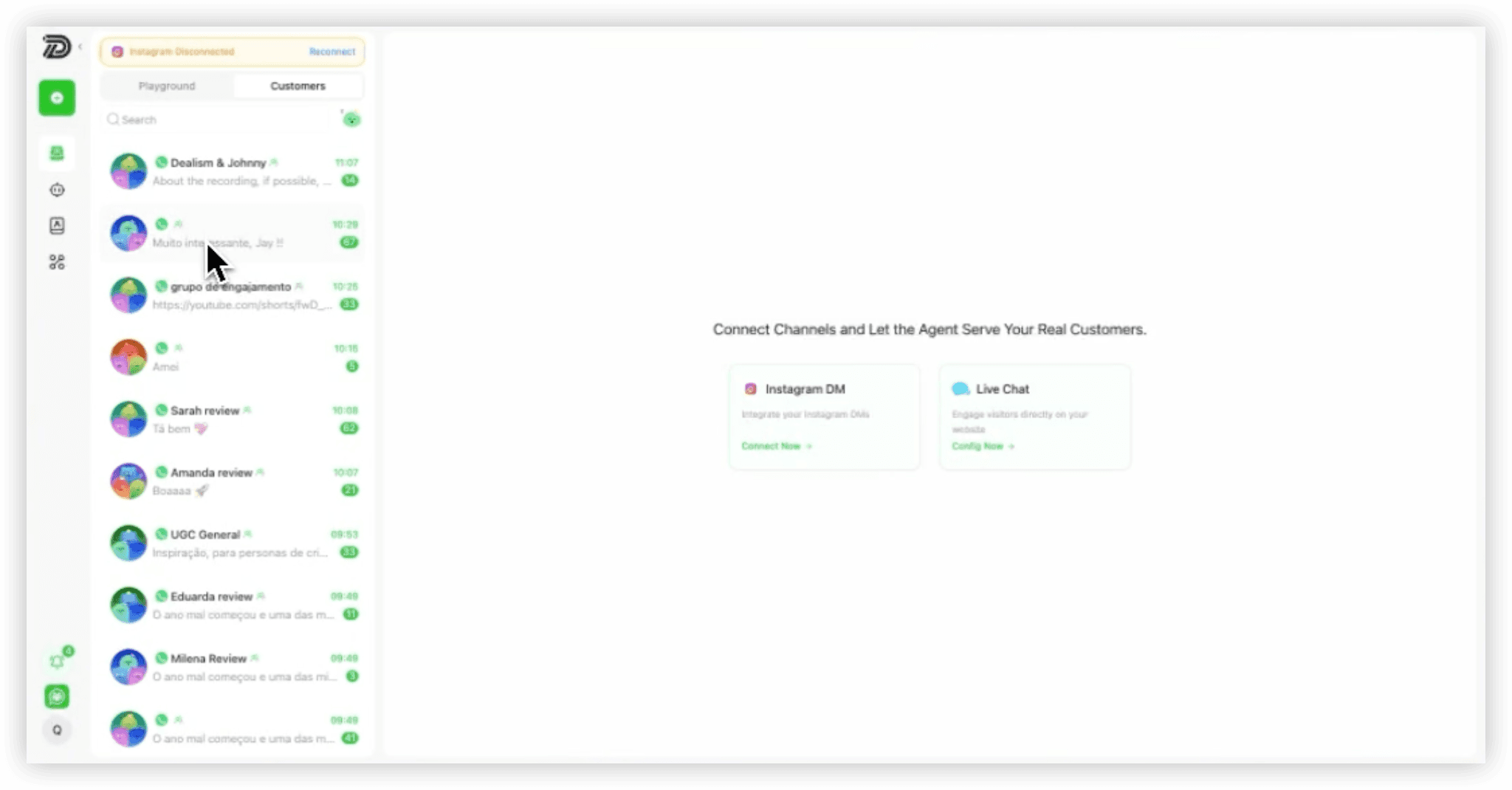
Dealism Live Chat is especially useful for clinics scheduling service , counseling practices, beauty services, education consulting, and other high-explanation businesses. In these settings, customers often start with a support question, then ask about service fit, timing, price, or next steps. A rigid chat widget can struggle here. A more context-aware system is better suited to handle the flow naturally.
For more real-world examples and practical use cases, visit our User Story.
It helps lean teams stay responsive without adding more agents
For small and mid-sized businesses, especially owners or operators without a formal sales team, Dealism offers a lighter alternative to heavy CRM-first workflows. As an AI sales agent and support automation platform, it helps teams handle more conversations, reduce repetitive manual work, and keep support active outside business hours, while still allowing human involvement where it matters most.
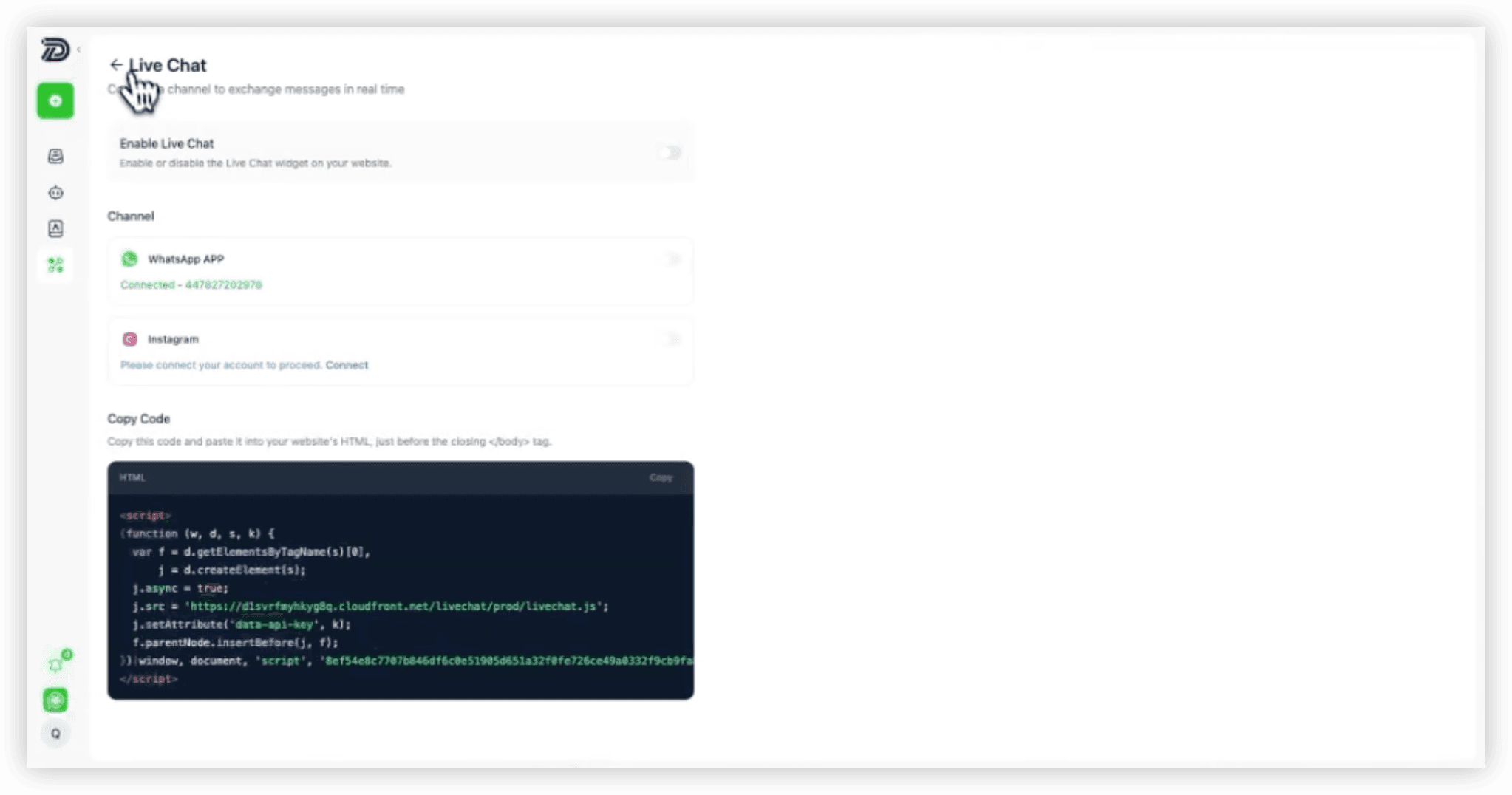
Setup is simple for chat-first businesses
The setup is straightforward:
connect your WhatsApp or Instagram account in Dealism
configure the Live Chat entry point
copy the embed code or script snippet
add it to your website
It can be installed on WordPress, Webflow, and other websites that support script installation.
Conclusion
The best support systems do not rely on keeping more agents online at all times. They work by improving conversation flow, knowledge access, routing, and handoff, so customers can still get useful help even when the team is offline. That is what makes modern 24/7 customer support more practical, efficient, and scalable.
When businesses take this approach, it becomes easier to deliver 24/7 customer support ai, 24/7 customer support with ai, and a stronger ai assistant for 24/7 customer support chat without growing headcount at the same pace. For chat-first teams, Dealism is especially relevant because it helps turn website, WhatsApp, and Instagram conversations into clearer next steps through context understanding, intent recognition, and follow-up support. Some teams may still consider outsourcing chat support or outsource support 24/7 live, but the more sustainable path is usually to build a smarter support system first and let humans step in where judgment matters most.