/
Account analysis
We looked at what brings people in, where each CTA sends them, and how Instagram, email, podcasting, and education offers connect into one business chain.
Based on public-facing content and offer pages. This is an account analysis, not a claim about private revenue, tools, or results.

Jenna Kutcher
Most creators treat Instagram like the whole business.
Post. Get views. Add a link in bio. Hope the right person clicks at the right time.
Jenna Kutcher’s public setup tells a different story.
We looked through her content, website, free resources, podcast pages, and course library, and the thing that stood out was not one viral post or one clever offer. It was the handoff. Almost every topic has somewhere useful for an interested person to go next.
Instagram gets someone in the room. The rest of the business gives them a reason to stay.
Jenna’s website describes a multi-million-dollar business and an Instagram audience of more than one million people. But we are not going to pretend we can see her private conversion data, revenue by offer, inbox workflow, or tech stack. We cannot. What we can see is a well-connected public path. Her homepage lays it out in plain sight.
Here’s our account breakdown: what the account is really selling, what its content pulls people in with, where each CTA sends them, and how the whole chain could be automated.
Account snapshot: this is not just a “personal brand” account
On the surface, the account is warm, personal, and easy to follow. Underneath, it is organized around a very clear promise: help aspiring creators and entrepreneurs build a business with more freedom and less guesswork.
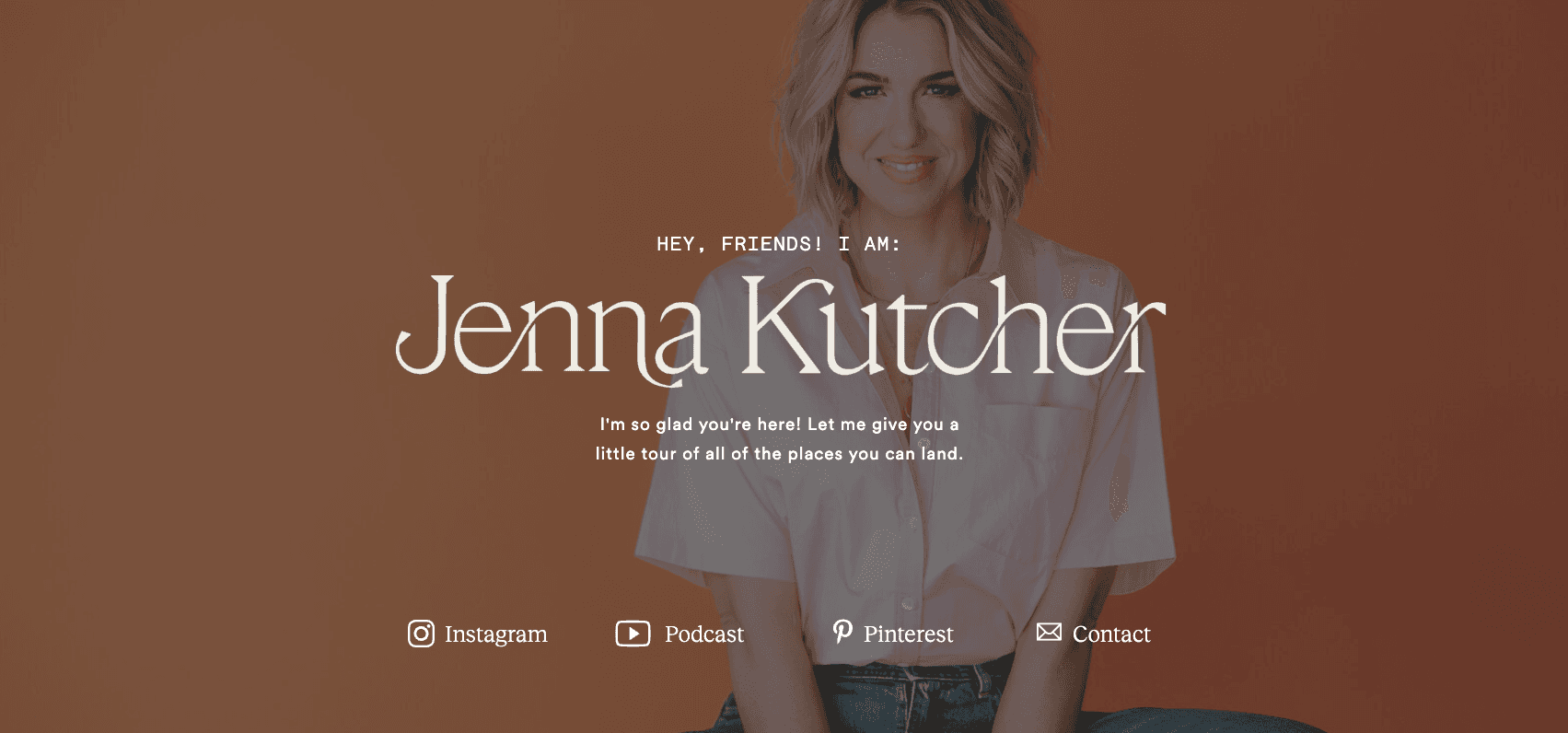
That promise shows up across the public brand: podcasting, list building, content, Pinterest, and building an online business around real life. These are not random content buckets. They are the problems the offers are built to solve.
So when we look at this account, we are not only looking at what Jenna posts. We are looking at the job each content theme does inside the business.
Content-to-CTA breakdown: there are two ways into the DM
We can see two distinct paths working together here.
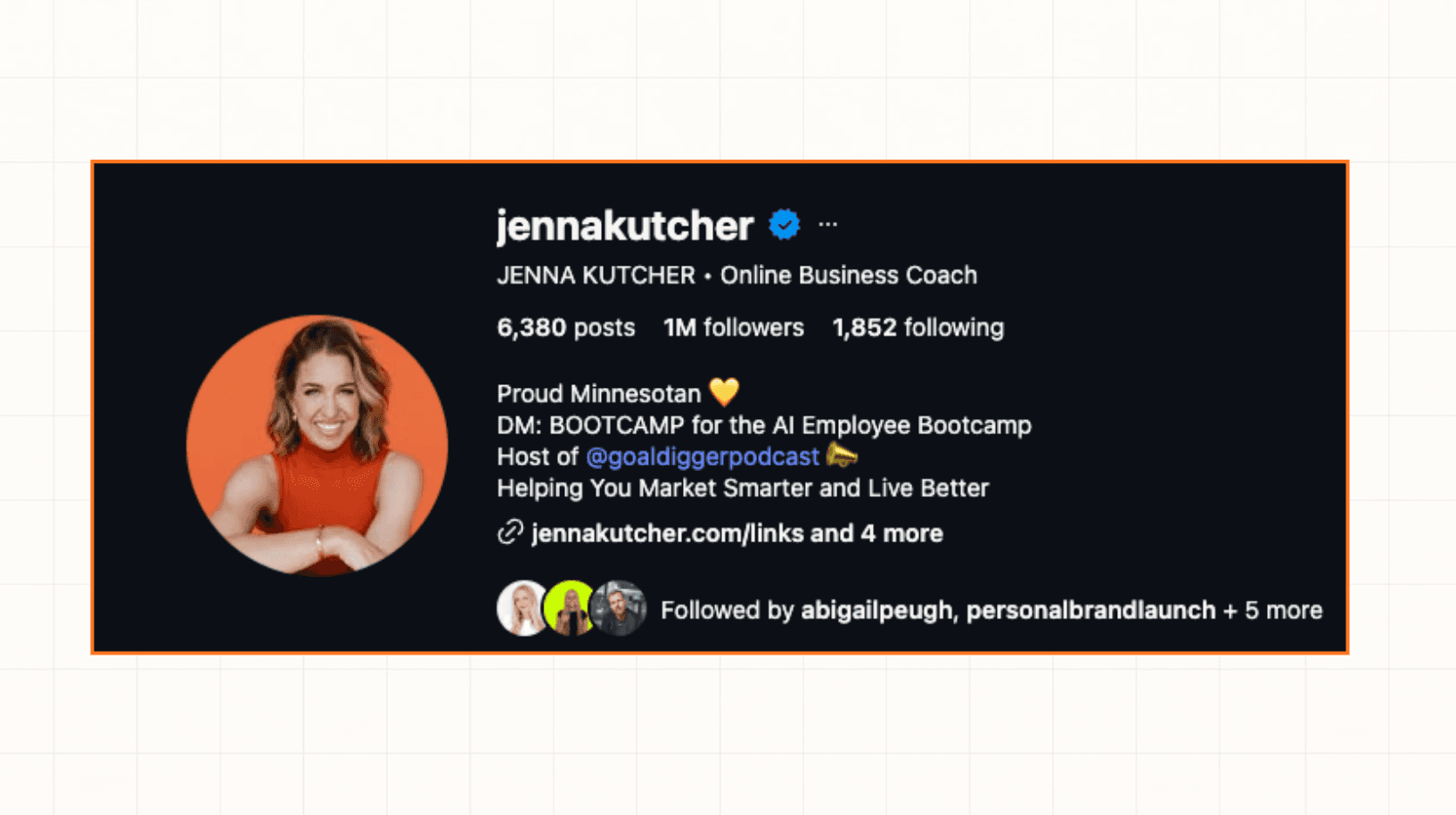
Path one: bio → DM → offer. The profile itself tells visitors what to do: DM BOOTCAMP for the AI Employee Bootcamp. This catches the person who is already browsing the account with intent. No need to hunt through a long link page or guess which post contains the right offer.
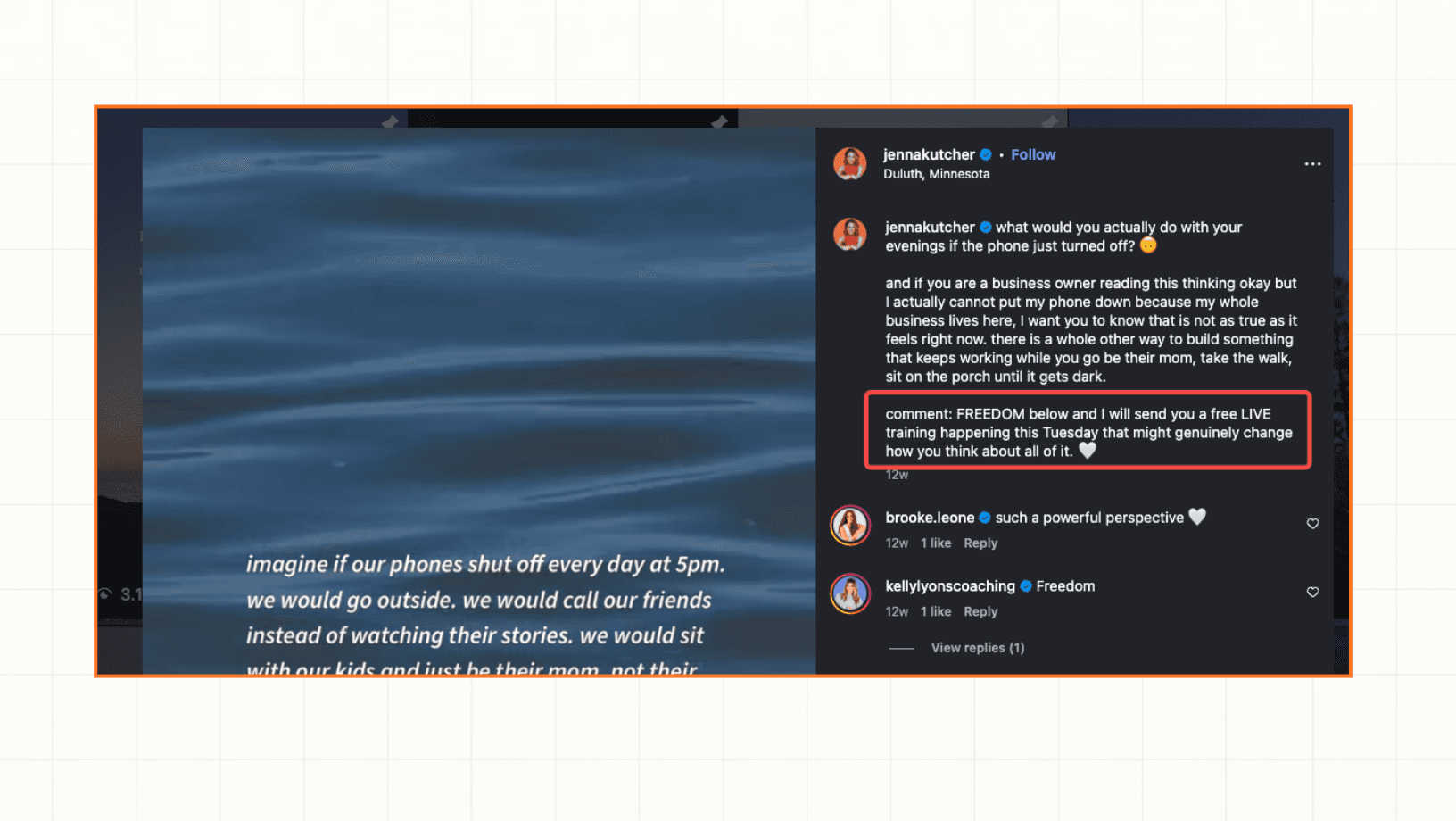
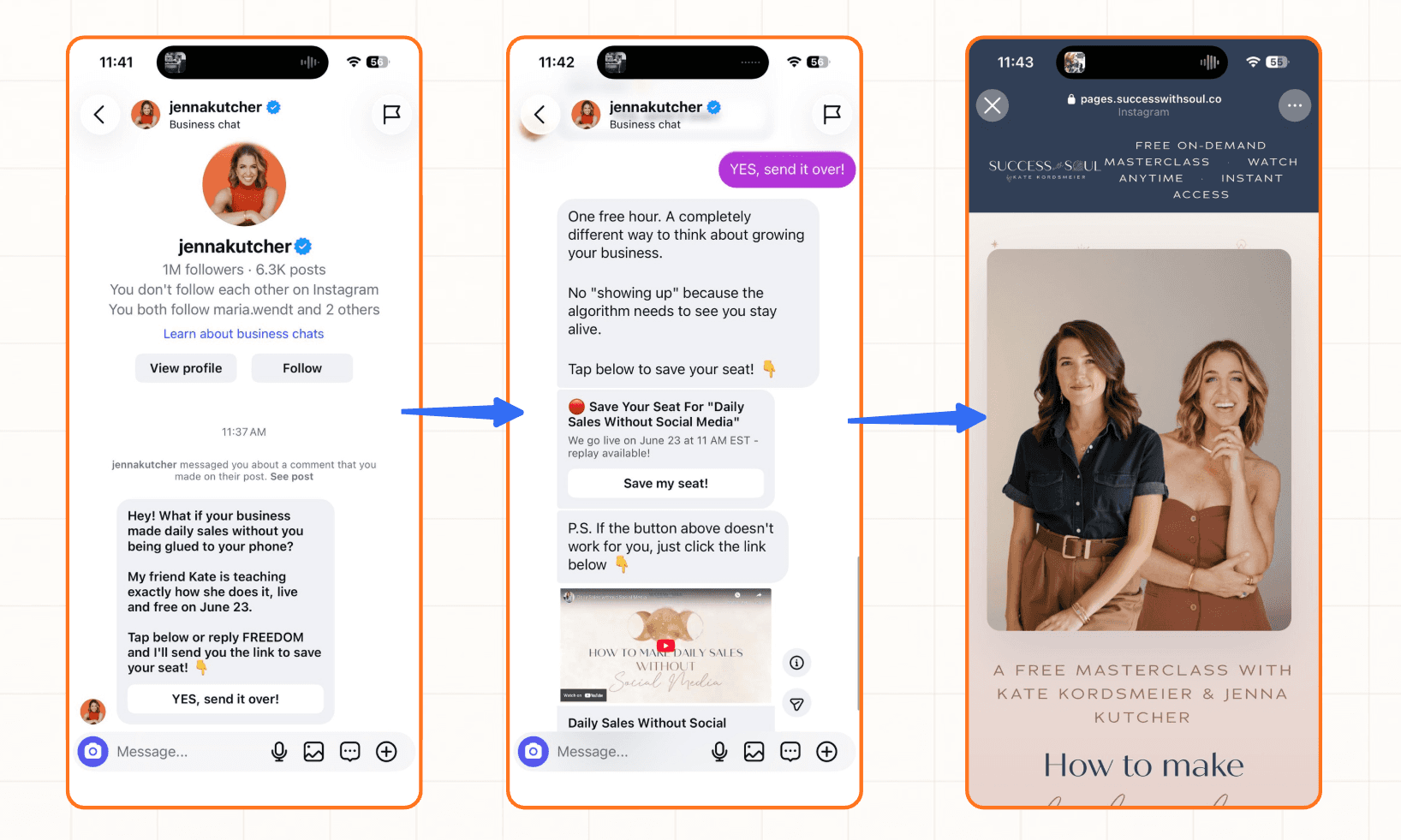
Path two: video → comment → DM. In video descriptions, Jenna can invite people to comment for a specific resource, training, or event. In the example we looked at, a comment triggered a private message about a “Daily Sales Without Social Media” masterclass. The DM asks the person to reply FREEDOM or tap a button, then shares the event details, a seat-saving button, and a fallback link.
That matters because the CTA matches the content someone just watched. They are not being dropped into a generic destination. They are being handed the next relevant thing while the topic is still fresh.
The public experience is clear: content creates the signal, a comment opens the DM, and the DM carries the person toward a more committed next step.
TRY IT WITH YOUR BUSINESS
Get the Playbook: how to turn content, comments, DMs, and follow-up into one connected customer journey — without making your account feel automated.
How this account turns content into a business chain
1. Content creates the first tiny yes
When we look at Jenna’s public brand, the content themes are pretty consistent: podcasting, email lists, content, Pinterest, and building a business around a real life. That consistency matters because it makes the account easy to understand.
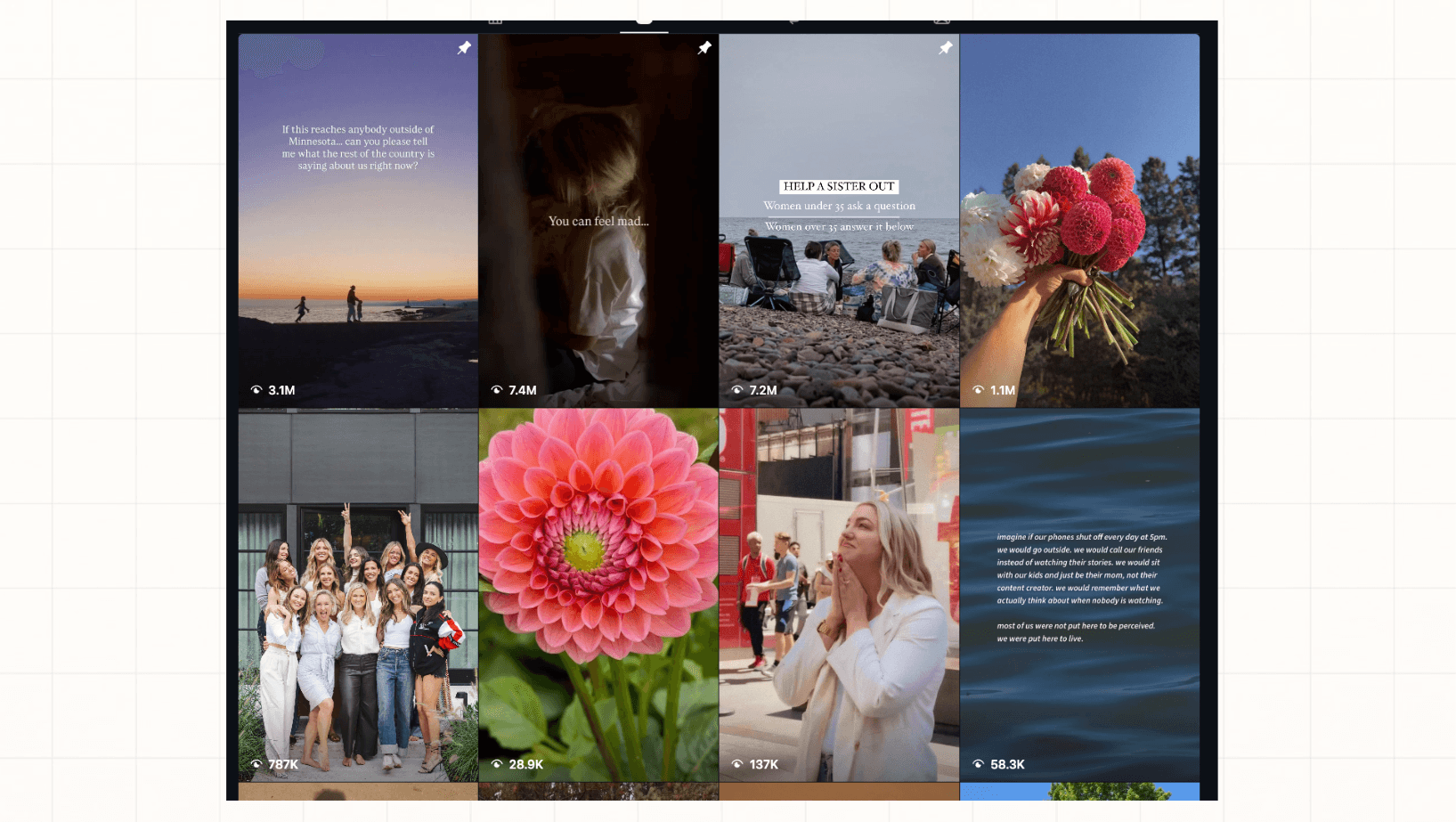
More importantly, those same themes show up in her offers.
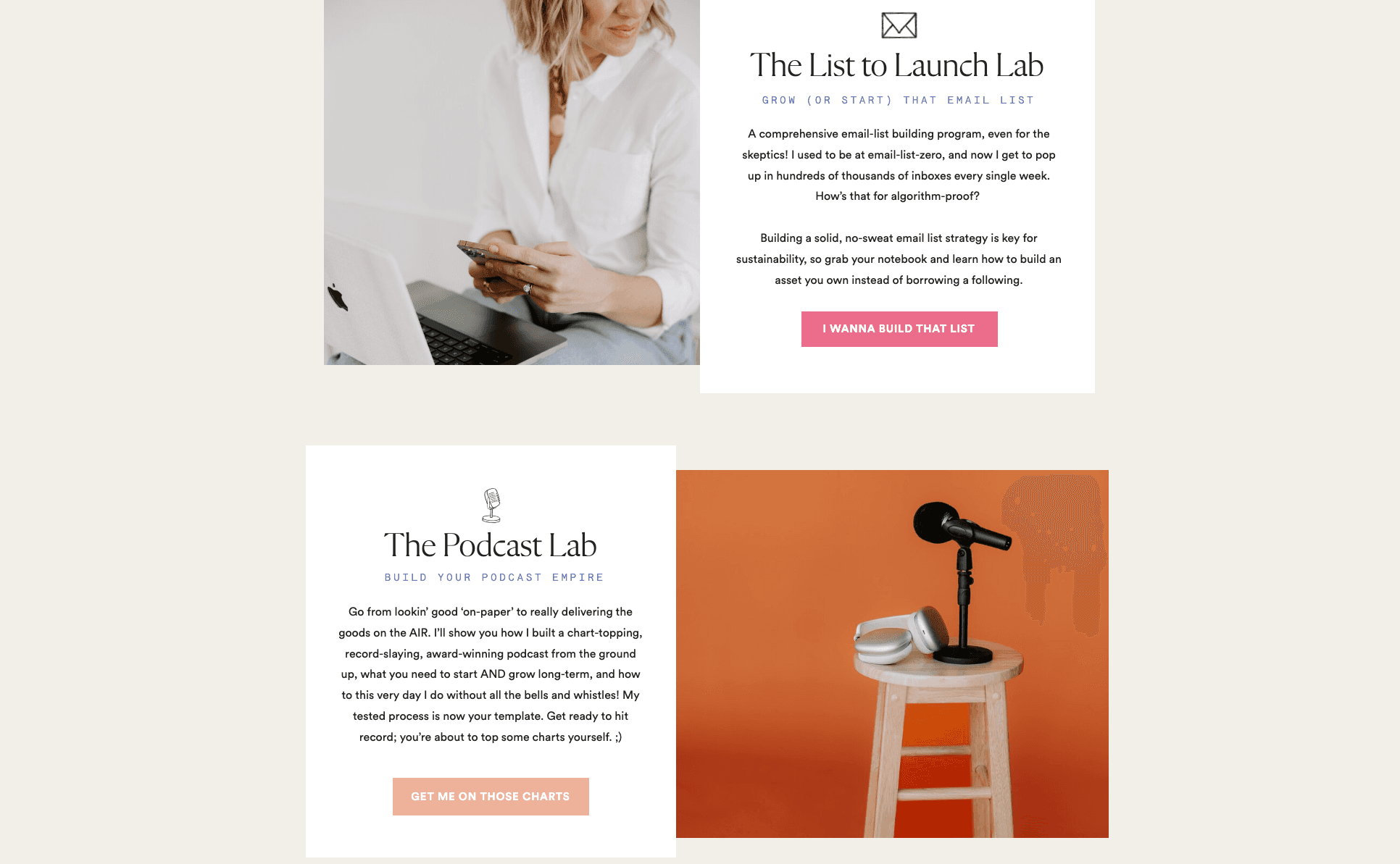
Content about list building can lead to a list-building mini-course. Content about podcasting can lead to a guide, training, or paid program. Nothing feels like a left turn.
This is the first lesson we would steal: make the CTA feel like the rest of the post.
Not “buy my course.” More like: “If this problem is yours, here is the next helpful thing.”
2. A free resource turns curiosity into a hand-raise
Jenna offers free guides, worksheets, and a 5-Day List Building Mini-Course. Her resource and course library makes the segmentation visible: different problems get different entry points.
That is a small but important distinction.
A generic “join my newsletter” form tells you almost nothing about a new subscriber. But someone who asks for a podcast guide has already told you what they are working on. Someone who joins a list-building mini-course has told you something else.
The freebie is not just there to collect an email address. It is the moment where a viewer says, “Yes, I want help with this.”
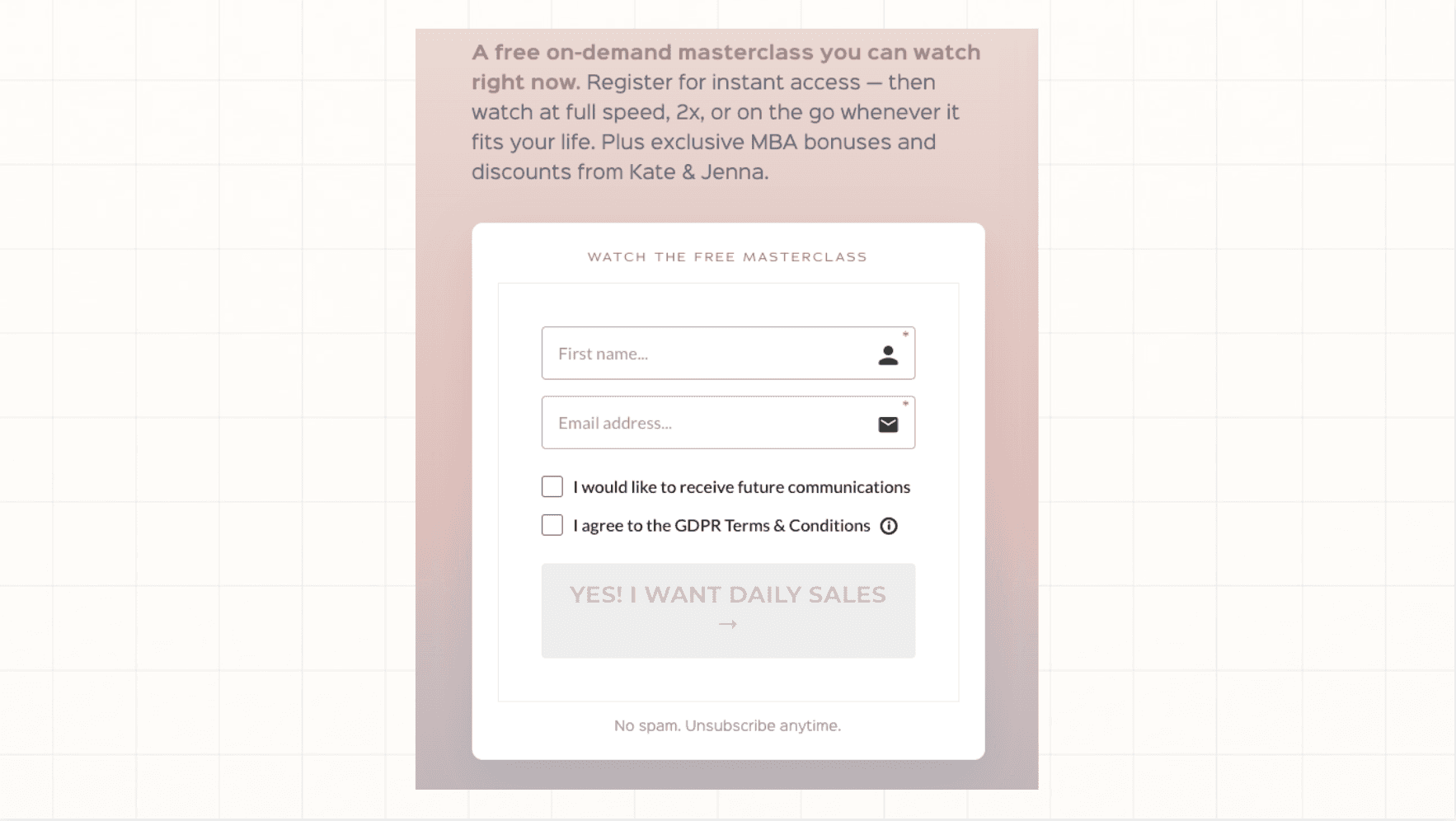
And once people tell you what they want, you can make the next conversation feel much less random.
3. Email and the podcast do the unglamorous work
Instagram is great at introducing you to new people. It is not great at guaranteeing you will see them again.
That is why the owned layers matter. Jenna regularly positions list building as a way to own a relationship rather than borrow one from an algorithm. Email gives her a direct route back to people who have already raised their hand.
Then there is the Goal Digger Podcast. Her site says it has more than 900 episodes and over 115 million downloads. Her podcast guide shows how the show sits next to free resources and training, rather than off in its own universe.
Short-form content makes people curious. Long-form content gives people more time with your thinking. That is where trust starts to compound.
You do not need a podcast to borrow this. A newsletter, YouTube channel, weekly live, or small community can do the same job. The point is to have somewhere your best people can spend more than 30 seconds with you.
4. The offers meet people at different levels of ready
When we looked at the public offers, we did not see a single huge “buy now” moment. We saw a ladder:
Free guides and mini-courses for someone just getting started
Templates and digital products for someone who wants a shortcut
Focused education programs for someone ready to go all in on a specific skill
This is what a creator business looks like when it is designed for real people. Not everyone arrives ready to spend hundreds of dollars. Some people need a quick win. Some need proof. Some just need to keep learning until the timing is right.
The important thing is that all of those offers live close to the content that brought people in.
What makes the account compound: the audience keeps talking back
Here is the neat part: when the path is clear, audience questions stop being “engagement” and start becoming research.
If people repeatedly ask for help starting a podcast, that tells you what content to make next. It tells you what free resource to create. It tells you what a new offer might need to solve.
So the loop looks something like this:
Content → interest → a specific resource → a deeper relationship → new questions → better content
That is why the setup compounds. It is not just pushing people toward an offer. It is using every hand-raise to understand what the next piece of content should do.
TRY IT WITH YOUR BUSINESS
Dealism helps you respond, qualify intent, share the right next step, and keep the conversation moving — automatically, but still in your voice.
Where this account’s growth path would get messy
Great content creates a very good problem: people respond.
Now imagine a Reel starts moving. Hundreds of people comment for a guide. Some ask which resource is right for them. Some ask about a course. Some are ready to buy. Some need a human answer because their situation is more specific.
That is where a smart creator system can suddenly become a full-time inbox job.
The worst version of this is not slow replies. It is a hot lead getting a generic link, or no reply at all, because the content worked better than the team expected.
What the DM handoff looks like — and where automation could help
Jenna’s public flow already shows the shape of a strong comment-to-DM journey:
Video topic → comment prompt → private message → reply or button → relevant event, resource, or offer
The message does not feel like a dead-end auto-reply. It gives context, repeats the promise, offers an easy action, and includes a backup link in case the button does not work. That is a small detail, but it is the kind of detail that keeps a hand-raise from turning into friction.
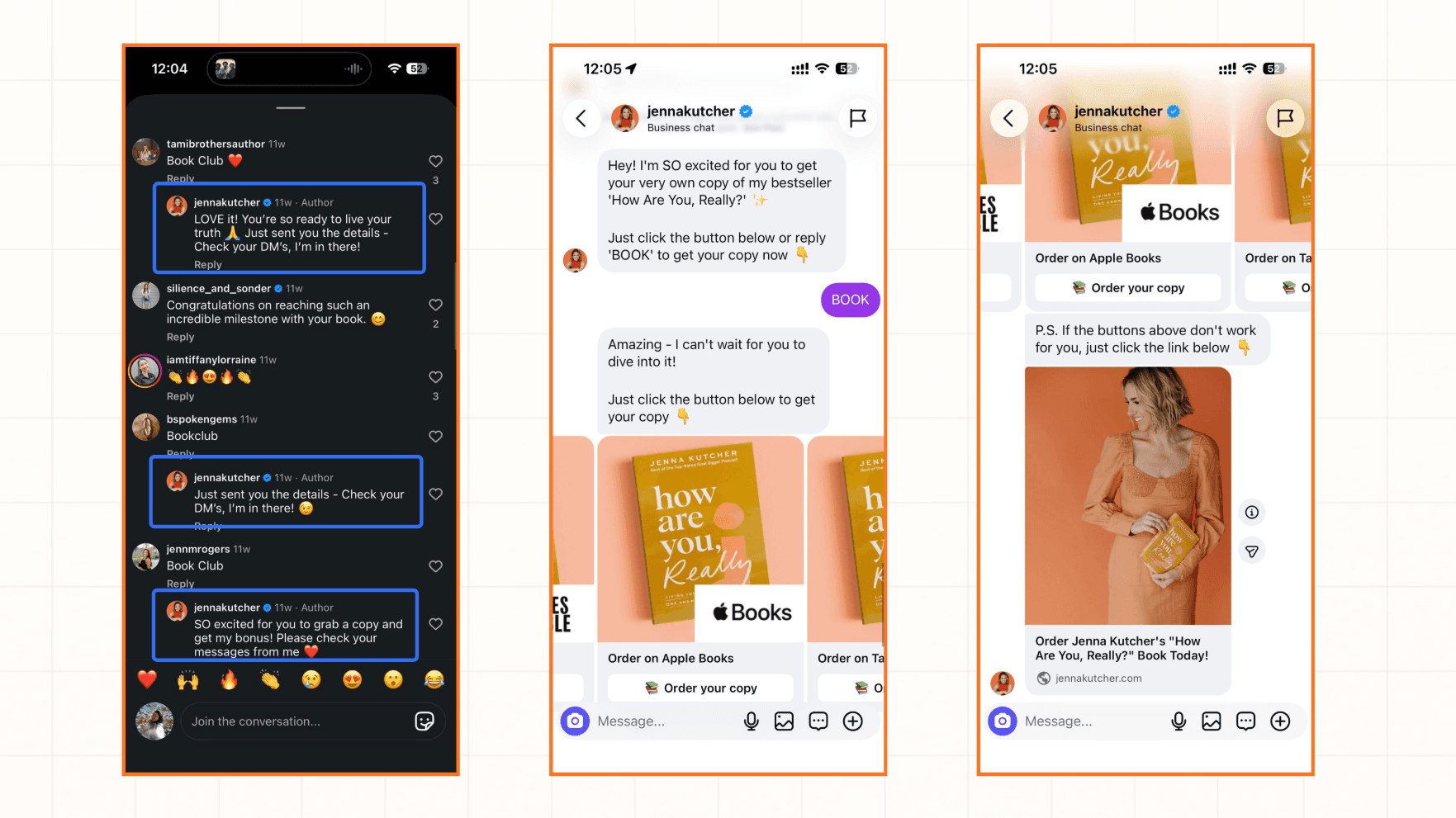
For a creator running a similar model, the next automation layer would be simple:
Deliver the promised resource or event link instantly after a comment.
Ask one short follow-up question to understand intent.
Route someone toward the most relevant guide, training, course, or human conversation.
Save that signal for better follow-up later.
With Dealism’s completely free Comment-to-DM feature, a creator could trigger that first private-message handoff from an Instagram comment. An AI sales agent could then handle the obvious questions and help people find the right next step.
What we would borrow tomorrow
Pick one next step per content theme. One Reel about one problem should lead to one relevant thing—not a pile of links.
Treat downloads as signals, not just leads. The resource someone wants tells you what conversation to have next.
Give your audience a place to go deeper. Email, a show, a community, or long-form video. Choose one and make it part of the rhythm.
Automate the handoff before the inbox becomes the bottleneck. If people are asking for the same thing, make getting it instant.
The takeaway
What we like about Jenna Kutcher’s public business is that it is not trying to be mysterious.
The content attracts people. The free resource catches the right kind of interest. Email and podcasting keep the relationship alive. The products are there when someone wants more help.
Every piece knows where it is sending people next.
That is the real lesson: more reach is nice. A connected path is what turns reach into a business.
Sources
ABOUT THE AUTHOR
Brenda Liang
Hi! I’m Brenda, a Content & Growth Researcher at Dealism✨ I’m here to unpack the creator moves behind the scroll—what gets comments, starts DMs, and turns attention into action. Let's explore!😉

THE EDITORIAL IDEA
Less software theatre. More attention to the exact point where a customer hesitates, asks, decides, or needs a person.
Every useful automation begins with a real conversation.
Build around the way your customers already talk.
Create your Agent →