/
Account analysis
We looked at what pulls people in, where the public links send them, and how relatable Reels, brand partnerships, Stories, and storefronts connect into one creator business.
Based on public-facing content, links, and partnership examples. This is an account analysis—not a claim about Kat Stickler’s private revenue, contracts, tracking, tools, or results.

Kat Stickler
Most creators get described as if they have one job: post, get views, add a link in bio, hope someone buys.
Kat Stickler’s public setup tells a more interesting story.
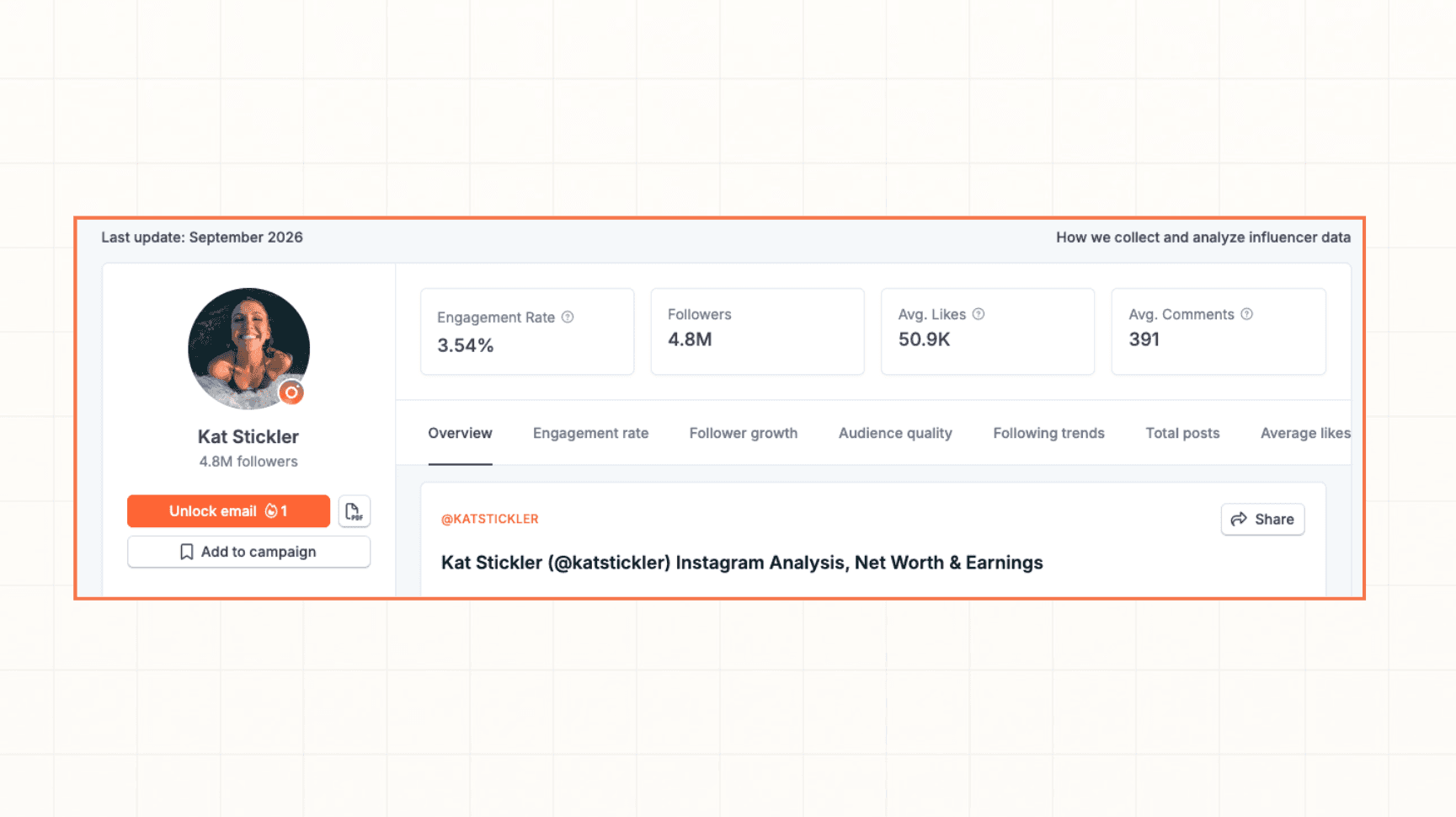
We looked through her content, public website, Linktree, listed partnerships, and store links. What stands out is not a course funnel or a clever Comment-to-DM play. It is a creator business built around an audience that already wants to hang out for the joke—and brands that can fit into that world without wrecking the vibe.
Instagram gets people into the conversation. Brand partnerships make that attention commercial. Stories and bio links give interested people somewhere simple to go next.
Here is our account breakdown: what Kat’s content is really selling, why brands can show up without feeling wildly out of place, and where the handoff could get smarter when attention turns into questions.
Account snapshot: this is not just a “funny creator” account
On the surface, Kat’s account is funny, chaotic, personal, and very easy to send to a friend. The content lives in those tiny everyday moments: parenting, dating, family, getting ready, doing too much, feeling too much, and saying the quiet part out loud.
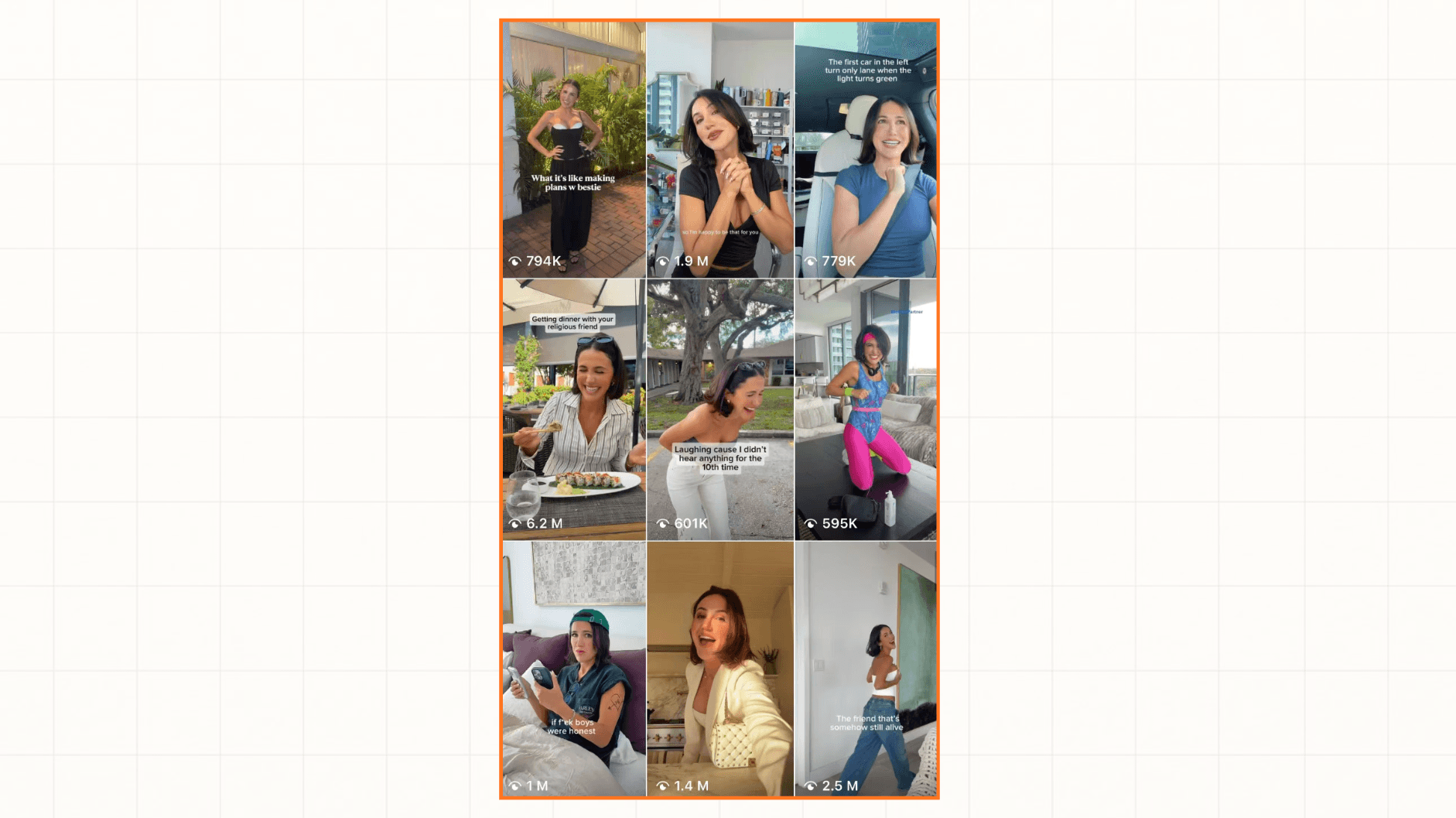
Underneath, that consistency creates a useful commercial position. Kat is not showing up as a category expert who reviews one kind of product all day. She is a personality-led creator whose audience expects her take on real life. That gives brands in beauty, household, family, food and drink, retail, and lifestyle a believable way in.
Her public website lists partnerships with Stur, Olay, Babbel, Verizon, and Beekman 1802. A public Honest collaboration, for example, was framed as “Womanhood 101” and disclosed with #honestambassador and #ad. The product is present, but the content still starts with a familiar Kat-sized observation.
That is the job we are looking at here: not “make people watch an ad,” but “make the ad feel invited into the scroll.”
Content-to-CTA breakdown: there is more than one way out of the Reel
Kat does not appear to run the kind of public DM-first funnel we mapped in our Jenna Kutcher analysis. There is no reason to pretend otherwise.
What we can see is a link-first setup with multiple places for different kinds of interest to land.
Path one: Reel or sponsored post → Story link → brand destination.
A funny or relevant post can create the first moment of attention. A Story can do the practical work later: point someone to the product, retailer, or offer while the post still feels like content rather than a checkout button with a punchline attached.

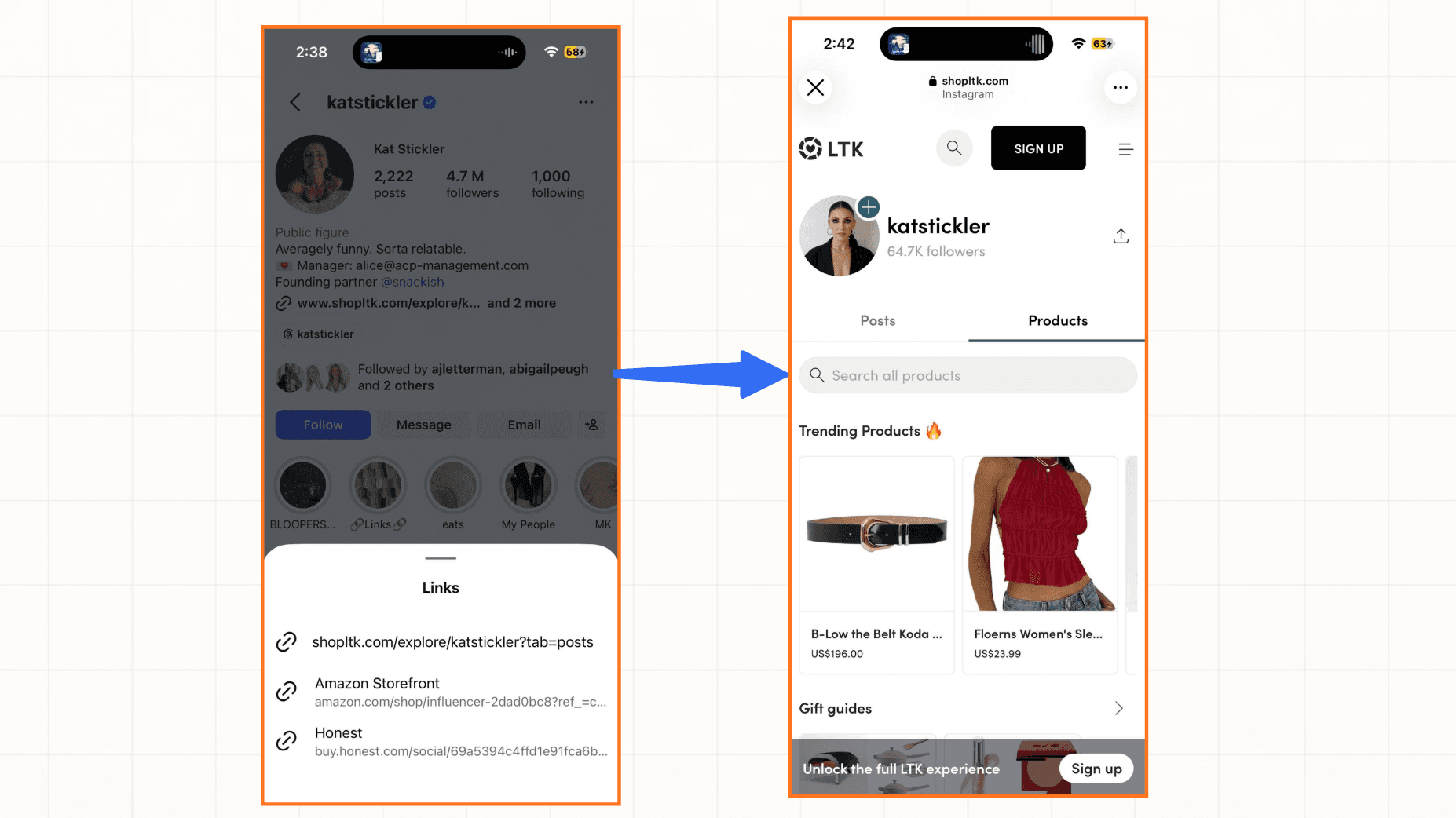
Path two: profile visit → Linktree → the right storefront.
Kat’s Linktree makes the public structure visible. It points to Stur, LTK, an Amazon Storefront, YouTube, and her own website. Someone looking for a specific product does not have to dig through old captions and hope they found the right thing.
That matters because these are different jobs. A Reel is good at earning the laugh. A Story is good at creating urgency. A bio link is good at catching the person who arrives three days later because a friend finally sent them the video.
TRY IT WITH YOUR BUSINESS
Creator content can make people curious fast. Dealism helps businesses answer the next question, recommend the right next step, and keep high-intent conversations moving after the click.
How this account turns relatability into a business chain
1. The content creates the first tiny “same”
Kat’s content does not need to explain the whole product up front. It only needs to make the viewer feel recognised.
That is a bigger advantage than it sounds. When an audience is used to seeing a creator’s real reactions, humour, and recurring life situations, a brand can enter through a context that already makes sense. A cleanser can live inside a messy-morning joke. A skincare product can sit inside a getting-ready moment. A drink can show up in the middle of an over-it day.
The first lesson we would steal is simple: start with the situation, not the product.
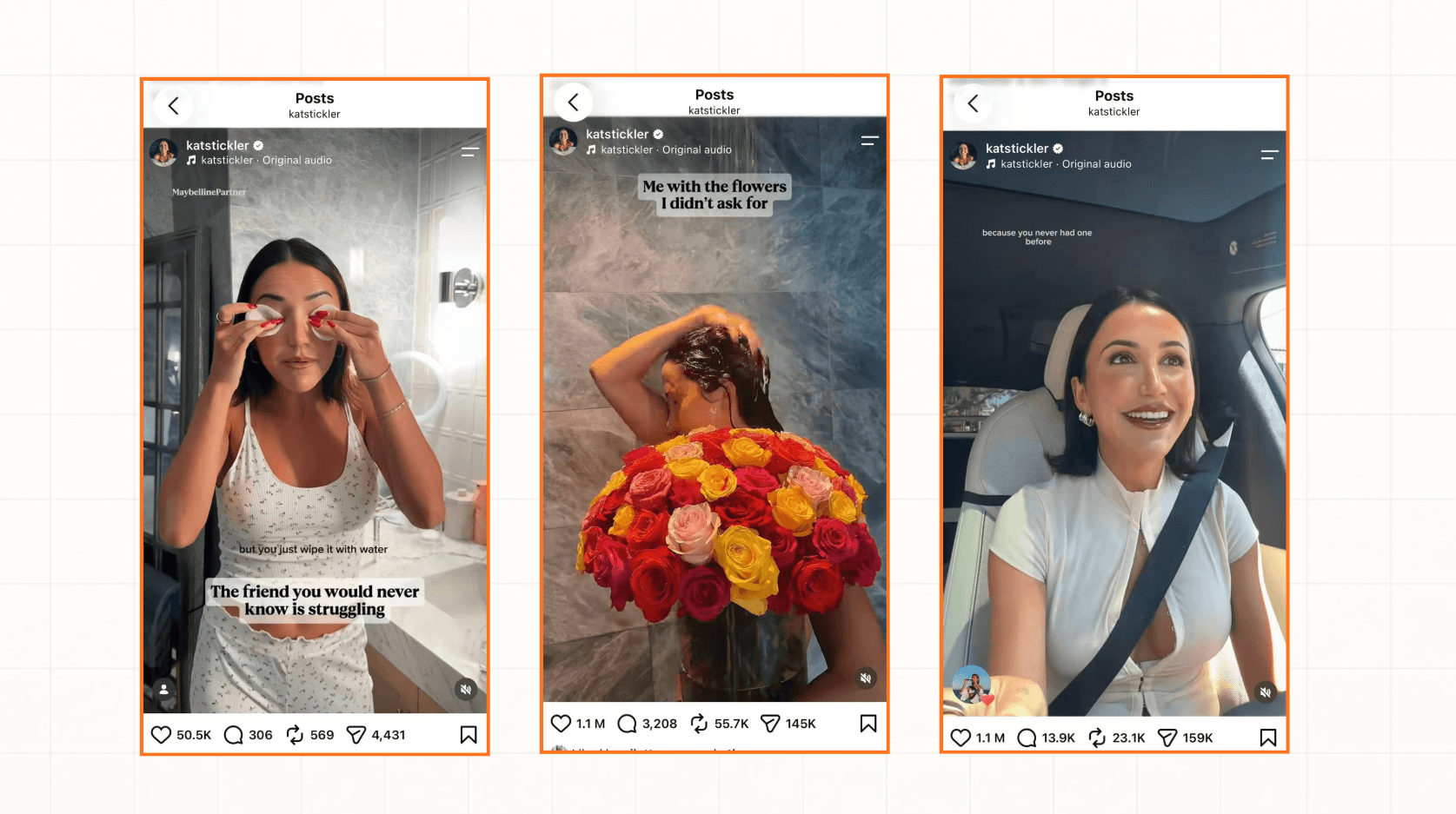
Not “here is why you need this.” More like: “You know this thing that happens? Here is the thing that made it a little better.”
2. The partnership works because it keeps Kat sounding like Kat
We do not think the magic is that every brand is a perfect match on paper. The better test is whether the product can play a real role in the world the audience already knows.
Kat’s public partnership list runs across several categories. That only works because the creative thread is not “Kat is the world’s leading authority on everything.” It is “Kat has a point of view on life, and this product makes sense inside this particular moment.”
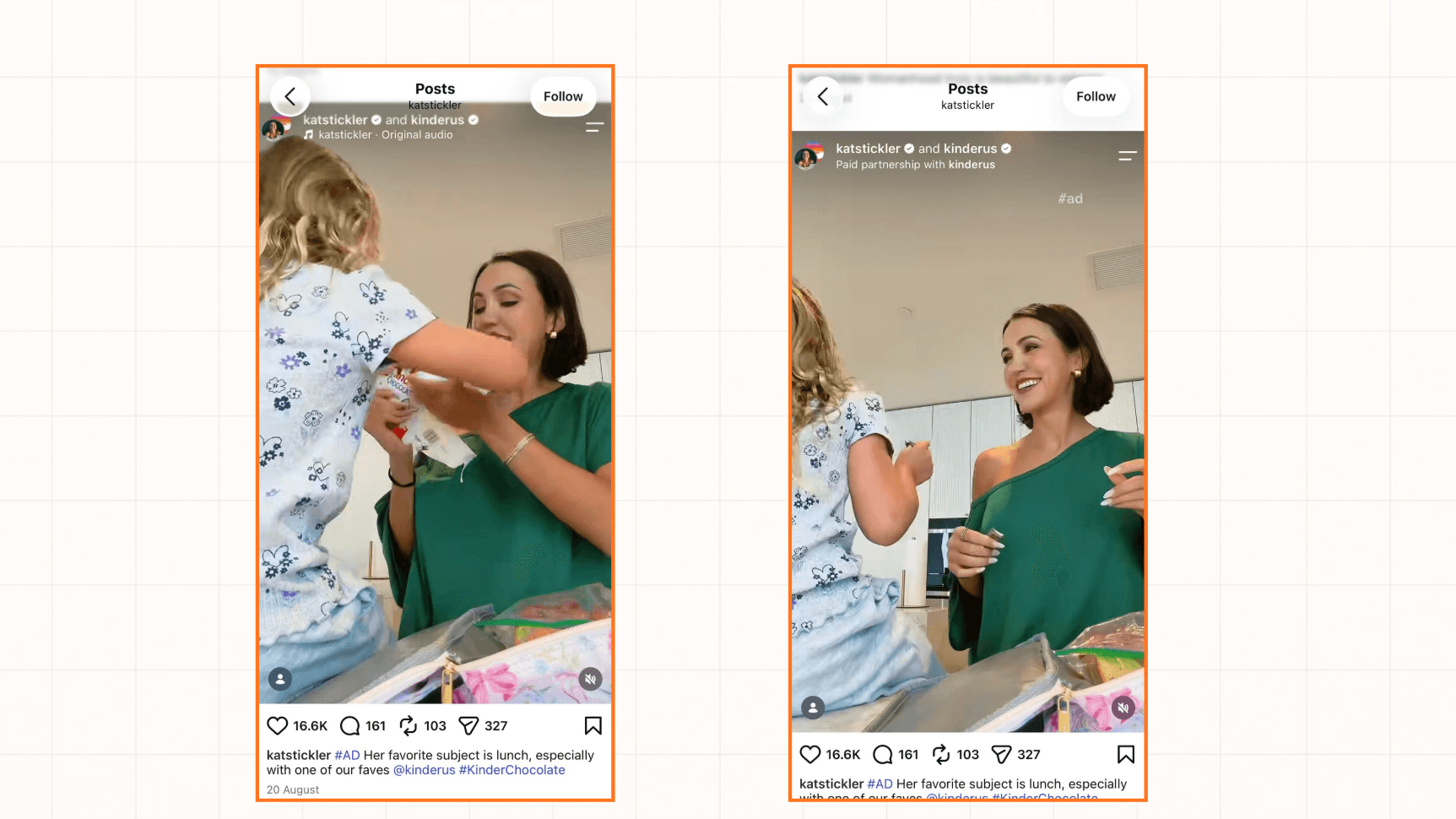
This is where a lot of creator work gets stiff. A brand tries to borrow the audience but loses the voice that built the audience in the first place.
The safer move is to give the creator the actual job to do, the important claims, the disclosure requirements, and the place people should go next—then leave room for the pacing, joke, and detail that make the post feel native.
3. The links do the unglamorous work
Reels get attention. Links do logistics.
Kat’s public Linktree has separate destinations for shopping, affiliate-style recommendations, owned content, and Stur. That is not an accident in the way we think about the system. It means one person can come looking for a recommendation, another can want to shop, and another can simply want more content—without every click being forced into one generic landing page.
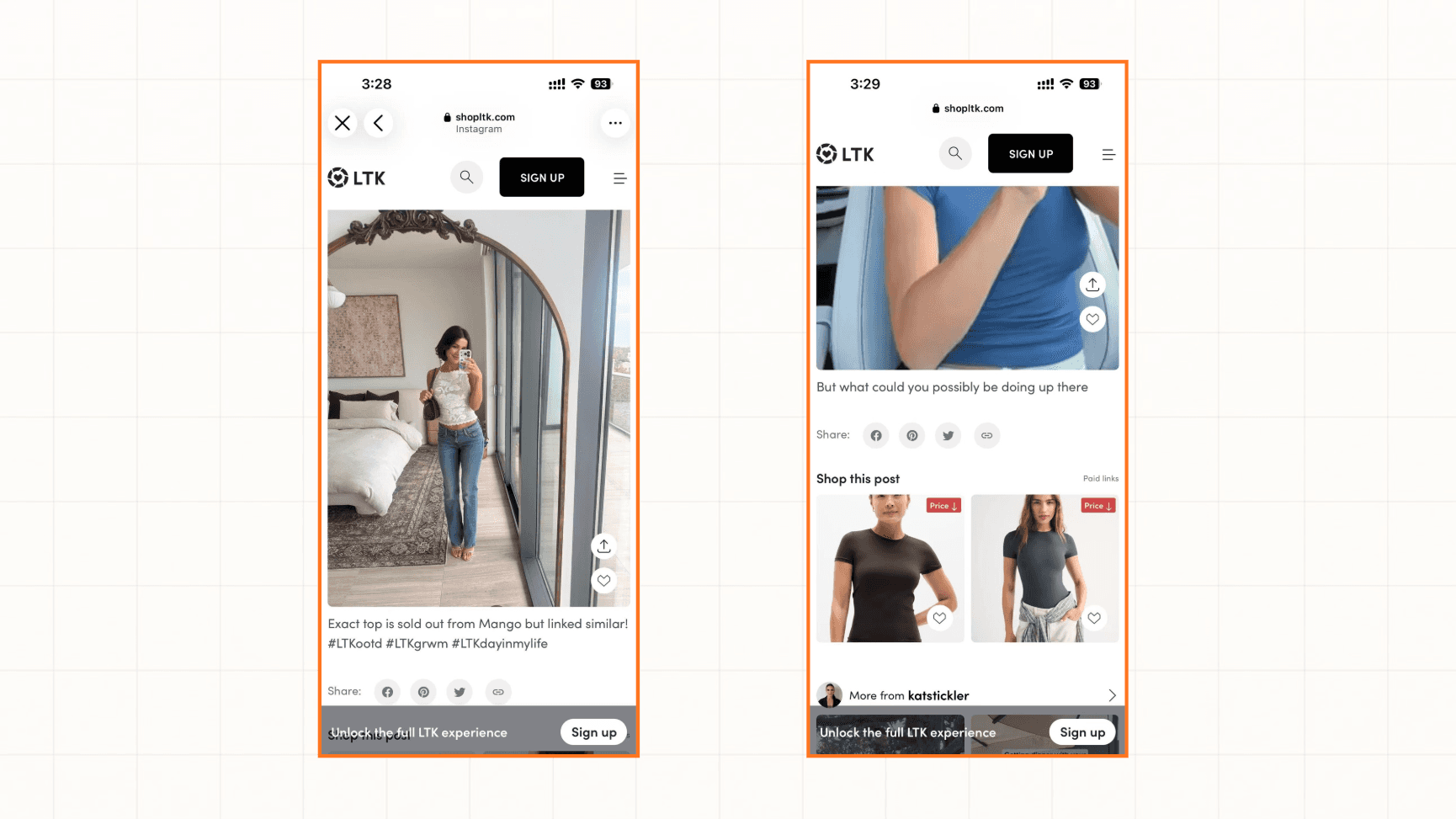
This is the part of the creator business that is easy to underestimate. A great sponsored post does not need to answer every product question. It needs a clean handoff to a page that can.
For brands, that means checking the boring things before the campaign goes live: does the link work, does the page load quickly, can a customer find the product, and is there a useful answer if they ask “which one is right for me?”
TRY IT WITH YOUR BUSINESS
Dealism helps you respond, qualify intent, share the right next step, and keep the conversation moving—automatically, but still in your voice.
Where the growth path would get messy
Great creator content creates a very good problem: people respond.
Some viewers are ready to click a link and buy. Some want to know whether the product works for their situation. Some ask about shade, size, delivery, ingredients, availability, or whether there is a better fit. And some need a real person because the question is not simple.
The worst version of that handoff is not a low engagement rate. It is someone showing up with intent and getting a dead link, a slow reply, or a generic message that tells them to “check the website.”
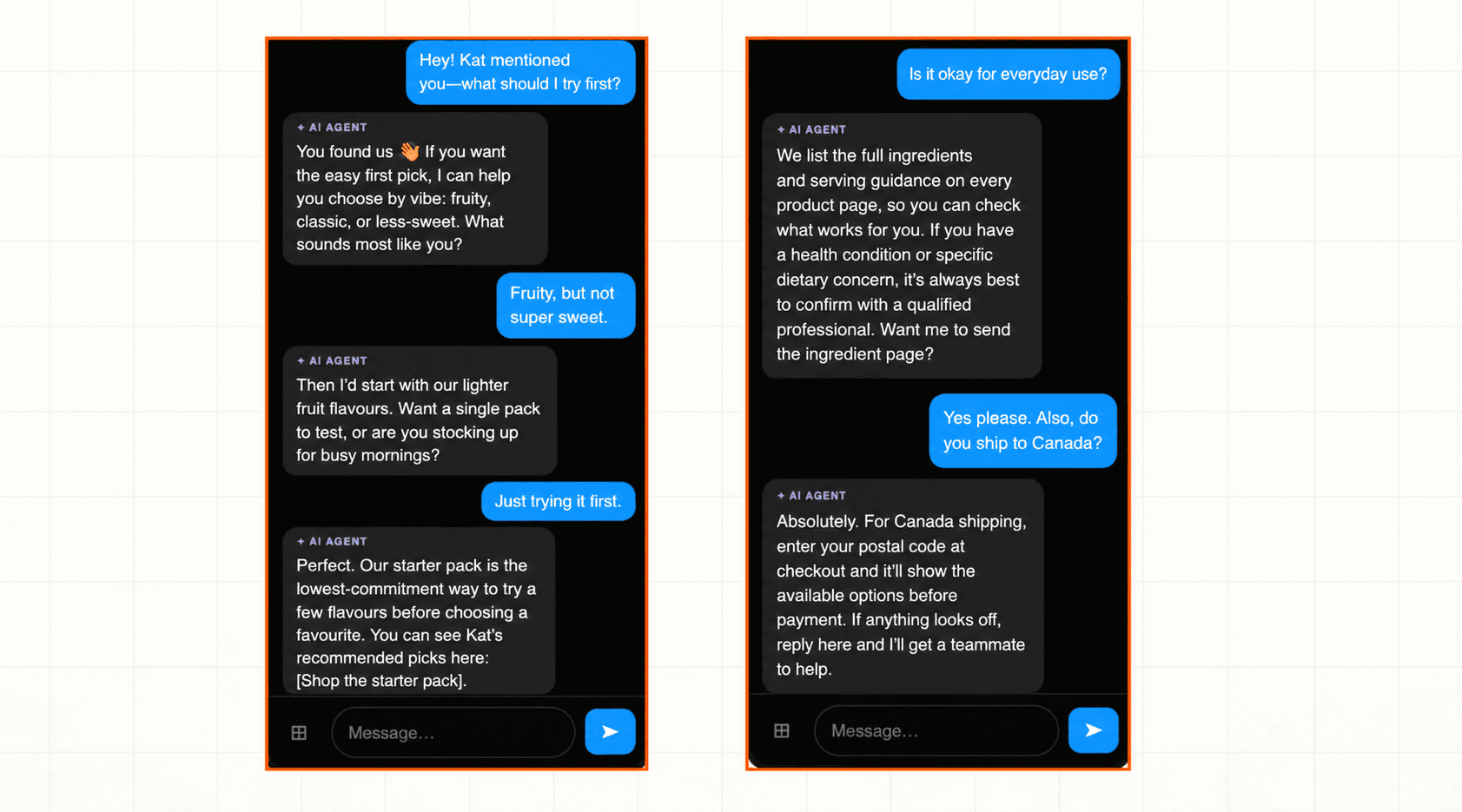
Kat herself may not need a DM-first conversion model. But the brands she works with may absolutely need a better way to catch the questions that arrive after a creator makes the audience care.
That is where the next layer could live: not inside the creative, but after it. A brand could use an AI sales agent to answer the obvious questions, recommend a product or next step, and hand a more specific buyer to a person—without asking the creator to turn every Reel into customer service.
What we would borrow tomorrow
Make the product part of the moment. The audience should understand why the brand is there before the caption explains it.
Let the creator keep the native rhythm. A polished mini-commercial can work, but it should not sound like it wandered into someone else’s feed.
Use one clear destination. A Story link, a creator-specific landing page, or a focused bio link beats a scavenger hunt.
Prepare for the questions after the click. The campaign is not finished when someone reaches the site. That is when the customer journey gets real.
The takeaway
What we like about Kat Stickler’s public business is that it does not need to make every post look like a funnel.
The content earns attention by being recognisable. The partnerships work when they fit that content. Stories and bio links make the next action simple. And the brand—not the creator—can own the job of turning interest into a helpful buying experience.
That is the real lesson: reach is nice. A natural handoff is what makes creator attention useful.
The best creator partnerships do not interrupt the scroll. They earn a place in it.
Sources
ABOUT THE AUTHOR
Brenda Liang
Hi! I’m Brenda, a Content & Growth Researcher at Dealism✨ I’m here to unpack the creator moves behind the scroll—what gets comments, starts DMs, and turns attention into action. Let's explore!😉

THE EDITORIAL IDEA
Less software theatre. More attention to the exact point where a customer hesitates, asks, decides, or needs a person.
Every useful automation begins with a real conversation.
Build around the way your customers already talk.
Create your Agent →