
Fast response matters more than many businesses realize. A good automated reply does more than save time. It shows customers the business is active, reliable, and ready to help. Today, reply speed is part of the customer experience across websites, Instagram, WhatsApp, and SMS. When responses are too slow, leads often lose interest and move on. That is why more businesses use auto reply tools and an automatic customer reply system to handle first contact, reduce repetitive work, and keep more conversations moving.
What Are Automated Replies for Businesses?
An automated reply is a message sent automatically when a customer takes an action or sends an inquiry. This could happen through WhatsApp, SMS, website forms, or live chat. Its main purpose is to respond instantly so the customer knows the business has received the message.
The simplest version is a basic acknowledgment, but stronger systems do more than confirm receipt. A better automatic customer reply can ask a follow-up question, share useful information, guide someone to booking, or route the conversation to the right person.
Why Automated Replies Matter for Modern Businesses
Many businesses still treat response time as a support issue. In reality, it is also a sales issue. When someone reaches out, they are often in the middle of making a decision. They may be comparing options, checking availability, or deciding whether your business feels trustworthy. A slow reply adds friction. A useful reply reduces it.
Faster Response Without Adding More Manual Work
An automated reply helps businesses respond right away, even when the team is busy, offline, or outside business hours. This reduces wait time and gives customers immediate confirmation that their message has been received.
A More Consistent Customer Experience
Without automation, response quality often depends on who is available at the moment. Automated replies create a more consistent first interaction by making sure every inquiry gets a clear and timely response.
Less Repetitive Work for Teams
Many incoming questions are repetitive. Customers often ask about pricing, hours, availability, delivery, or booking. Automation helps handle these common inquiries more efficiently, so staff can focus on conversations that need more attention.
Better Lead Capture at the Start of the Conversation
A strong first message does more than say hello. It can ask useful follow-up questions, collect customer intent, and keep the conversation moving. This helps businesses capture more leads before interest fades.
A Clearer Path to Action
Good automation is not just about acknowledgment. It helps customers take the next step, whether that means booking an appointment, requesting more details, choosing a service, or reaching the right team faster.
That is why more businesses want to automate replies across channels instead of relying on one generic auto-response that does little beyond confirming receipt.
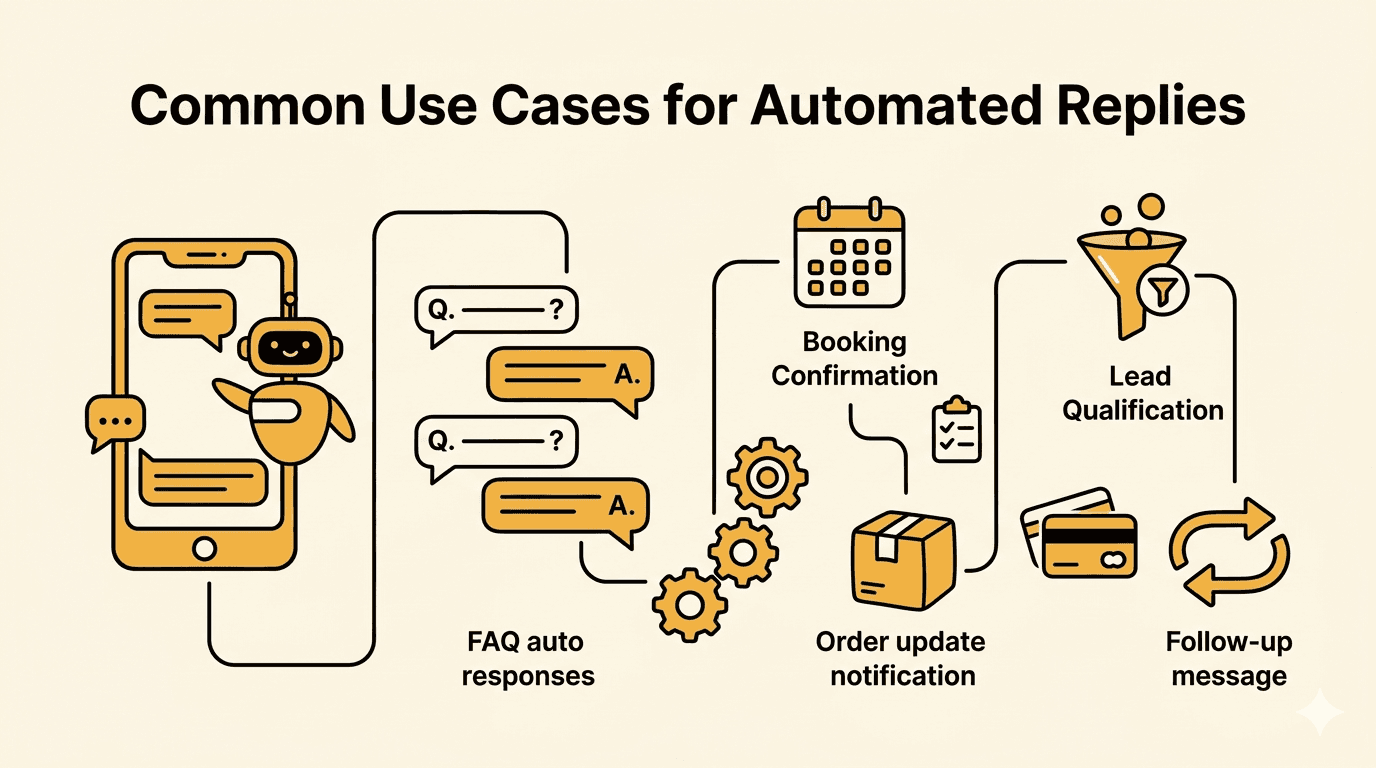
Common Use Cases for Automated Replies
After-Hours and Out-of-Office Coverage
This is the most common starting point. When someone reaches out outside business hours, the main goal is to reduce uncertainty. A short reply reassures the customer that the message was received and tells them what to expect next.
A useful after-hours message usually includes:
when the team will reply
where to find urgent information
what the customer can do in the meantime
This is also a strong use case for an automated sms reply, especially for local businesses, clinics, and service teams that receive time-sensitive inquiries.
Lead Capture and First Response
Automation is more useful when it does more than say hello. A stronger first reply can ask simple questions about the customer’s needs, such as service interest, location, or whether they want pricing or booking information. This helps capture better leads and gives the business more context before a human steps in.
Customer Support and FAQ Handling
Many incoming messages are repetitive. Customers often ask about pricing, opening hours, availability, shipping, or service details. An automated reply can handle these common questions faster, which reduces repetitive work and lets staff focus on conversations that need more attention.
Booking, Scheduling, and Routing
Some conversations do not need a long back-and-forth. They just need a clear next step. Automation can send a booking link, share availability, or direct the customer to the right team. This is also where an automated sms reply can be especially useful for businesses that depend on simple scheduling or fast inquiry handling.
How Automated Replies Work Step by Step
Step 1: Capture the Incoming Message
The system first detects an incoming action. That may be a website message, a text reply, an Instagram DM, or a WhatsApp inquiry.
Step 2: Send an Immediate First Response
A fast first message matters because it reduces drop-off. Even a short confirmation can lower customer uncertainty.
Step 3: Ask a Useful Follow-Up
This is where better automation stands out. Instead of sending only one static line, the system can ask a question that helps qualify the lead or guide the next step.
This is also why businesses try to automate replies with intent in mind. The goal is not only speed. The goal is direction.
Step 4: Route, Qualify, or Continue the Flow
Once the customer replies, the workflow can continue. The conversation may go to a sales rep, support rep, booking system, or another automated step.
Step 5: Review Performance
Strong teams do not just set up automation once and forget it. They review what works, where leads drop off, and which messages get better outcomes.
How Dealism Helps Businesses Turn Replies Into Real Conversations
A basic automated reply can confirm that a message was received. But for many businesses, the harder part starts after that. Time is lost when teams keep repeating the same explanations, switching between channels, or letting promising leads go cold after the first response.Dealism is more useful here because it works as a Vibe Selling Agent, helping businesses handle chat as an ongoing workflow shaped by context, clarification, and next-step action, not just a one-time reply.
Make Replies More Useful With Context and Knowledge
Many inquiries are repetitive, but they still need the right answer in the right context. Dealism can work from uploaded FAQs, service details, product information, past conversations, and self learning capabilities, so replies do not start from zero every time and can improve over time through real interactions.
That helps reduce time spent on:
repeating service explanations
re-asking for customer needs
manually checking documents or pricing info
answering the same pre-sale questions across channels
The result is not just faster response, but less wasted effort and a smoother lead experience.
Knowledge Base learn.mp4
Turn Website Traffic Into Real Conversations With Live Chat
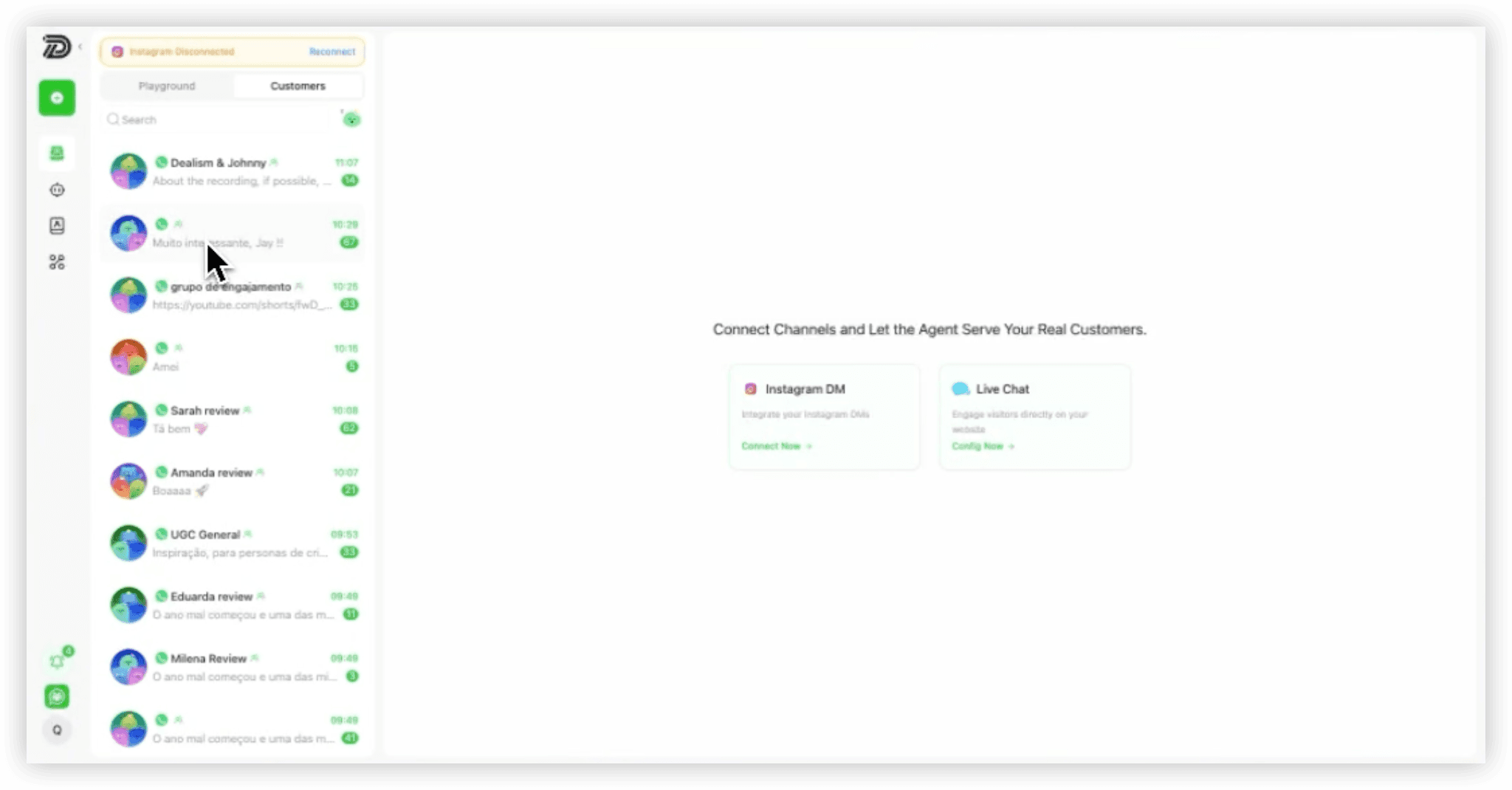
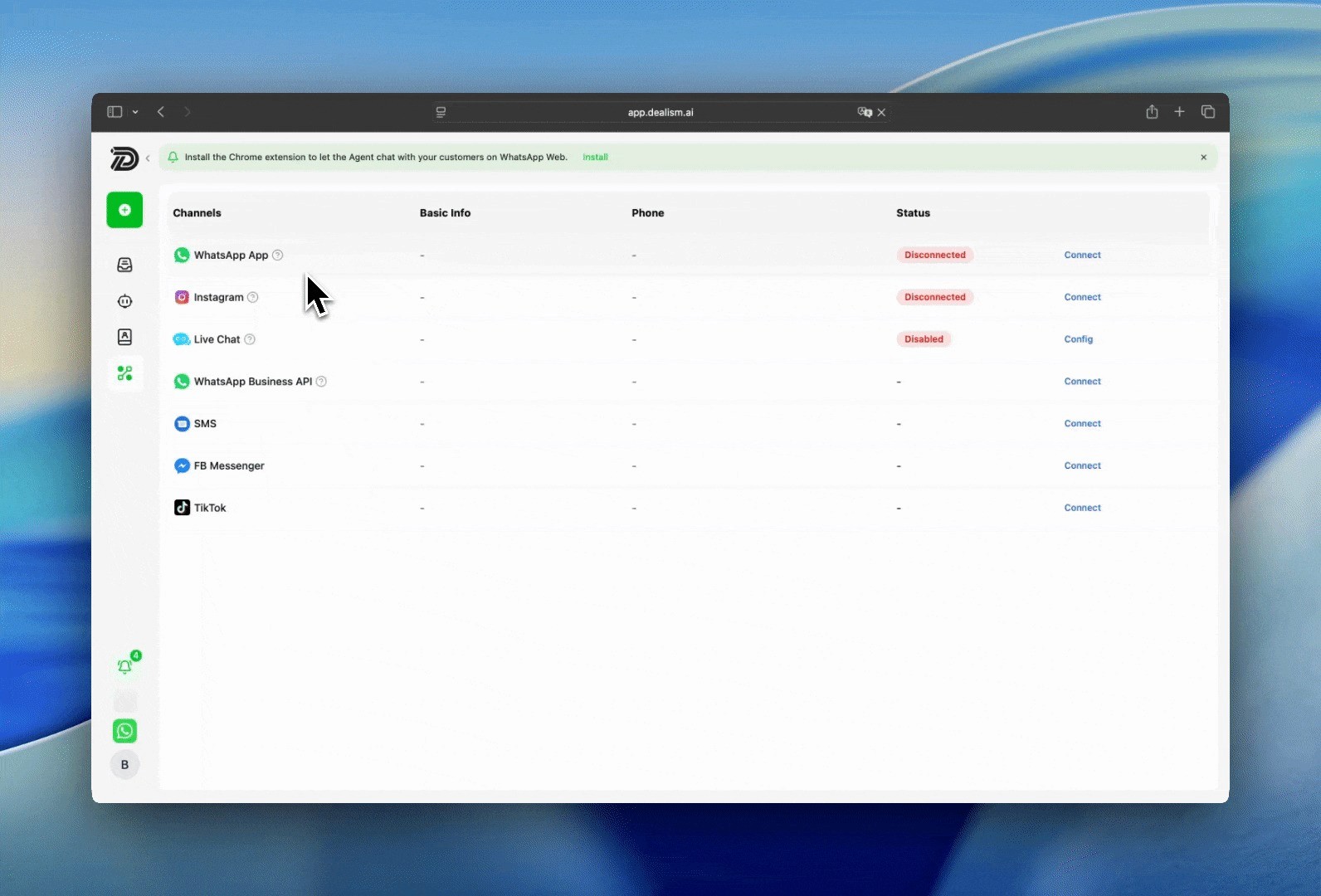
This is also where Dealism Live Chat adds value. It is not a traditional on-site chat box where the whole conversation stays trapped on the website. Instead, it acts more like a website-to-chat entry point, guiding visitors into connected WhatsApp or Instagram conversations.
That matters because once the visitor enters a native messaging channel, the business can:
continue the conversation more naturally
avoid losing leads in a separate website inbox
let the Agent handle follow-up, qualification, or booking
manage WhatsApp, Instagram, and web-originated inquiries in one flow
For service businesses, this is often much more practical than a simple contact widget.
Keep the Conversation Moving, Not Just Answered
A fast reply is useful, but captured leads still need direction. Dealism helps extend the conversation beyond the first message through contextual replies, follow-up logic, and cross-channel continuity, and AI sales strategy that helps guide the next best action based on chat flow and lead signals. So instead of stopping at acknowledgment, the chat can move toward something more concrete: clarification, consultation, booking, or sales progress.
That is what makes it a better fit for businesses that sell and serve through chat. It does not just send an automated reply in whatsapp or web chat. It helps turn messy incoming messages into guided, usable business action.
Best Practices for Using Automated Replies Effectively
A strong automated reply system should do more than respond quickly. It should make the conversation feel clear, relevant, and easy to continue. The best results usually come from simple wording, thoughtful flow design, and the right balance between automation and human support.
Keep the Message Clear and Human
Good automation should sound natural, not mechanical. Customers should feel like they are getting a helpful first response, not reading a system notice. In most cases, shorter messages work better because they are easier to scan and easier to answer. A strong reply confirms the message was received, sets expectations, and gives the customer a simple next step without sounding cold or overly formal.
Start the Conversation, Not Just the Response
A weak reply only acknowledges the message. A stronger one helps move the interaction forward. Instead of ending with “We will get back to you soon,” it should make the next action obvious. That could mean asking what service the customer needs, offering pricing or availability, or guiding them toward booking. When businesses automate replies well, the first message creates momentum instead of stopping the conversation too early.
Match the Channel to the Use Case
Different channels need different reply styles. An automated sms reply usually works best when it is short, direct, and easy to act on. Web chat can support slightly more guidance, such as service selection or simple qualification. WhatsApp often feels more conversational, so replies there can be a little more natural and flexible. The goal is not to copy the same message everywhere, but to match the tone and structure to the way people actually use each channel.
Use Automation Where It Adds the Most Value
Automation works best when it handles repetitive questions, basic qualification, first response, and simple routing. These are the areas where speed and consistency make the biggest difference. It is less effective when a conversation needs trust-building, detailed explanation, or careful judgment. Businesses get better results when automation supports the process instead of trying to replace every interaction.
Know When a Human Should Step In
Not every conversation should stay automated from start to finish. When a customer is frustrated, unsure, discussing a sensitive issue, or close to making an important decision, human support becomes much more valuable. At that point, the goal is not just speed. It is judgment, trust, and the right tone. A strong workflow should recognize that shift and make human takeover feel smooth.
For businesses that need both efficiency and control, Dealism supports this through two modes. Copilot mode keeps a human involved by letting AI suggest replies for review, which works better for nuanced or higher-value conversations. Autopilot mode is better suited to repetitive, low-risk inquiries that can be handled automatically at scale.
Review and Improve the Flow Over Time
Even a well-written automated reply should not stay unchanged forever. Customer behavior changes, common questions shift, and some messages will perform better than others. Businesses should review where conversations continue, where they stop, and which replies lead to stronger outcomes. The most effective systems improve over time, becoming not only faster, but also clearer and more useful.
Conclusion
Saving time is only part of the value. The bigger opportunity is using automation to create better first conversations. When done well, it helps customers feel heard faster, helps teams work smarter, and helps businesses capture more real demand instead of letting it disappear.
In the end, the goal is not to send more messages just because you can. The right automated reply strategy helps your business respond faster, guide the next step, and turn more chats, texts, and inquiries into leads, bookings, and sales.