Published

Chat Marketing for Small Business: How Messaging Conversations Turn Into Leads and Sales
For many small businesses, marketing used to mean ads, email campaigns, or social media posts. Today, however, a growing number of companies are discovering that the most powerful marketing channel isn’t a broadcast channel at all — it’s a conversation.
Chat marketing allows businesses to engage prospects through real-time messaging across channels like website chat, WhatsApp, and social messaging apps. Instead of waiting for customers to fill out forms or reply to emails, brands can start conversations instantly, guide visitors toward decisions, and convert interest into revenue.
As messaging becomes the preferred communication channel for consumers, chat marketing is rapidly becoming a critical strategy for small businesses that want to compete in digital markets.
Why Chat Marketing Is Growing So Fast
Chat marketing has grown rapidly in recent years as consumer communication habits shift toward instant messaging and real-time interaction.
According to research from HubSpot and Salesforce, customers increasingly prefer messaging businesses instead of using traditional communication channels such as email or phone calls. Studies show that
more than 66% of consumers expect companies to provide real-time communication options like live chat.
over 70% of customers say immediate responses strongly influence their purchasing decisions.
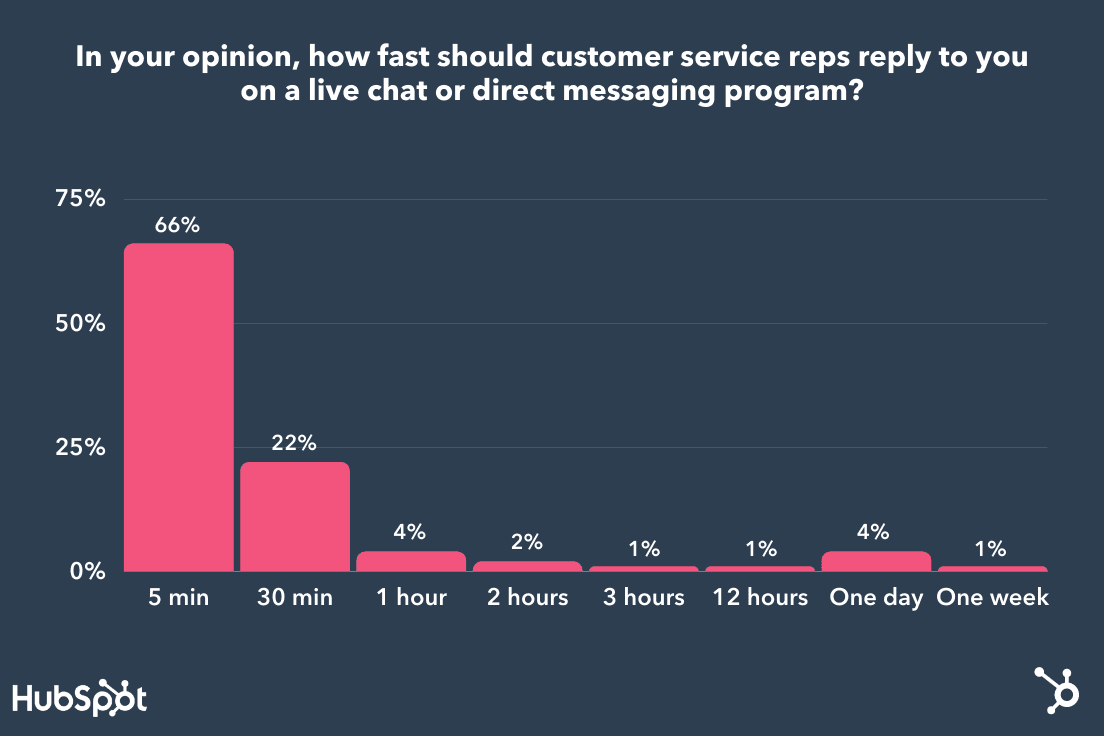
Source:
https://blog.hubspot.com/service/live-chat-consumer-behavior
https://www.bandt.com.au/study-consumers-demand-real-time-responses-brands/
Messaging also has a measurable impact on engagement and conversions. Businesses that implement live chat have reported conversion rate increases of up to 20%, while customers who interact with brands through chat are significantly more likely to complete a purchase compared to those who do not engage.
For small businesses, these trends create a powerful opportunity. Chat marketing allows companies to interact with potential customers at the exact moment they show interest, whether they are browsing a website, asking product questions, or comparing services.
Instead of waiting for users to submit forms or respond to marketing emails, businesses can initiate conversations immediately—turning website visitors and social media audiences into qualified leads in real time.
What Is Chat Marketing?
Chat marketing is a digital marketing strategy that uses real-time conversations through messaging channels to attract, engage, and convert potential customers.
Unlike traditional marketing methods that rely on one-way communication—such as advertisements, email newsletters, or static landing pages—chat marketing focuses on interactive, two-way communication. Customers can ask questions, receive personalized responses, and move toward a purchasing decision within a single conversation.
At its core, chat marketing combines three elements:
1. Real-Time Customer Conversations
Chat marketing allows businesses to communicate instantly with website visitors or messaging app users. This real-time interaction helps reduce friction in the customer journey, especially when buyers need quick answers before making decisions.
2. Conversational Lead Generation
Instead of asking users to fill out long forms, chat marketing collects information naturally through conversation. Businesses can ask simple questions such as:
What product are you interested in?
What problem are you trying to solve?
When do you need the service?
This conversational approach makes the process feel more natural while still capturing valuable lead information.
3. Automated Messaging and AI Assistance
Modern chat marketing systems often use automation or AI agents to handle large volumes of conversations. These systems can respond instantly, provide product information, qualify leads, and guide prospects toward the next step in the buying process.
Typical chat marketing channels include:
Website live chat widgets
Messaging apps such as WhatsApp
Social media direct messages
AI-powered conversational assistants
Because these conversations happen where customers already spend time—inside messaging apps and websites—chat marketing reduces barriers to engagement and encourages more interactions.
For small businesses in particular, chat marketing provides a way to scale personalized communication without dramatically increasing marketing costs or staff.
How Instant Messaging Marketing Drives Customer Engagement
Instant messaging marketing works because it aligns with how people already communicate.
Customers spend a large portion of their digital time inside messaging apps, and many prefer messaging brands rather than filling out forms or making phone calls.
Research shows that:
55% of consumers prefer messaging businesses instead of email or phone.
47% of consumers are more likely to buy from a brand they can message directly.
Source:
https://wifitalents.com/conversational-marketing-statistics/
Because messaging is immediate and interactive, it enables companies to guide prospects through the buying journey in real time.
For small businesses with limited marketing budgets, this type of direct engagement can be far more effective than traditional advertising.
Live Chat Service Lead Generation: Turning Visitors Into Customers
One of the most valuable aspects of chat marketing is its ability to generate leads directly from website traffic.
Many websites struggle with conversion rates because visitors leave without taking action. Live chat changes that dynamic by initiating conversations the moment someone shows interest.
Here’s why live chat service lead generation is so effective:
Real-Time Qualification
Chat systems can ask simple questions to determine whether a visitor is a good fit, automatically qualifying leads before they reach sales.
Immediate Answers
Customers often abandon purchases when they cannot quickly find information. Chat solves this problem by providing instant responses.
Guided Decision-Making
Through conversation, businesses can recommend products, book appointments, or provide quotes directly within the chat.
Because of this interaction, visitors who engage in chat are significantly more valuable. Studies show that website visitors who use live chat can be worth 4.5 times more than those who don’t interact.
Marketing Automation Platforms Comparison for Chat Marketing
As chat marketing grows, businesses increasingly rely on automation platforms to manage conversations at scale.
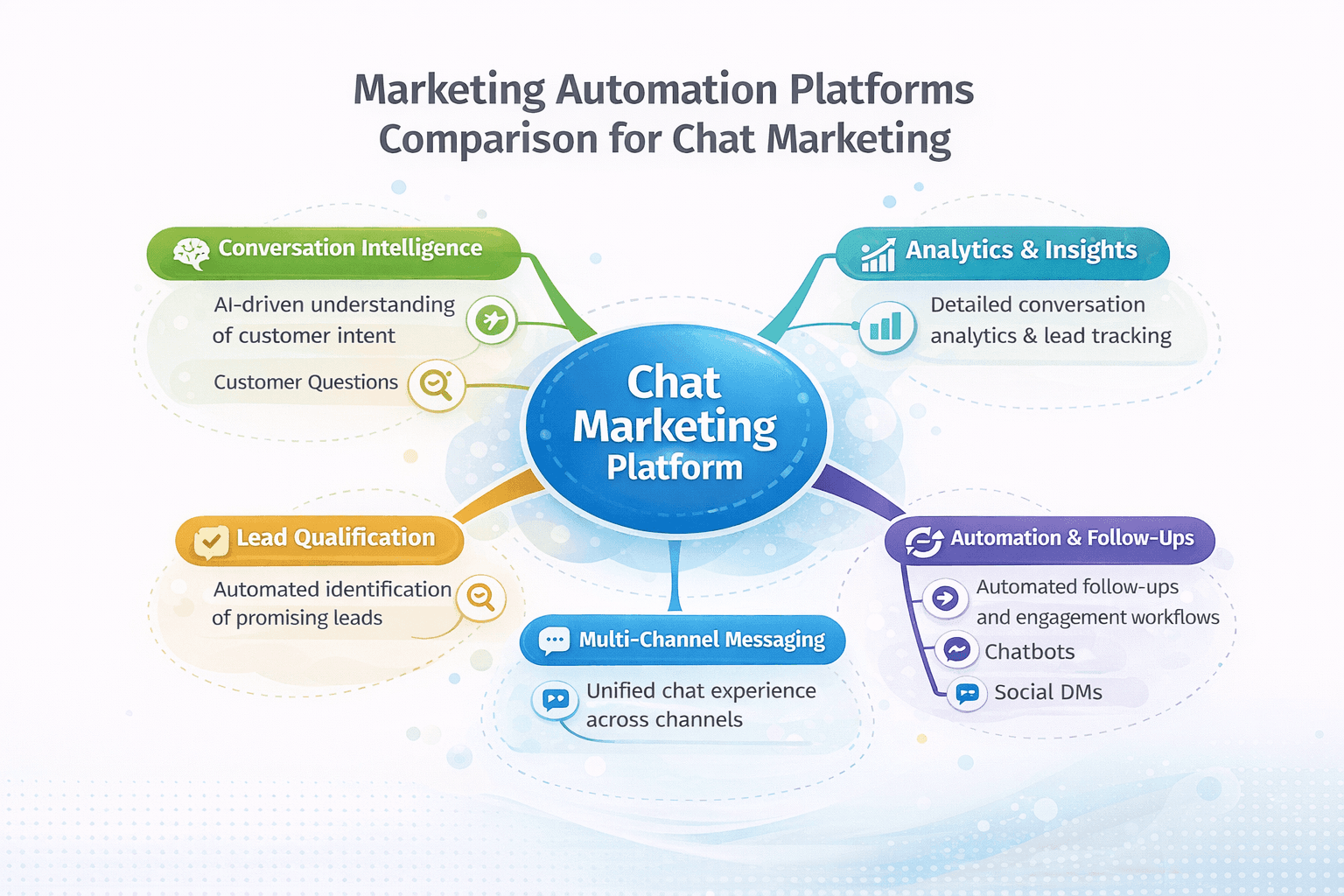
A typical marketing automation platforms comparison for chat marketing should consider several factors.
(alt text: chat marketing platform)
Conversation Intelligence
Modern platforms use AI to understand customer intent and respond naturally instead of relying on rigid scripts.
Lead Qualification
Advanced systems can automatically identify high-intent prospects and route them to sales teams.
Multi-Channel Messaging
The best tools connect website chat, WhatsApp, social messaging, and other channels into a single workflow.
Automation and Follow-Ups
Automated follow-ups ensure that conversations do not go cold when prospects stop responding.
Data and Insights
Conversation analytics help businesses understand customer needs and improve marketing strategies.
Businesses evaluating chat marketing tools should prioritize platforms that focus not only on automation but also on driving meaningful conversations that lead to action.
How AI Is Transforming Chat Marketing
Artificial intelligence has significantly expanded what chat marketing can accomplish.
Modern AI chat systems can:
Analyze user intent in real time
Personalize responses based on previous conversations
Automatically qualify leads
Guide prospects toward purchasing decisions
The impact is substantial. Studies show that chatbots now handle nearly half of all website customer interactions, helping businesses scale conversations without increasing staff.
For small businesses, this technology effectively creates a 24/7 digital sales assistant that engages every visitor.
How Dealism Helps Small Businesses Turn Conversations Into Revenue
Many chat tools stop at automation — sending predefined responses or routing messages to support teams. Dealism takes a different approach by focusing on conversation-driven sales execution.
Instead of functioning like a traditional chatbot or CRM, Dealism acts as an AI agent that understands context, detects customer intent, and pushes conversations toward meaningful outcomes. The platform analyzes messages, asks clarifying questions, and guides prospects toward actions such as booking a service, requesting information, or making a purchase.
This approach aligns closely with the concept of vibe selling, where sales is no longer a manual process handled entirely by humans but a conversational workflow that AI agents can help execute through messaging interactions.
For businesses relying on messaging channels, Dealism also supports strategies commonly used in WhatsApp marketing, helping teams manage conversations at scale, automate follow-ups, and guide customers toward decisions within the chat itself.
By combining conversational intelligence with automated execution, Dealism transforms messaging from a simple communication channel into a structured system for generating leads and driving revenue.
Building a Sustainable Chat Marketing Strategy for Small Businesses
Chat marketing is not simply about installing a chat widget on a website. To fully benefit from conversational marketing, businesses need a structured strategy.
A successful approach typically includes:
1. Clear conversation entry points
Allow visitors to start conversations from websites, social media, and messaging apps.
2. Smart conversation flows
Guide prospects with helpful questions that identify needs and move them toward decisions.
3. Automation for repetitive tasks
Use AI or automation to handle FAQs, lead qualification, and follow-ups.
4. Human escalation when necessary
Complex or high-value leads should be seamlessly transferred to human teams.
5. Continuous optimization
Analyze conversations to identify common questions, objections, and conversion triggers.
When executed effectively, chat marketing creates a continuous loop where conversations generate insights, insights improve automation, and automation drives more conversions.