Published
May 13, 2026
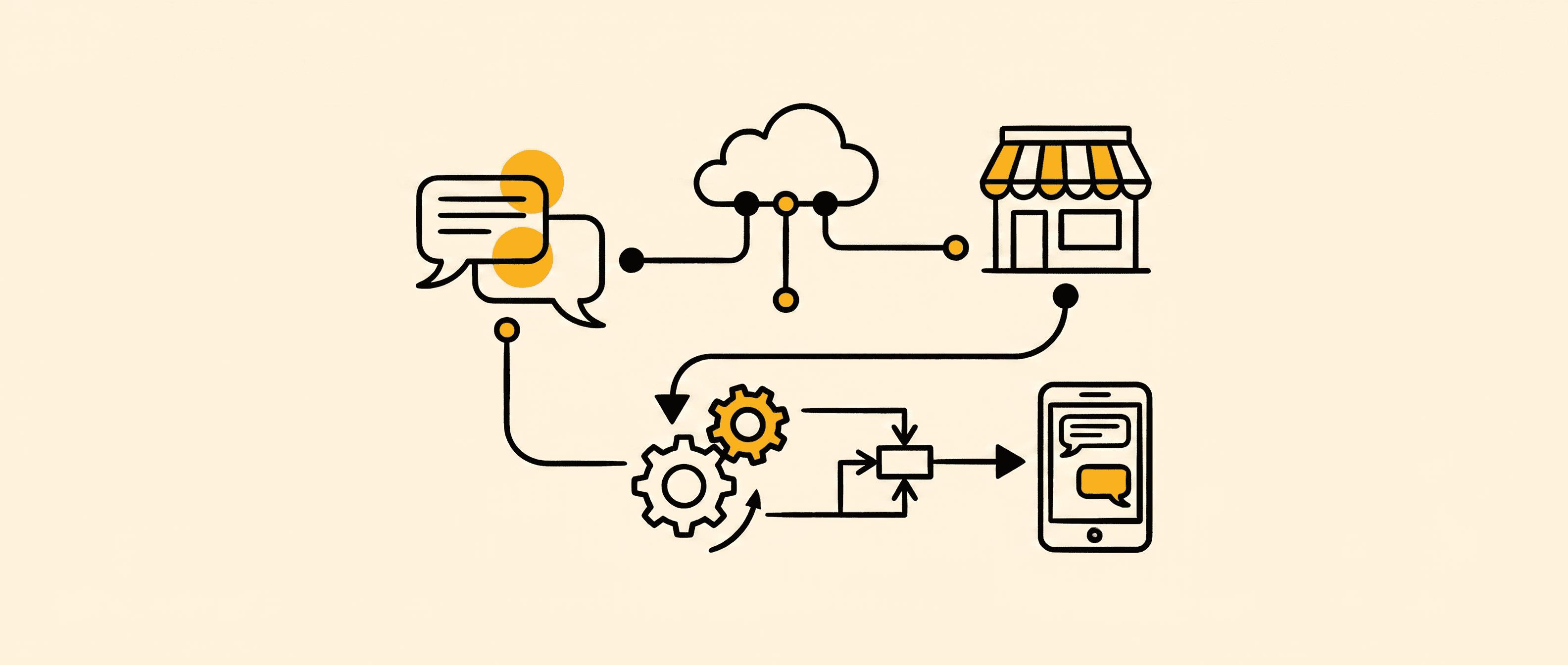
For many local businesses, the real problem is not getting website traffic. The real problem is what happens next. A visitor lands on the site, has one or two questions, cannot get a quick answer, and leaves. That is where managed live chat becomes useful. It helps businesses respond faster, guide buyers more clearly, and turn simple website visits into real conversations.
A lot of owners still think chat is only a small support tool in the corner of a page. In reality, it can do much more. It can answer questions, reduce hesitation, qualify leads, route people to the right service, and move a customer closer to booking or buying. For local businesses, that matters because many decisions happen fast. A person looking for a clinic, salon, tutor, repair service, or local shop often chooses the business that replies first and feels easiest to talk to.
What Is Managed Live Chat?
The simplest way to explain managed live chat meaning is this: it is a live website chat system that is actively handled, guided, and monitored instead of being left as a passive inbox. That support may come from an internal team, an outside support team, trained operators, or a platform that combines automation with human follow-up.
In a normal live chat setup, the box exists on the website, but no one has a clear process behind it. Messages may be missed. Replies may be slow. Conversations may end without a next step. With managed live chat, the chat is part of an actual workflow. Someone owns the response. Someone guides the conversation. Someone makes sure the customer does not get stuck.
This is why many businesses now look for managed live chat services instead of only installing a generic widget. They do not just want a chat box. They want a system that helps handle inquiries well.
Managed Live Chat vs Traditional Live Chat vs Chatbots
Not all chat tools work in the same way. While they may look similar on the surface, the way they handle conversations can be very different.
Traditional live chat
Traditional live chat is usually a basic website chat tool. It gives visitors a way to send a message, but it does not always come with a strong process behind it. In many cases, replies depend entirely on whether someone is available to check the chat and respond in time.
Chatbots
Chatbots are designed to automate simple tasks. They can answer common questions, collect names or contact details, and send useful links. This can save time, but chatbot flows are often limited when a customer has more detailed questions, unclear intent, or needs a more natural back-and-forth conversation.
Managed live chat
Managed live chat sits between automation and real human conversation. It adds more structure to the process through training, routing, response handling, and follow-up support. Instead of only letting messages come in, it helps make sure the conversation is handled properly and moved toward the right next step. In many cases, this includes both bot support and human support.
Some modern tools take this further. Instead of treating chat as something that begins and ends inside a website widget, they use the website as the starting point and continue the conversation in channels like WhatsApp or Instagram. Platforms like Dealism follow this model, which can work especially well for local businesses because many customers prefer to keep talking in familiar messaging apps.
Why Managed Live Chat Matters for Local Businesses
Local businesses do not usually lose leads because the service is bad. They lose leads because the buyer gets confused, waits too long, or leaves before asking a question.
A visitor may want to know:
Do you have openings this week?
How much does this cost?
Is this service right for me?
Where are you located?
Can I book now?
Do you serve my area?
If those questions are answered quickly, the business has a real chance to win the customer. If not, the customer moves on.
This is why fully managed live chat can be so valuable. It reduces the gap between interest and action. Instead of making the visitor search for answers, it lets the business guide the next step in real time.
For local businesses, chat also helps in a very practical way. Owners and small teams are often busy. They are handling calls, walk-ins, orders, scheduling, and operations at the same time like clinic services. They cannot always sit and watch a website inbox. A managed system creates better coverage without making the business feel cold or robotic.
How Managed Live Chat Works in Practice
A good chat system is not just about replying. It is about moving the conversation forward.
Step 1: The visitor starts on the website
This usually happens on a homepage, service page, pricing page, booking page, or product page. The person is interested, but not fully decided.
Step 2: The chat opens at the right moment
Sometimes the visitor clicks first. Sometimes the site triggers a greeting based on behavior, such as time on page or checkout hesitation. The timing matters. A good chat flow feels helpful, not pushy.
Step 3: The conversation identifies the need
This is where strong systems beat weak ones. Instead of just saying hello, the chat should help clarify intent. Is the visitor comparing options? Ready to book? Asking for support? Unsure what they need?
Step 4: The business gives the next step
That next step might be:
answering the question
recommending the right service
sharing pricing
scheduling an appointment
sending the visitor to a staff member
continuing the conversation in another channel
This is also where platforms like Dealism can be especially useful. Dealism Live Chat is not just an on-site chat box. It works more like a website-to-chat entry point. A visitor can start on the website, then continue in connected WhatsApp or Instagram, where follow-up often feels more natural and easier to maintain.
Step 5: The conversation is saved and improved
The best systems keep transcripts, store customer context, and track what happens next. That makes future replies faster and better. Over time, the business learns which questions come up most, where people drop off, and which conversations turn into bookings or sales.
What Good Managed Live Chat Looks Like
A strong chat experience feels simple on the customer side, but it has structure behind the scenes.
It should include:
fast first response
clear tone
helpful questions
smooth routing
a clear next step
after-chat visibility for the team
This is where managed live chat agents make a difference. They do not just reply with scripts. They help move the conversation in the right direction. In a local business context, that may mean calming a nervous customer, explaining the service in plain language, or guiding someone to book instead of leaving them stuck in endless questions.
The goal is not just to answer. The goal is to help.
The Real Business Benefits of Managed Live Chat
The value of chat becomes much clearer when you connect it to business outcomes.
Faster trust
Speed matters. When someone gets a quick answer, the business feels active, present, and reliable.
Better lead qualification
Not every visitor is ready to buy. Chat helps sort casual questions from real intent. That saves time and improves follow-up.
Higher conversion chances
Many people leave websites because they are unsure, not because they are uninterested. A good chat flow removes doubt at the right time.
Better customer experience
When people can ask a question naturally and get a clear answer, the whole experience feels easier.
Better use of team time
Teams that know how to manage live chats well do not waste effort repeating the same answers all day. They create reusable flows, better routing, and smarter support.
Where Dealism Fits for Local Businesses
For local businesses, one of the biggest limits of old-style website chat is that the conversation often stays trapped in the website widget. That sounds small, but it creates a real problem. Once the visitor leaves the page, the conversation often stops too.
Dealism takes a different approach.
Dealism is not just a chat box
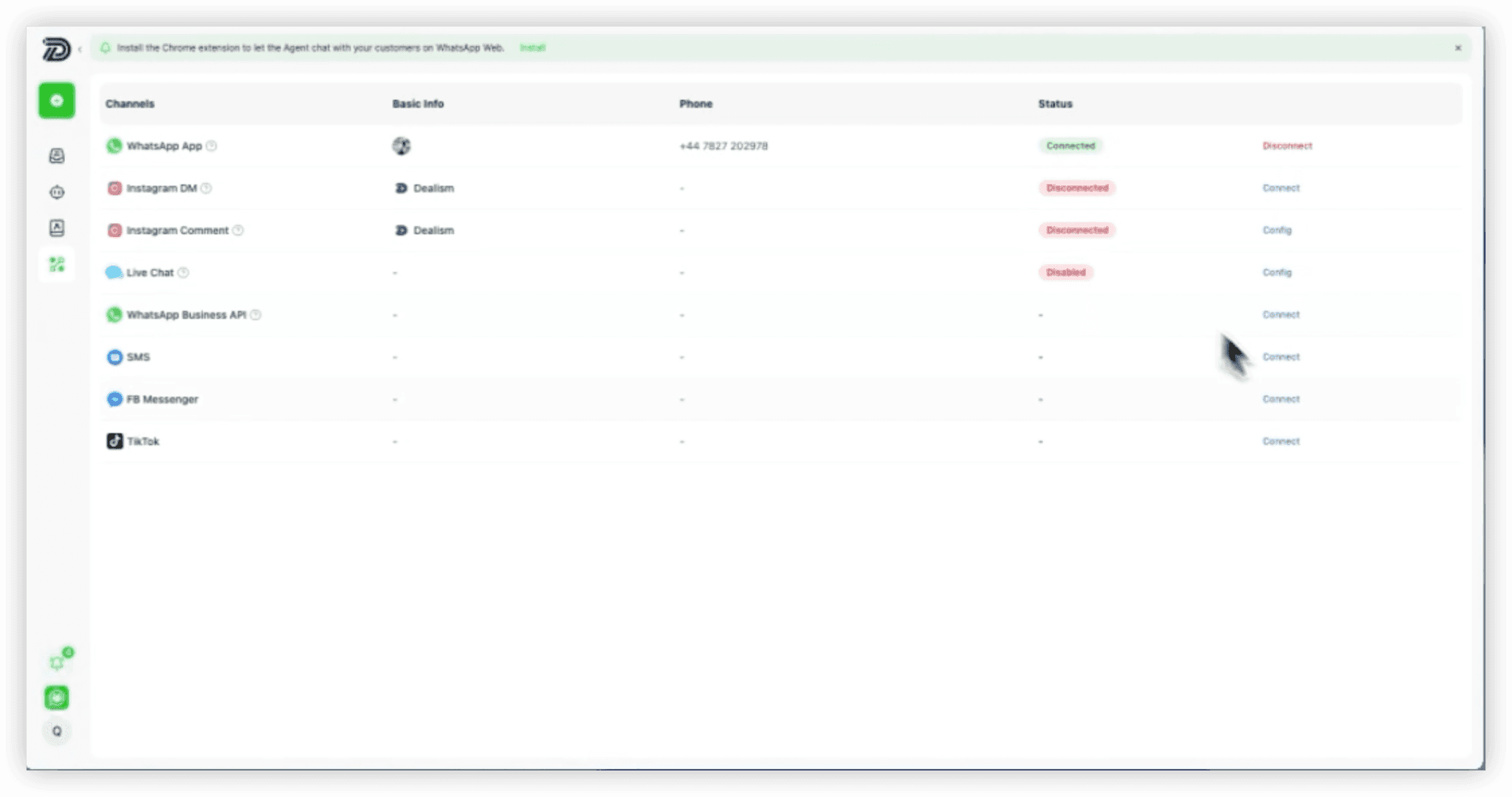
Dealism Live Chat is better understood as a website chat entry point connected to WhatsApp or Instagram. That matters because many local businesses already sell, explain, follow up, and close deals inside messaging apps, not inside a stand-alone website support panel.
Instead of treating chat as a passive inbox, Dealism works more like an AI sales agent that helps guide the conversation forward. It can support qualification, suggest the next step, and keep leads moving instead of letting interested visitors drop off after the first message.
Why this works well for local businesses
Local businesses often need back-and-forth conversation before the customer acts. A buyer may ask about timing, fit, price, service details, or location. That does not always end in one short site chat. In many cases, the conversation continues over time.
Dealism fits this behavior well because it helps move the conversation into the channels where follow-up actually happens.
Best-fit use cases
This model works especially well for:
clinics and health-related services
counseling and consultation businesses
beauty and aesthetic services
education consulting
home and local service businesses
local e-commerce brands with high-explanation products
What it can support beyond basic chat
Dealism can help with inquiry qualification, ongoing follow-up, booking support, Auto Reply for some questions based on customer intent. It also supports human takeover when needed. That makes it more useful than a simple contact button and more practical than a rigid bot-only setup.
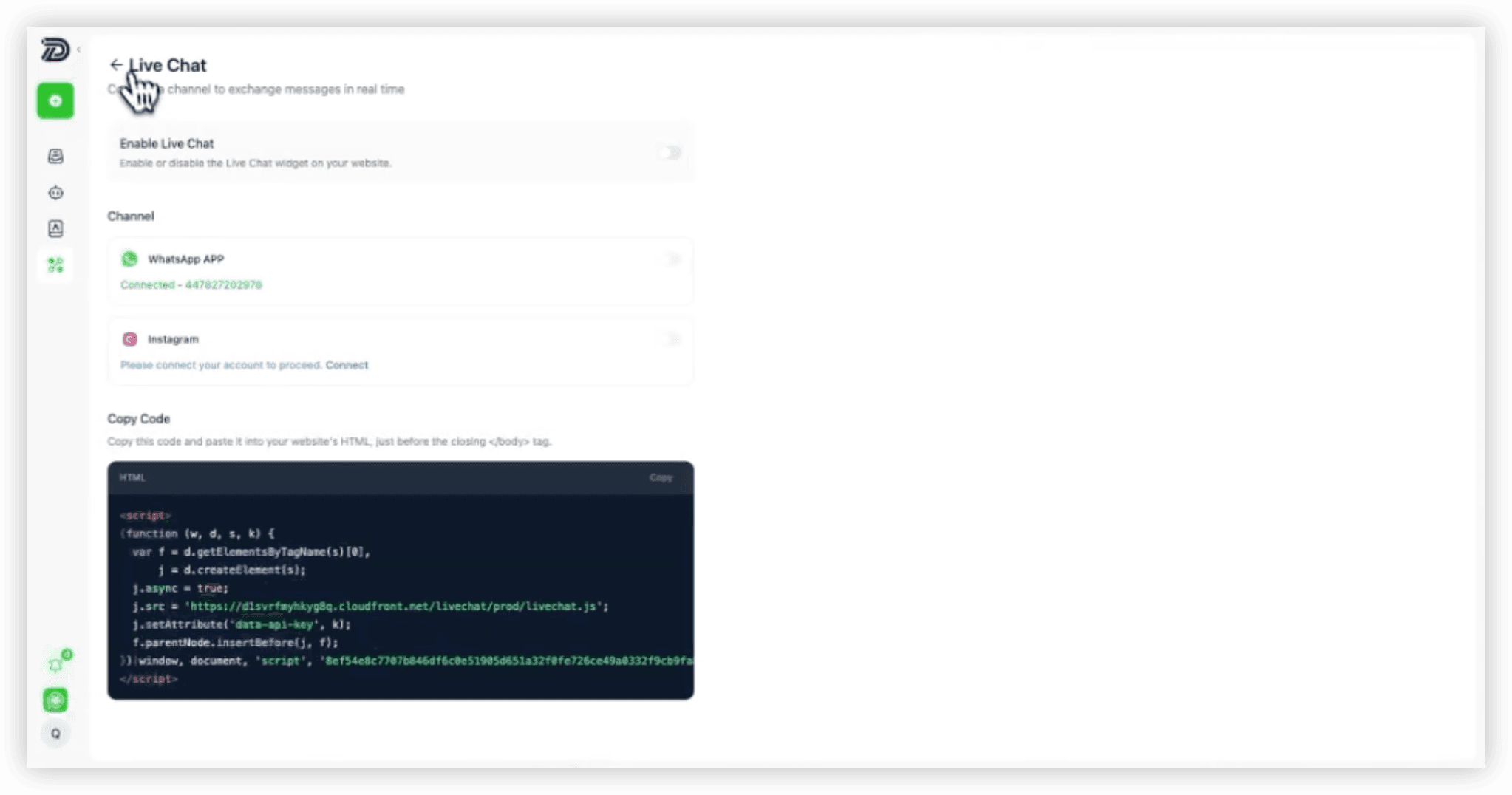
In other words, it works less like a basic widget and more like an AI Sales Assistant built to support real conversation workflows. Setup is also relatively simple, since businesses only need to add the provided code snippet to their website to get the entry point live.
Common Mistakes to Avoid
Many businesses install chat and then wonder why it does not help. Usually, the problem is not the chat itself. It is the missing system behind it.
Mistake 1: Treating chat as decoration
A chat box that nobody owns is not a strategy.
Mistake 2: Relying too much on scripts
Templates are useful, but robotic replies hurt trust.
Mistake 3: Interrupting at the wrong time
If chat pops up too often or too early, it feels annoying instead of helpful.
Mistake 4: Leaving website chat disconnected from real follow-up
This is a big one. When chat stays isolated from the business’s real sales or service flow, value gets lost. This is also why solutions like Dealism can be stronger than a basic widget. The point is not only to reply on-site. The point is to keep the conversation going where the business can actually qualify, follow up, and close.
Mistake 5: Failing to measure results
Without tracking, the business cannot see what chat is improving.
How to Measure Whether Managed Live Chat Is Working
To judge performance, do not just count chat volume. Look at outcomes.
Useful metrics include:
first response time
chat-to-lead rate
chat-to-booking rate
chat-to-sale rate
resolution rate
follow-up completion rate
customer satisfaction after chat
These numbers help show whether the chat is only active or actually useful.
For example, a business may have many chats but few bookings. That may mean the greetings are weak, the routing is poor, or the next step is unclear. Another business may have fewer chats but a high booking rate, which often means the system is working well.
This is one reason more companies choose managed live chat services instead of unmanaged tools. They want better outcomes, not just more messages.
Conclusion
For local businesses, growth often comes down to small moments. A visitor has a question. A buyer feels unsure. A lead wants one clear answer before moving forward. Those moments decide whether the business wins or loses the opportunity. That is why managed live chat matters. It helps turn website interest into real conversation, real trust, and real action, while helping local businesses improve conversions at the same time.
At its best, managed live chat is not just a support feature. It helps businesses answer faster, qualify better, and guide more people toward booking or sale. For local businesses that want a more practical way to manage chats across channels, Dealism can be a strong fit. It helps turn website conversations into clearer next steps through WhatsApp or Instagram.