Published
Mar 10, 2026
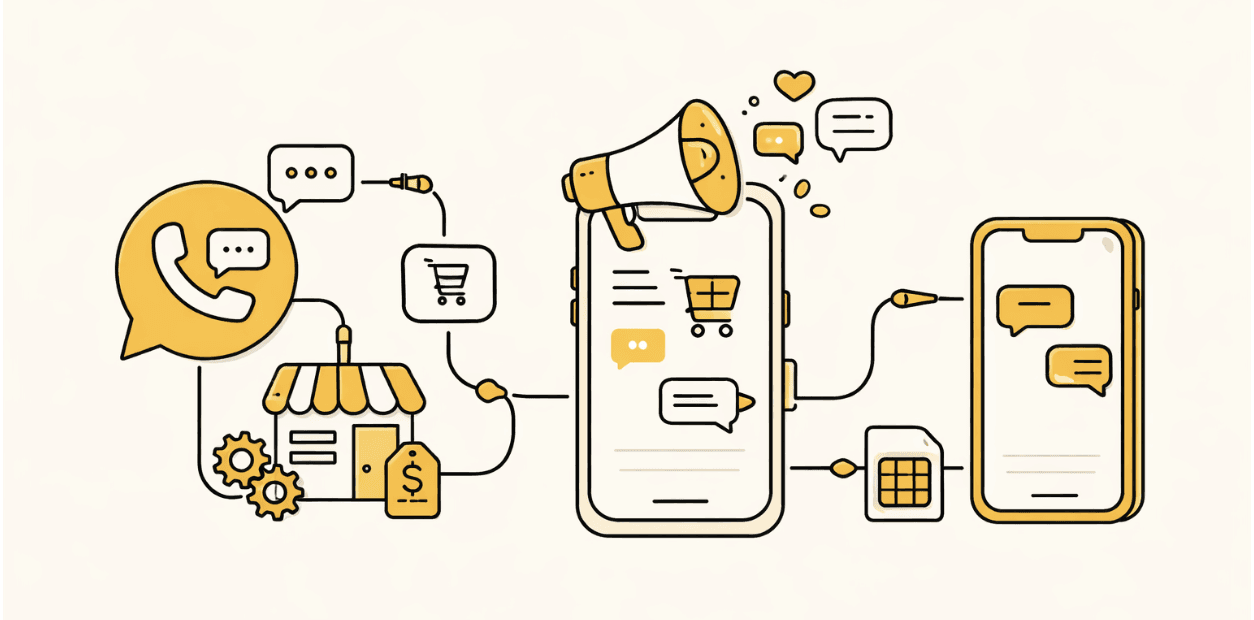
Traditional digital channels are optimized for reach. WhatsApp is optimized for action. The structural difference is critical: messaging platforms operate inside users’ primary communication environment, which makes them inherently closer to decision-making moments. Unlike email or social media, WhatsApp does not rely on passive exposure — it begins with interaction.
From a commercial perspective, three structural advantages make WhatsApp uniquely powerful:
It captures high-intent engagement
It shortens decision cycles
It turns conversations into revenue processes
Messaging Sits Closer to Purchase Intent
A click suggests curiosity.
A message signals intent.
When a user initiates or responds within WhatsApp, they are not browsing — they are evaluating. Instant messaging (IM) functions as the closest digital entry point to a transaction. The friction between interest and action is minimal because the user has already stepped into dialogue.
This proximity to intent is what differentiates messaging from traditional campaign channels.
Conversations Compress the Customer Journey
In traditional funnels, awareness, consideration, and purchase happen across multiple touchpoints. Messaging compresses these stages into a single thread.
Within one conversation, a business can:
Clarify needs
Handle objections
Provide pricing
Guide product selection
Close the sale
Chat is not a follow-up mechanism — it is an active selling behavior. The interaction itself advances the transaction.
Chat Is Not Support — It Is a Business Workflow
Many companies treat WhatsApp as a customer service extension. Strategically, this is limiting. When structured intentionally, chat becomes part of the operational revenue system.
Conversations can qualify leads, route high-intent prospects, trigger offers, and finalize decisions. In this model, messaging is not reactive support — it is a defined business workflow embedded directly in the sales process.
How to Get Started with WhatsApp Marketing in 5 Steps
Launching WhatsApp marketing requires more than sending promotional messages. High-performing brands treat it as a structured growth channel — combining compliance, targeting, conversational design, and performance tracking. Below is a practical five-step framework aligned with industry best practices.
Step 1 – Set Up Your WhatsApp Business Account
Start with the right infrastructure:
Create and verify your WhatsApp Business account
Connect to the WhatsApp Business Platform (API if scaling)
Configure your business profile (description, hours, contact details)
Set up approved message templates for outbound campaigns
Verification and template approval are not optional — they directly impact deliverability and quality ratings.
Step 2 – Collect Opt-Ins and Ensure Compliance
WhatsApp is permission-based by design.
To build a compliant subscriber base:
Collect explicit opt-ins (website forms, checkout, QR codes, in-store prompts)
Clearly explain message frequency and purpose
Provide easy opt-out options
Follow WhatsApp’s marketing message policies
List quality determines campaign performance. High complaint rates reduce message reach and account reputation.
Step 3 – Define Your Campaign Goals & Audience
Before sending any campaign, clarify:
Objective: Awareness, conversion, retention, reactivation
Audience segment: New leads, abandoned carts, repeat buyers
Lifecycle stage and intent level
Segmentation is essential. Broadcast messaging without behavioral context reduces engagement and increases opt-outs.
Step 4 – Create High-Converting Promotional WhatsApp Messages
Effective WhatsApp marketing is conversational — not mechanical.
Strong campaigns apply three principles:
Vibe Selling: Understand emotional signals and clarify needs before pushing offers
Natural progression: Guide the conversation instead of forcing decisions
Human tone: Avoid robotic phrasing or obvious automation cues
Best practices include:
Short, value-driven copy
Clear single CTA
Interactive buttons or quick replies
Context-based personalization
The goal is not to “send messages.” It is to move decisions forward inside dialogue.
Step 5 – Track Performance and Optimize Campaigns
Measurement ensures sustainable growth. Monitor:
Delivery rate
Read rate
Click-through rate
Conversion rate
Opt-out rate
Quality rating score
Continuously A/B test:
Message structure
CTA placement
Send timing
Audience segments
Optimization is ongoing. WhatsApp marketing performs best when treated as a dynamic, data-informed revenue channel rather than a one-off campaign tool.
WhatsApp Marketing Campaign Best Practices
Once the foundation is set, performance depends on execution quality. Many brands stop at sending compliant campaigns. High-performing teams go further — they design WhatsApp as a decision environment. This is where campaign best practices shift from surface-level tactics to structural advantage.
Segment Your Audience for Relevance
Relevance is the primary driver of engagement.
Effective segmentation should go beyond basic demographics and include:
Behavioral signals (clicks, replies, browsing activity)
Purchase history and lifecycle stage
Intent indicators captured inside conversations
Engagement frequency and recency
Segmentation is not about sending different messages.
It is about triggering the right conversation at the right moment.
Without segmentation, WhatsApp becomes noise. With segmentation, it becomes contextual guidance.
Use Automation & Trigger-Based Messaging
Automation is most effective when it responds to behavior rather than schedules.
Best practices include:
Abandoned cart triggers
Re-engagement flows
Post-purchase upsell prompts
Event-based reminders
However, automation must not feel mechanical. The goal is structured responsiveness, not scripted broadcasting.
You don’t lack manpower — you lack judgment systems.
Well-designed trigger logic embeds business rules into conversations, ensuring that each reply leads somewhere meaningful instead of stalling.
Keep Messages Conversational and Action-Oriented
High-converting WhatsApp campaigns apply what can be described as Vibe Selling:
Understand emotional tone
Clarify real needs
Remove ambiguity
Guide the next step naturally
Chat is not support — it is a business workflow.
Every reply should either qualify, educate, or advance the decision. The conversation itself becomes part of the sales engine.
Platforms like Dealism focus on executing business logic inside conversations — turning replies into structured next steps. Instead of treating chat as a reactive support channel, this approach embeds decision-making directly into messaging.
When campaigns are designed this way, WhatsApp stops being a notification tool and becomes a revenue-driving process.
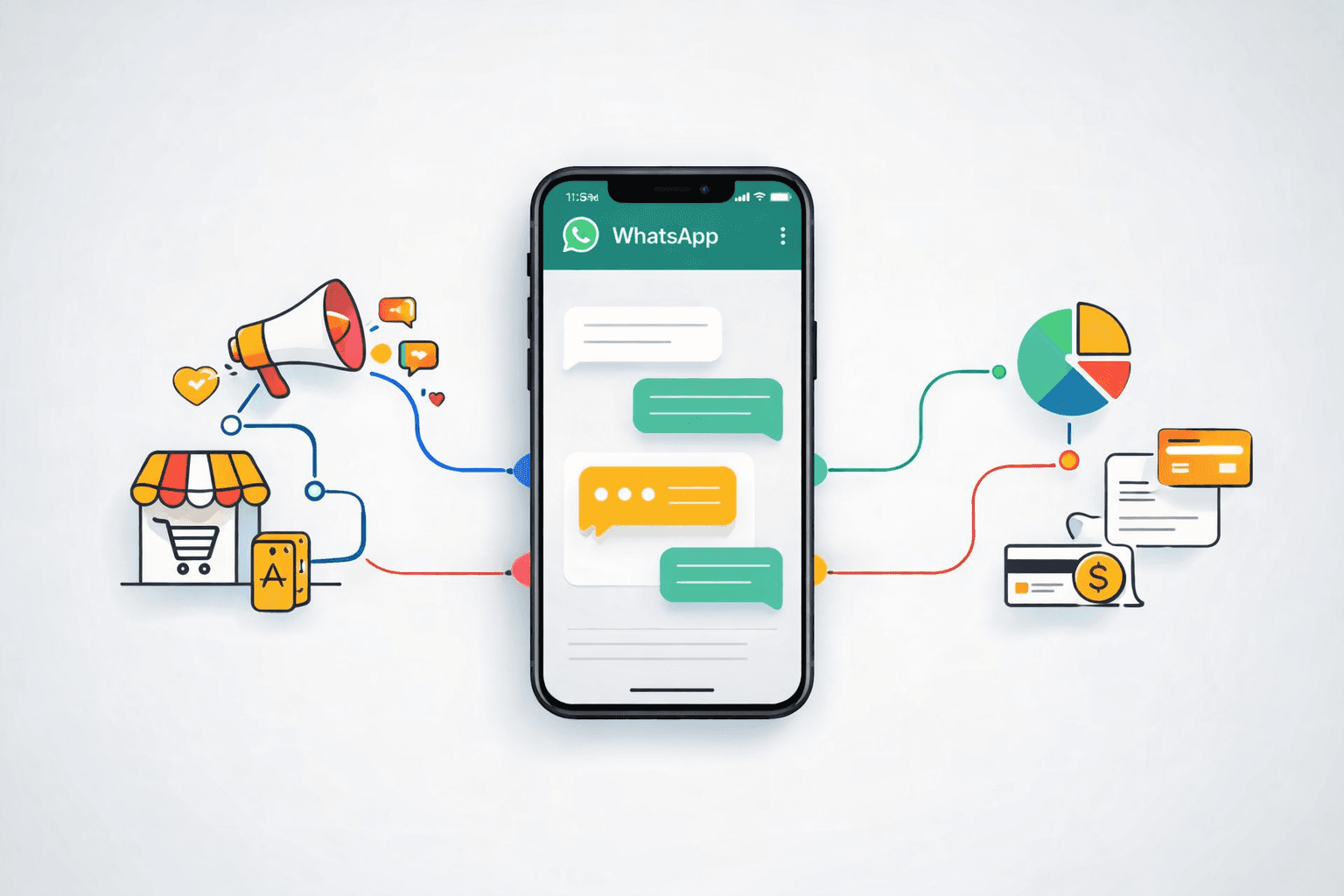
Beyond Basic Messaging: How Dealism Elevates WhatsApp Marketing Strategy
Most WhatsApp marketing articles focus on infrastructure: account setup, opt-ins, templates, broadcast flows, and basic whatsapp auto reply configuration. These are foundational elements of whatsapp automation. But they do not create strategic advantage.
The real differentiation layer sits above messaging mechanics. It lives inside decision intelligence — how conversations are interpreted, segmented, and advanced.
Dealism is not a WhatsApp API tool. It is not a messaging gateway.
It functions as a growth intelligence layer that operates inside conversations — transforming replies into structured, forward-moving business logic.
This is where an advanced WhatsApp marketing strategy begins.
AI-Powered Behavioral Segmentation
Traditional segmentation relies on static lists: purchase history, location, or campaign source. That model cannot adapt to real-time intent shifts inside chat.
Dealism introduces dynamic segmentation through:
Real-time interest recognition based on conversational signals
Automatic tag updates as user intent evolves
Dynamic audience regrouping without manual intervention
Instead of pre-building rigid segments, brands can respond to emerging behavioral cues — what the user is asking, hesitating about, or comparing.
This allows the creation of a truly personalized WhatsApp campaign, not just first-name personalization, but contextual personalization driven by live interaction data.
Segmentation becomes fluid. Audience groups adjust as conversations unfold.
Predictive Campaign Triggers Based on User Intent
Standard automation triggers campaigns after fixed events — abandoned cart, form submission, inactivity. These are reactive.
A more advanced approach uses predictive modeling to identify:
Behavioral triggers within conversation threads
AI-detected indicators of buying readiness
Subtle conversion signals (pricing inquiries, urgency language, comparison questions)
Instead of sending generic promotional messages, brands activate campaigns based on real-time buying signals interpreted through intelligent whatsapp automation.
Predictive logic allows campaigns to activate before intent fades.
It shifts WhatsApp from broadcast marketing to intent-driven orchestration.
In this model, messaging is no longer just a delivery channel.
It becomes an adaptive growth system — continuously interpreting behavior and guiding the next step toward conversion.
Read more:
Turn Every Message into a Sale Automatically
How to Set Up WhatsApp Business
Common WhatsApp Marketing Mistakes to Avoid
Even with WhatsApp’s high engagement potential, small missteps can quickly reduce effectiveness. Avoiding common pitfalls ensures campaigns stay relevant, compliant, and conversion-focused.
Over-Messaging and Spam Signals
Frequent or irrelevant messages annoy users and trigger complaints.
High-frequency broadcasts without context lower engagement
Automated flows that don’t respond to behavior feel robotic
Excess messaging can harm WhatsApp quality scores
Tip: Only message when user intent or behavior signals relevance — chat is selling, not noise.
Generic Messaging Without Segmentation
Sending the same message to all contacts limits results.
Users expect content tailored to their interests and journey stage
Static lists ignore changing behavior or intent
Personalized, context-driven messages drive higher engagement
Dynamic segmentation, as implemented in Dealism, updates tags and groups based on real-time interactions, keeping messages relevant and timely.
Ignoring Compliance and User Preferences
WhatsApp is permission-based. Non-compliance risks account issues and damages trust.
Collect explicit opt-ins and honor opt-outs
Use templates only in approved contexts
Respect messaging frequency and user preferences
Well-structured campaigns balance engagement with compliance, making messages welcomed rather than intrusive.
By avoiding these mistakes, marketers preserve deliverability, maintain user trust, and ensure WhatsApp campaigns effectively drive results.
Final Thoughts: Turning WhatsApp Into a Sustainable Growth Channel
WhatsApp is more than a messaging tool — it’s a revenue-driving channel when used strategically. Effective WhatsApp marketing campaigns combine compliance, segmentation, and conversational design to move users naturally toward conversion.
Platforms like Dealism elevate this process, applying Vibe Selling to understand emotions, clarify needs, and advance next steps inside the conversation. By integrating these principles into your WhatsApp marketing strategy, every message — from promotional WhatsApp messages to automated flows — becomes part of a structured growth engine rather than a broadcast. Consistent practice ensures lasting engagement, higher conversions, and a truly sustainable marketing channel.