The time between interest and action is often a cold time for sales leads. The person can ask about the price, fill out a form, click on a WhatsApp ad, or ask for a demo, and if they don't get a quick or clear answer, they can move on. This is why it's important to know how to follow up on sales leads: it helps the conversation stay going until the buyer is ready to buy.
Here's your practical next step plan – when to follow up, how often, and what to say in each follow-up – and when to call it quits. You'll also have a set of sales follow-up email templates to choose from and tips on WhatsApp, Instagram DM, SMS, and automation.
What Is Sales Lead Follow-Up — and Why Most Leads Are Lost Without It
Sales lead follow-up refers to the process of communicating with a potential customer after they have expressed interest in your product or service, whether by filling out a form, inquiring about a price, sending a message, or requesting a demo. It's designed to convert the initial interest into a clear and effective next step: a response, a booking, a quote, a call, or a purchase.
The majority of leads are lost due to the business replying too late; it fails to provide clear direction or an ending after one message. A great follow-up maintains the discussion, but it's only while the buyer is still in the mood.
How Fast Should You Follow Up on a New Lead?
Follow up on a new lead as fast as possible, ideally within 5–30 minutes. For high-intent leads, such as pricing requests, demo requests, booking inquiries, WhatsApp messages, or Instagram DMs, the first 5 minutes matter most.
A Harvard Business Review study on online sales leads found that many companies fail to respond fast enough to online inquiries. The practical takeaway is clear: the longer you wait, the colder the lead becomes.
Your first message should confirm the request and ask one easy question, so the lead can reply without thinking too much.
How Often Should You Follow Up on Sales Leads?
For most warm leads, 6–8 follow-up touches are a practical range. One message is rarely enough, especially if the lead is comparing options, checking budget, or waiting for approval. The key is to follow up with a clear cadence, not to send the same “just checking in” message again and again.
A simple follow-up schedule can look like this:
Touch | Timing | Best Channel | What to Send |
1 | Within 5–30 minutes | Original channel | Confirm the request and ask one clear question |
2 | Same day or next day | Email or chat | Clarify the need, budget, or timeline |
3 | Day 3 | Share a useful tip, case example, or product fit | |
4 | Day 5–7 | WhatsApp, SMS, or DM | Send a short reminder with an easy reply option |
5 | Day 10 | Address a likely concern, such as price or setup | |
6 | Day 14 | Call, email, or chat | Check whether the timing still makes sense |
7 | Day 21 | Send a helpful resource or comparison | |
8 | Day 30+ | Close the loop or move the lead into re-engagement |
Adjust sales lead follow-up frequency by intent: prioritize quick one-week outreach for high-intent leads (pricing, demo, booking, WhatsApp ad inquiries) and slow nurturing for low-intent sign-ups/downloads. This follows the same logic as lead scoring, where prospects are prioritized based on fit, behavior, and perceived sales value. As an AI Sales Agent, Dealism auto-detects intent across WhatsApp, Instagram and site chats to match follow-up pace, fast-tracking hot leads and lightly nurturing cold ones.
For email, Tuesday to Thursday and late morning to early afternoon are safe starting points for B2B follow-up. You can reference Mailchimp’s guide to the best time to send email when explaining why send timing should be adjusted instead of treated as a fixed rule. For WhatsApp, Instagram DM, SMS, local services, and consumer sales, speed usually matters more than the exact hour. If the lead contacted you through chat, reply while the conversation is still fresh.
How to Follow Up on Sales Leads Step by Step
A good follow-up process should be easy to repeat. Use this flow before writing your next message.
1. Choose the Right Channel
Start with the channel where the lead first contacted you. If they came from WhatsApp, reply on WhatsApp. If they filled out a form, email may work. If they sent an Instagram DM, stay in the DM before moving them elsewhere.
This reduces friction because the lead already chose where they prefer to respond.
2. Reply Quickly With Context
Avoid generic greetings. Mention what the lead asked about.
Weak follow-up:
Hi, how can I help you?
Better follow-up:
Hi Mark, I saw your request about pricing for the team plan. Are you looking for monthly billing or an annual option?
This shows you read the inquiry and gives the lead a simple choice.
3. Add Value Before Asking Again
Every follow-up should reduce one concern in the lead’s mind.
Common concerns include:
Is this right for my situation?
How much does it cost?
How hard is the setup?
Send a short case example, pricing context, setup note, comparison, checklist, or next-step option.
4. Personalize Without Overwriting
Personalization should be specific, not long. Use the lead’s industry, goal, channel, product interest, location, company size, or last message.
Example:
Since most of your leads come from Instagram, I’d suggest starting with DM follow-up before adding email.
One relevant detail is enough.
5. Keep Following Up Until There Is a Clear Signal
No reply is a weak signal. A direct “no,” “later,” or “we chose another option” is clear. Before stopping, send one close-the-loop message:
Should I close this for now, or would it be better to check back next month? This gives the lead an easy way to answer and keeps the thread from feeling endless.
Sales Follow-Up Email Templates & Sequences
Use these short templates to restart the conversation and move the lead to one clear next step.
First Follow-Up Email
Subject: Quick follow-up on your request
Hi [Name],
Thanks for reaching out about [product/service].
I saw you’re looking for [specific need]. Are you mainly trying to [option A] or [option B]?
Once I know that, I can point you in the right direction.
Best,
[Your Name]
Value-Add / Second Touch Email
Subject: A useful note on [their goal]
Hi [Name],
One quick note as you compare options.
For [their situation], the main issue is usually [common pain point]. A better setup is often [short recommendation] because it helps with [specific result].
If useful, I can send a simple option based on your case.
Best,
[Your Name]
“Break-Up” / Last-Attempt Email
Subject: Should I close this for now?
Hi [Name],
I have not heard back, so I do not want to keep filling your inbox.
Should I close this for now, or follow up later?
If this is still relevant, reply with “still interested” and I’ll send the next step.
Best,
[Your Name]
Re-Engagement Email for Cold Leads
Subject: Still looking at [problem/goal]?
Hi [Name],
We spoke a while ago about [topic]. Is this still on your list?
A few things may have changed around [new angle, offer, timing, or common issue].
If you are still exploring options, I can send an updated recommendation.
Best,
[Your Name]
Follow-Up Beyond Email — WhatsApp, Instagram DM & SMS
Email works better for quotes, proposals, pricing details, and decision records. WhatsApp, Instagram DM, and SMS are different because they are faster and more immediate. A quick product question, ad click, or availability check may look casual, but it can still signal strong buying intent. The best follow-up channel is usually the one where the lead first reached out.
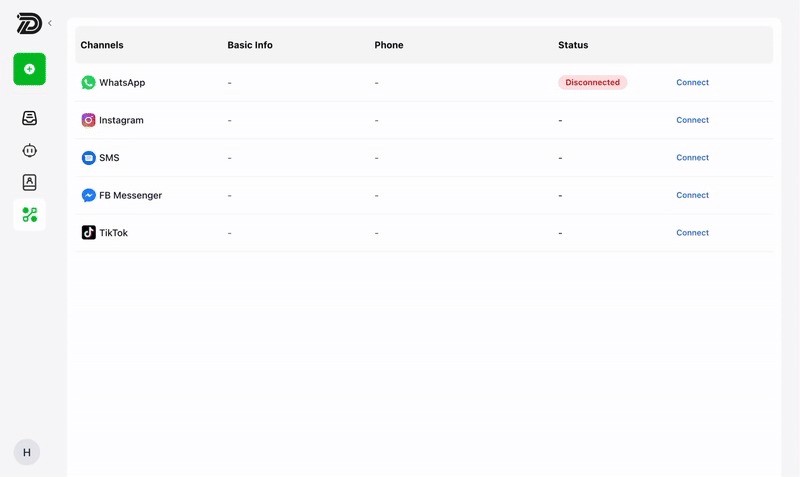
For teams managing several inboxes, Dealism, as an AI Sales Agent, can connect WhatsApp, Instagram, and website chat without code setup. Sales teams can reply and manage follow-ups in one place instead of switching between platforms, while the AI helps qualify the lead and guide the conversation toward booking, purchase, or human handoff.
Handling No-Response and Objections: When to Continue and When to Stop
No response does not always mean no interest. It can mean the timing is bad, the message was too vague, the lead is comparing options, or the next step feels too difficult.
The first move is to read the signal behind the silence:
Lead Signal | What It Usually Means | Best Next Step |
No reply after the first message | The need is unclear or the lead is busy | Ask one simple question |
Price concern | Budget or value is unclear | Show the difference between basic and advanced options |
“I’ll think about it” | Timing is uncertain | Ask when to follow up |
Needs team approval | They need internal support | Send a short summary they can forward |
Silent after 6–8 touches | Low intent or bad timing | Stop active follow-up and move to re-engagement |
The goal is to change the angle, not repeat the same reminder. If the lead has a price concern, talk about options. If they are unsure about timing, ask when to check back. If they need approval, send a short summary they can forward.
Why Follow-Up Fails — and How to Automate It So It Actually Happens
Follow-up is generally not successful because there is too much disorganization in the process. While a sales team knows the correct cadence, once leads are generated through WhatsApp, Instagram, website chat, forms, and ads, the follow-up process quickly becomes difficult to manage.
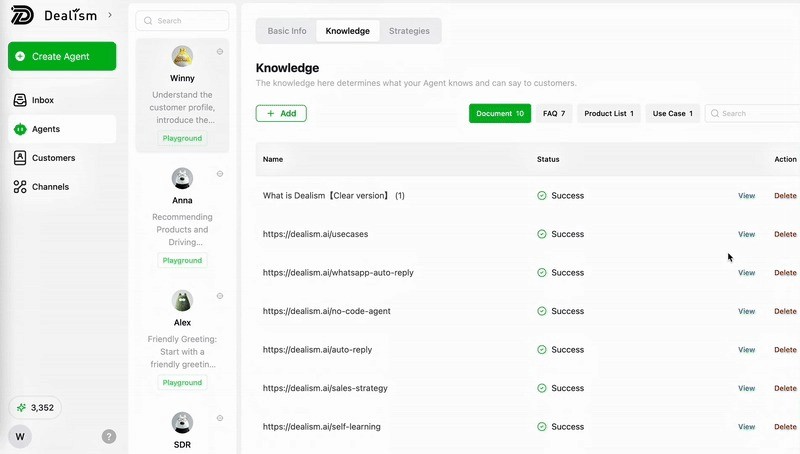
With a tool such as Dealism AI Sales Agent, this disjointed process becomes one streamlined follow-up system. It integrates WhatsApp, Instagram and website chat seamlessly, allowing sales teams to oversee conversations, lead context and next steps from a single source.
Lost history
Price may be asked on WhatsApp, followed by a return on Instagram, and finally a request for booking on the website's chat. Dealism allows for the continuation of the conversation, rather than starting again from scratch.
No intent segmentation
The pace of a pricing request and demo inquiry should not be the same as the pace of a casual signup. Hot leads receive quicker responses and better booking calls, while colder leads remain in a lighter nurture stream, thanks to Dealism.
Repeated follow-up messages
A lot of teams make multiple reminders. The next message becomes more relevant based on dealism. If the lead inquires about price, the response can include options. If they ask about the setup, they can get clarification. For common questions, Auto Reply can answer pricing, availability, and service details instantly.
Missed ad leads and booking chances
For paid traffic, WhatsApp Ads automation helps continue the conversation after the click. When a lead is ready to act, Booking can move them from follow-up into a confirmed appointment or human handoff.
This allows the entire 6–8 touch cadence to be more easily completed across channels and each message to be held to the lead's actual concern.
FAQ
How many follow-ups are too many?
Follow-up can only be too much when the lead clearly says no, asks you to stop, unsubscribes, or doesn't respond after a full sequence of follow-up. The problem is not only the number of messages, but whether every message provides a new justification to respond. A reminder is too much, even 3 reminders.
What is the best time to follow up with a sales lead?
This will vary based on the channel and the goal of the lead. Generally, late morning or early afternoon on a weekday is a good time to start on email. Time is more real in the case of WhatsApp, Instagram DM, SMS, and website chat. If the lead reached you via chat, follow up during the conversation.
What should I record after each follow-up?
Keep the key context: what the lead asked, which channel they used, what concern they raised, what answer was sent, and what next step was offered. This prevents the team from asking the same question again or losing important conversation history.
When should an AI sales agent hand off the lead to a human?
Handoff is required for custom pricing, complex objections, negotiation, purchase intent, and relationship-based sales conversations. The AI can take care of lower-dollar qualification and follow-up issues, and the sales rep can take care of higher-dollar decisions.