AI Agent Performance Analysis

Review the Reply. Improve the Result.

Review response quality and conversation performance to understand where an Agent helps, where the exchange loses direction, and what to improve next.

Meta Business PartnersReply qualityConversation context
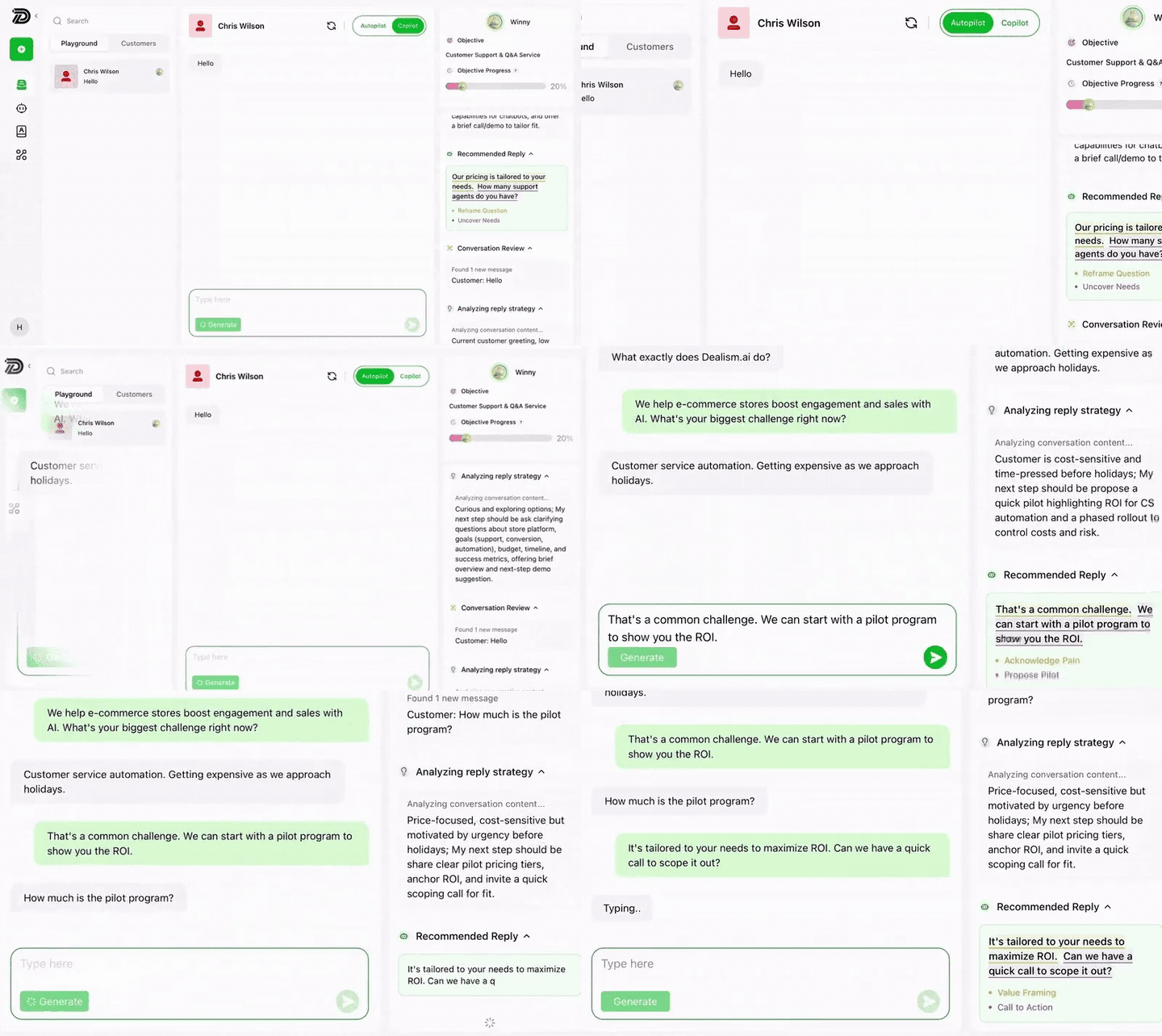
Dealism AI Customer Agent analyzing a customer conversation and preparing a reply

Reply review

Did the answer address what the customer actually asked?

Conversation review

Did the exchange gain direction—or start repeating itself?

Improvement focus

Refine the knowledge, instruction, rule, or handoff behind the result.

From conversation to improvement

What Is AI Agent Performance Analysis?

It is the practice of reviewing individual replies and complete conversations, identifying patterns that affect the customer experience, and using those findings to make focused Agent updates.

  1. 1Conversation

    A customer asks, clarifies, reacts, or requests a person.

    Conversation

  2. 2Review

    Look at the reply and the wider exchange against the Agent’s assigned job.

    Review

  3. 3Find the Pattern

    Identify what helped, what stalled, and which missing context or rule affected the result.

    Intent
    Known
    Missing

    Find the Pattern

  4. 4Improve and Test

    Make one focused change, test it, and review the next conversations.

    AnswerRoute

    Improve and Test

Two levels of review

A Strong Reply and a Strong Conversation Are Not the Same

Review the individual answer, then zoom out. A reply can be accurate on its own while the full exchange repeats, loses context, or stops without a clear next step.

One reply

A reply can sound polished and still miss the job.

Review whether it responds to the actual question, stays within approved information, matches the intended tone, and gives the customer a useful next step.

Customer: “Can this work for five locations?”
One reply lens
Review: Did the Agent clarify scope before recommending a direction?

Reply quality

A Good Reply Does More Than Sound Right

The useful question is not whether a response looks polished. It is whether it performs the job you assigned without stepping outside the business context you approved.

Relevant

Does the reply address the customer’s actual request rather than a nearby topic?

Grounded

Does it stay within the business information and boundaries you approved?

Natural

Does the tone fit both the Agent’s role and the moment in the conversation?

Directional

Does the customer know what to answer, choose, or do next?

Handoff-aware

Does the Agent recognize when the next decision belongs with a person?

Find the turning point

Find the Moment the Conversation Lost Direction

A weak outcome usually leaves a clue in the exchange. Review the point where the customer had to repeat something, received an answer without a next step, or needed judgment the Agent could not provide.

The answer is vague

Review whether the Agent lacked approved knowledge, missed the intent, or needed a clarification rule.

The conversation repeats

Look for lost context or a follow-up question that did not use what the customer had already shared.

The exchange stops moving

Check whether the reply explained the next action or simply provided information without direction.

The handoff comes at the wrong moment

Review whether the Agent continued past its boundary—or handed over before completing its focused job.

From signal to change

Improve the Agent, Not Only the Dashboard

A finding becomes useful when it points to a controlled update. Change the smallest part responsible for the pattern, then test the same kind of conversation again.

Missing or unclear information

Update the approved business knowledge the Agent can use.

The wrong conversational direction

Refine the Agent’s goal or instructions around that customer moment.

Tone or question style feels wrong

Adjust the conversation rules without rewriting unrelated Agents.

Judgment arrives too late

Clarify the handoff boundary and test the transition with your team.

One job, one standard

Review Each Agent Against the Job It Was Given

A product guide, inquiry qualifier, and customer-care Agent should not be forced into one generic performance standard. Review whether each Agent fulfilled its own goal and respected its own boundaries.
1

Product guide

Did it clarify fit and recommend an approved direction?

2

Inquiry qualifier

Did it collect the details that actually change the next step?

3

Customer care

Did it use approved guidance and recognize when the issue needed a person?

A practical review loop

Review. Change One Thing. Test Again.

Start with conversations that stalled or repeated, but include normal successful examples too. Make one controlled change so the next review can tell you what actually changed.
  1. 1Choose

    Select a focused set of recent conversations for one Agent and one kind of customer request.

    Choose

  2. 2Inspect

    Find the exact turn where the reply helped, stalled, repeated, or crossed a boundary.

    Inspect

  3. 3Adjust

    Update the relevant knowledge, instruction, conversation rule, or handoff—not everything at once.

    Intent
    Known
    Missing

    Adjust

  4. 4Retest

    Try the same scenario again and review the next real conversations before expanding the change.

    AnswerRoute

    Retest

Connected conversations

Review Performance Where Customers Already Write

Apply the same review discipline to supported conversations across your connected channels. Channel behavior and available context can differ, so inspect the experience where it actually happened.

Frequently asked questions

AI Agent Performance Analysis FAQ

AI agent performance analysis is the review of an Agent’s responses and complete conversations to understand what is working, where the exchange loses direction, and what should be adjusted before the next review.
No. Reply quality looks at an individual answer. Conversation performance looks across the exchange: whether context was retained, questions moved the customer forward, repetition was avoided, and handoff happened at an appropriate moment.
A useful review can consider relevance, grounding in approved information, tone, next-step clarity, and respect for the Agent’s boundaries. The right standard depends on the Agent’s assigned job.
Performance analysis should inform a controlled update, not silently replace your business judgment. Review the finding, change the relevant knowledge or configuration, and test the result.
No. A qualifier, product guide, and customer-care Agent have different jobs. Independent Agent Configuration helps keep each role and its rules distinct.
Yes. Handoff behavior is part of conversation quality because a fluent reply is not useful when the request needs approval, sensitive judgment, negotiation, or access the Agent does not have.
Start with conversations that stalled, repeated a question, produced an unclear next step, reached an unexpected handoff, or covered a frequent customer topic. Include normal successful conversations so the review is not based only on visible failures.
No. Analysis can help you make more informed Agent updates, but results also depend on your offer, traffic, customer intent, business information, team process, and the changes you choose to make.

An honest review creates a better next move

Every Better Agent Starts With an Honest Review.

Review the reply, understand the wider conversation, and make the focused change that gives the next customer a clearer path forward.

Review and improve my Agent