THE STORY IN BRIEF
Erik Diet uses Dealism to turn a new WhatsApp inquiry into a structured pre-consultation conversation. The Agent collects information progressively, explains four service plans, and guides interested clients toward Pix payment. The nutritionist still handles assessment, prescriptions, and decisions requiring professional judgment.
Someone interested in online nutrition consulting rarely begins by choosing a plan immediately.
They explain what they want to change. They ask how the service works. They compare prices and levels of support. They want to know what happens after payment—and whether the service is right for them.
For Erik Diet, every one of those conversations matters. But answering the same initial questions takes time away from preparing nutrition plans and supporting clients who have already purchased a service.
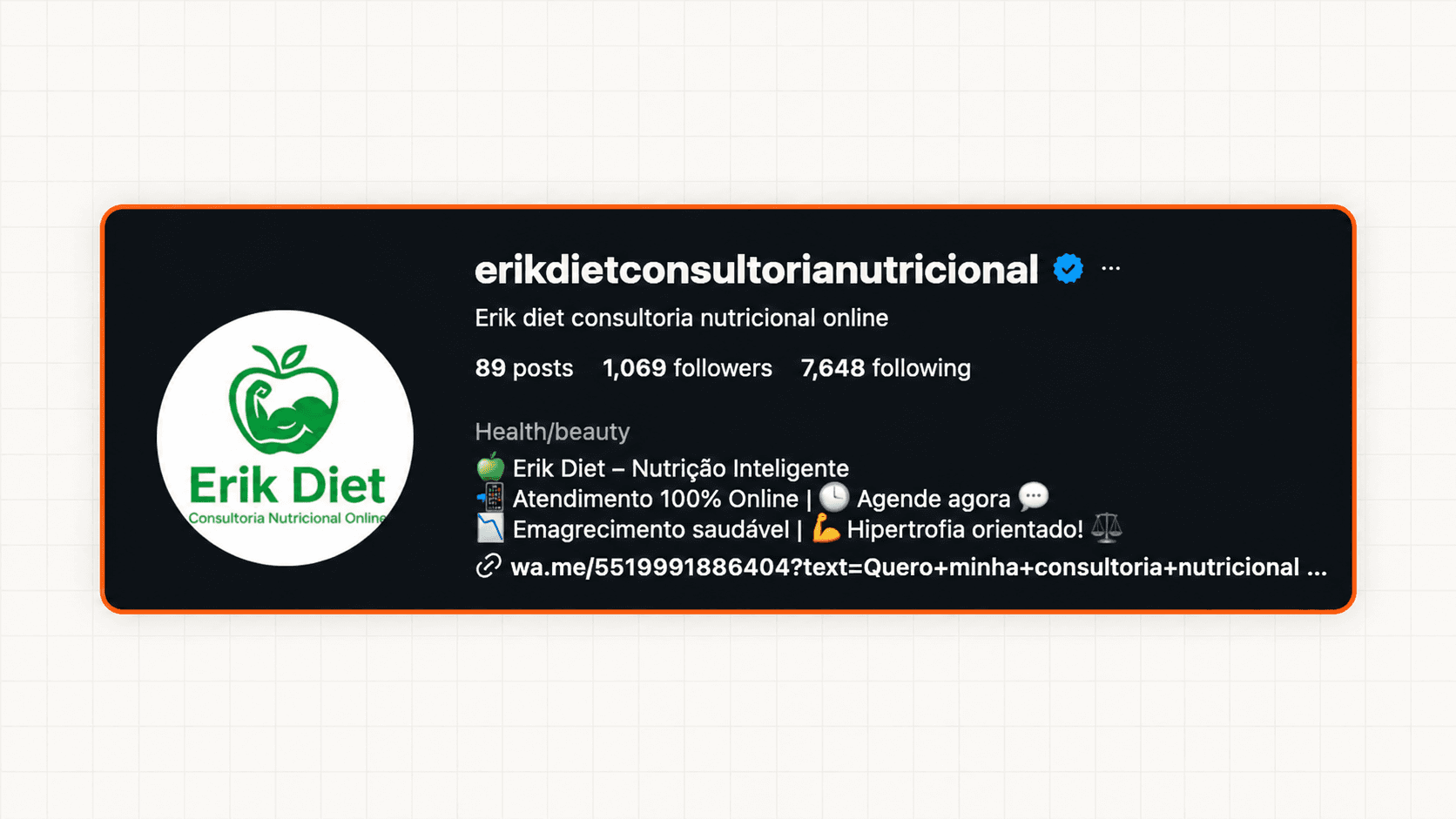
Erik did not need to remove the conversation from the sales process. He needed a way to move it forward without personally starting every exchange.
He configured a Dealism Agent to handle the journey from the first inquiry to plan selection and Pix payment. The Agent welcomes the prospect, gathers the information needed for the next step, explains the available plans, and provides the configured payment instructions.
It does this one question at a time.
The intake feels like a conversation, not a long form
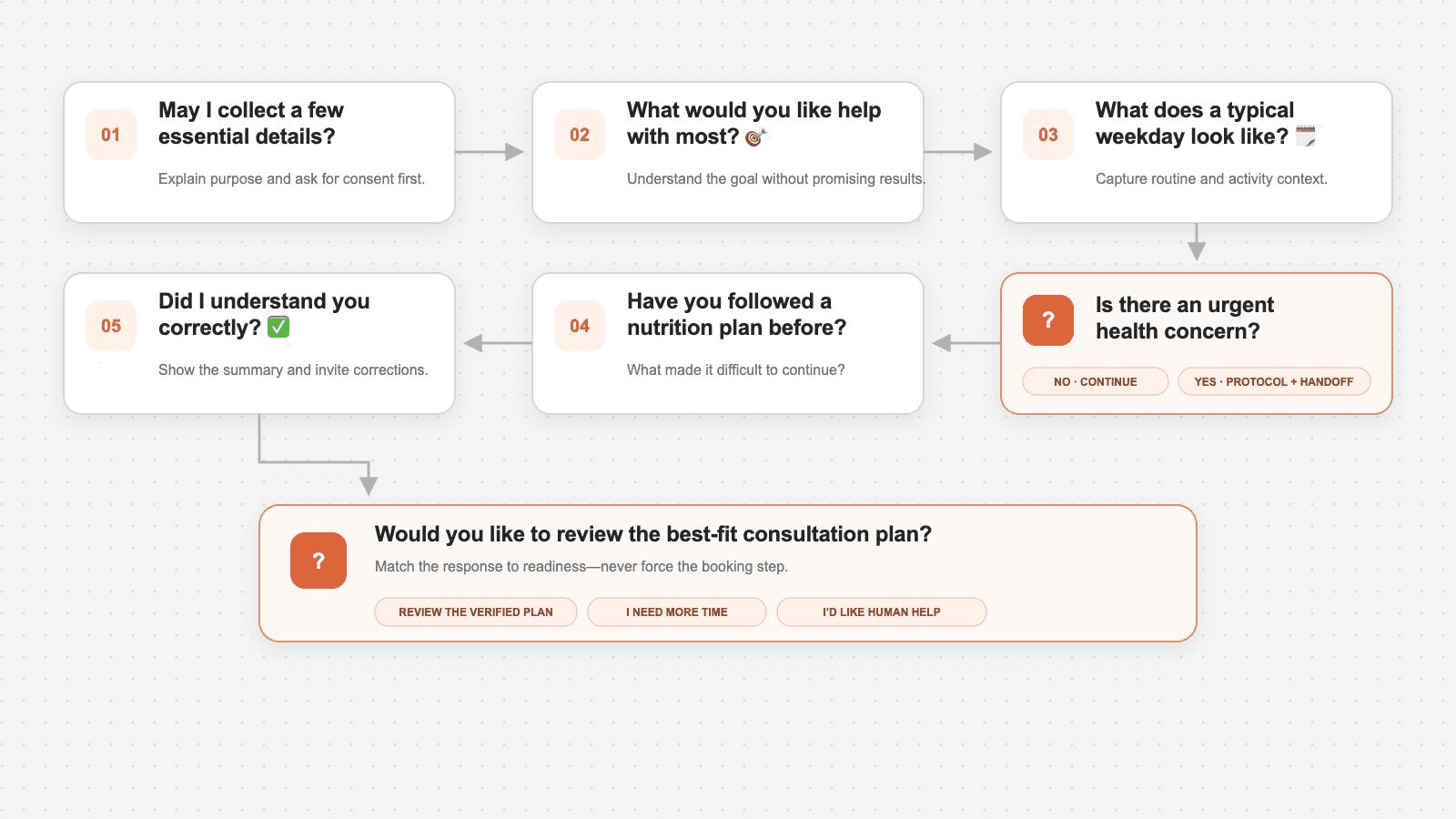
Erik’s Agent begins with a simple welcome and asks how the person would like to be addressed. It then asks about the prospect’s main goal, such as weight loss, muscle gain, general health, or better food organization.
From there, the conversation progresses gradually. The Agent may ask about age, height, current weight, daily routine, physical activity, and previous attempts to follow a diet.
But it does not send every question at once.
Erik explicitly configured the Agent to ask one question, wait for the response, and continue from what the person has already shared. It should not restart the conversation, repeat completed steps, or ask for the same information twice.

That detail changes the experience.
A traditional intake form makes the prospect do all the work before receiving value. A progressive conversation lets the business acknowledge each answer, maintain context, and keep the person oriented toward the next step.
The Agent also summarizes the information before proceeding. The prospect has an opportunity to confirm that their goal and basic details have been understood correctly.
This is not only a more natural way to qualify an inquiry. It also gives Erik a clearer starting point when professional work begins.
VIEW THE REAL SETUP
Explore the intake sequence, service-plan presentation, Pix payment step, conversation style, and professional boundaries behind Erik Diet’s Agent.
The Agent turns information into a clear buying decision
Collecting information is useful only when it helps the customer understand what to do next.
Erik Diet offers four levels of online nutrition consulting. They vary by duration, level of support, and the amount of ongoing adjustment included in the service.
Once the initial intake is complete, the Agent presents the available options in an organized format rather than sending a dense block of text. The prospect can compare a shorter entry-level service with longer plans designed for people who want more support over time.
The Agent’s role is to explain the real differences between those offers. It should not diagnose a condition, promise a result, or claim that a plan is medically necessary.
This distinction keeps the commercial decision understandable:
What does each plan include?
How long does it last?
What level of support does it provide?
How much does it cost?
What happens after the client chooses?
The prospect can ask follow-up questions in their own words. Because the Agent retains the context of the conversation, the exchange does not have to return to the beginning every time the person asks for clarification.
For nutritionists and other service professionals, this is where an AI Customer Agent for clinics can offer more value than a static price list. It can explain the offer while keeping the conversation connected to what the prospect has already said.
When the client is ready, the next step is already there
One of the easiest places to lose momentum is the gap between “I want this plan” and “How do I pay?”
Erik configured his Agent to provide the business’s Pix instructions after the prospect reaches the payment stage. The person can then send proof of payment through WhatsApp so the service can proceed to confirmation and delivery.
The Agent is helping with payment instructions; it is not independently processing the transaction. It should never claim that a payment has been received unless the business has a reliable confirmation process.
That creates a clear division of responsibility:
The Agent explains the available plans.
The prospect chooses an option.
The Agent shares the configured Pix information.
The prospect submits proof of payment.
The business confirms payment and begins the professional service.
The Pix key and recipient information must come directly from the business and remain current. They should never be invented by the Agent or copied into a public template.
Erik’s workflow shows how WhatsApp automation can support more than an instant greeting. The conversation can continue from initial interest to a concrete commercial next step without becoming a rigid sequence of buttons.
The Agent prepares the consultation—it does not become the nutritionist
Erik’s workflow includes personal information that may help prepare the professional service. His intake can include health-related details and a request for current front, side, and back photos.
That makes the boundary between automation and professional responsibility especially important.
The Agent can collect information according to the business’s approved process. It should not interpret someone’s body, identify a disease, prescribe a diet, or use a photo to make an independent health judgment.
Erik has instructed the Agent never to diagnose a condition. If a person reports chest pain or difficulty breathing, it should stop the normal intake and advise the person to seek emergency assistance. Other questions that require health assessment should be left to a qualified professional.
For any nutrition business using a similar workflow, sensitive information should only be requested when it is genuinely necessary. The business should explain why it is being collected, obtain appropriate consent, provide an alternative when possible, and define how the information will be handled.
The Agent should also identify itself clearly as an assistant rather than allowing a client to believe they are already speaking directly with the nutritionist.
A practical division looks like this:
The Agent can handle | Erik should handle |
|---|---|
General service questions | Nutrition assessment |
Progressive pre-consultation intake | Individual nutrition prescriptions |
Comparing existing plans | Health or clinical judgment |
Explaining prices and duration | Interpretation of symptoms or photos |
Sending configured Pix instructions | Payment confirmation and exceptions |
Organizing the next step | Complex, urgent, or sensitive situations |
A clear human handoff is not an interruption to the workflow. It is what keeps the Agent useful without allowing it to overstep.
TRY IT WITH YOUR BUSINESS
Turn your qualification questions, service plans, payment process, and human handoff rules into an Agent that guides each new inquiry toward the right next step.
A repeatable first conversation gives the professional more time for professional work
At the time of the interview, Erik Diet had been using Dealism for approximately four months.
Erik did not provide a conversion rate, revenue increase, or exact number of hours saved. The result he described was operational: Dealism was helping handle incoming information, qualification, plan presentation, and payment instructions while the team focused on serving people who had already purchased.
His setup offers a practical model for other service businesses:
Begin with the customer’s immediate goal.
Ask only one relevant question at a time.
Remember what the customer has already shared.
Confirm the collected information before continuing.
Explain real service options without inventing promises.
Provide a clear payment or booking step when the person is ready.
Keep sensitive and professional decisions with a qualified person.
The lesson is not that every nutrition conversation should be automated.
It is that the repetitive path surrounding the professional service can be made more consistent. New inquiries receive a useful first response. Prospects can understand the available options. Ready clients know how to proceed. Erik can spend more of his time on the work that requires him.
One question at a time, the Agent turns an open-ended inquiry into a clear next step.
Build an Agent around your own client journey
Turn your business information, qualification questions, service plans, payment process, and handoff rules into an Agent you can test before connecting it to real conversations.
ABOUT
Erik
Erik works with Erik Diet, an online nutrition consultancy. His team uses Dealism to respond to incoming inquiries, collect initial information, qualify prospective clients, present available plans, and share Pix payment details—leaving more time for the nutritional work delivered to paying clients.

Creator
She Didn’t Need More Followers. She Needed a Better Way to Handle the DMs
Read story →
Professional Service
How an AI Agent Gets Evaristo’s Clients to the Final Stage of Intake—Before He Steps In
Read story →
Education
Hugo Let Dealism Handle the Questions—But Not the Decisions That Need Him
Read story →
THE EDITORIAL IDEA
Less software theatre. More attention to the exact point where a customer hesitates, asks, decides, or needs a person.