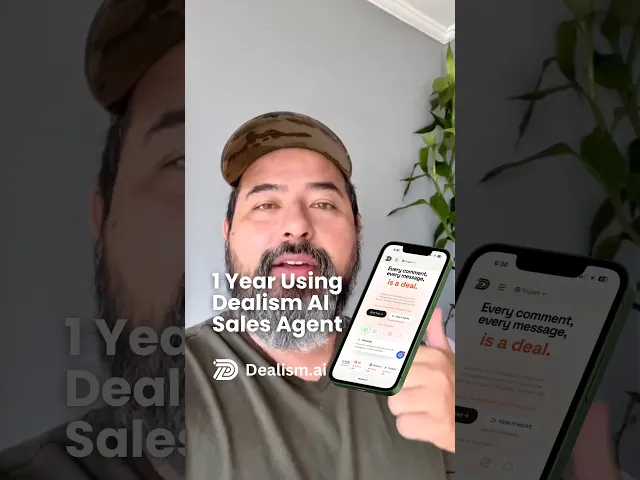
THE STORY IN BRIEF
Hugo uses Dealism to help prospective students understand his courses, find the right next step, and move toward enrollment. His Agent, Aspirante, answers routine questions from approved business knowledge—but hands complex legal, safety-sensitive, or judgment-based decisions back to a person.
Before someone enrolls in a course, they rarely begin by saying, “I’m ready to buy.”
They ask questions.
Is this suitable for a beginner? What will I learn? Do I need previous experience? How is the course different from mentorship? What should I bring? What happens after I register?
For Hugo Magarifuchi, a firearms and shooting instructor, these questions are an important part of the sales process. Prospective students need clear information before they feel confident enough to take the next step.
But some questions also touch on firearms regulations, personal circumstances, and safety. Those cannot be treated like ordinary sales FAQs.
Hugo needed an Agent that could do both: keep routine sales conversations moving and recognize when a question still required a person.
That Agent became Aspirante.
An AI assistant built around the way Hugo actually sells
Hugo offers firearms training and mentorship through IAT – Protocolo Ponto Zero. His programs cover subjects such as safety rules, firearm mechanisms, shooting fundamentals, malfunction handling, and general information about firearms regulations.
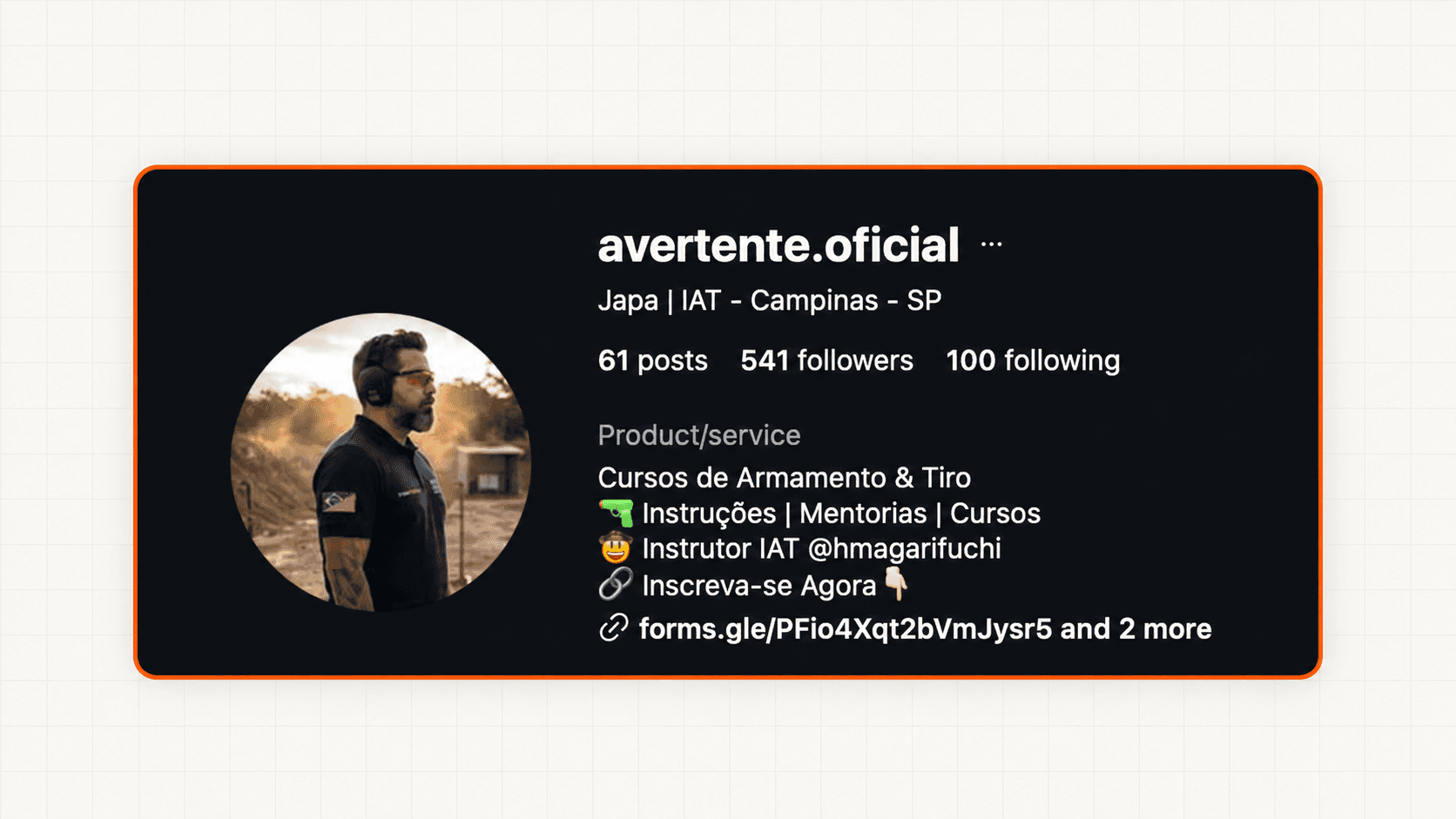
A prospective student may arrive with no experience at all. Another may already practice shooting and want to improve. Someone else may be primarily interested in understanding administrative or legal requirements.
A generic response would not be equally useful to all three.
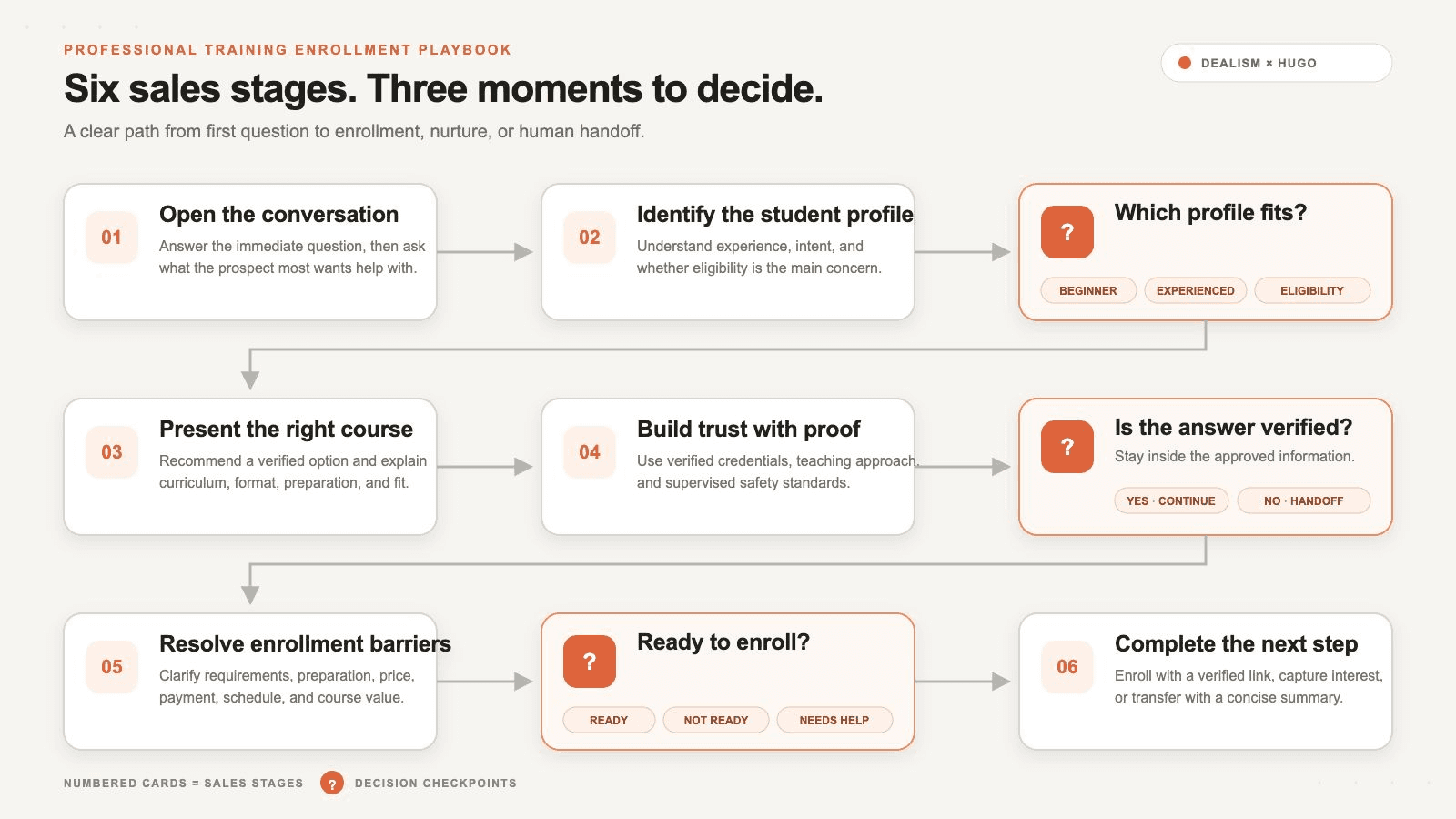
Hugo configured Aspirante to begin by understanding the person behind the question. The Agent asks what the prospective student is interested in and identifies whether they are:
A beginner without previous firearms experience
An experienced shooter looking to improve
Someone seeking general information about legal or administrative requirements
Only then does it explain the most relevant course, mentorship, or next step.
This makes the conversation feel less like navigating a static FAQ and more like speaking with an assistant that understands how Hugo’s business works. Other educators can follow the same approach with a purpose-built AI Customer Agent for courses.
TRY IT WITH YOUR BUSINESS
Explore the real playbook behind Hugo’s Agent—from identifying each student’s needs to guiding enrollment and handing sensitive questions to a person.
From answering questions to guiding enrollment
Aspirante is not designed to answer a question and end the conversation. Its job is to help prospective students move forward without pressuring them.
After understanding someone’s needs, it can explain the program, including its content, prerequisites, and what the student should bring. It can also highlight the qualities Hugo wants people to associate with his training: a respectful approach, practical instruction, and safety without intimidation.
When price becomes a concern, the Agent can explain available payment options and connect the cost to the practical value of training. It does not invent discounts or push the customer aggressively.
If the person is ready to enroll, Aspirante directs them to the registration process and explains that a place is only secured after payment has been confirmed.
If the person is interested but not ready, the Agent offers a different next step: an interest form and the option to hear about future classes. It does not force the person to register or promise follow-up that the business may not be able to provide.
The result is a simple but important distinction:
Ready buyers receive a clear path to enrollment.
Interested prospects receive a lower-commitment next step.
People who only need information can continue asking questions without being forced into a sales flow.
Not every conversation needs to produce an immediate sale. But every useful conversation should help the customer understand what to do next.
The Agent answers first—but only from what Hugo has approved
Hugo built the Agent’s knowledge around his own business. That includes information about his courses, mentorships, teaching approach, enrollment process, and the general administrative questions prospective students regularly ask.
“I built its entire knowledge library, and it works very well,” Hugo says.
This matters because a fluent answer is not automatically a correct answer. A generic AI system might produce something that sounds plausible but does not reflect the instructor’s current course, policies, or professional judgment.
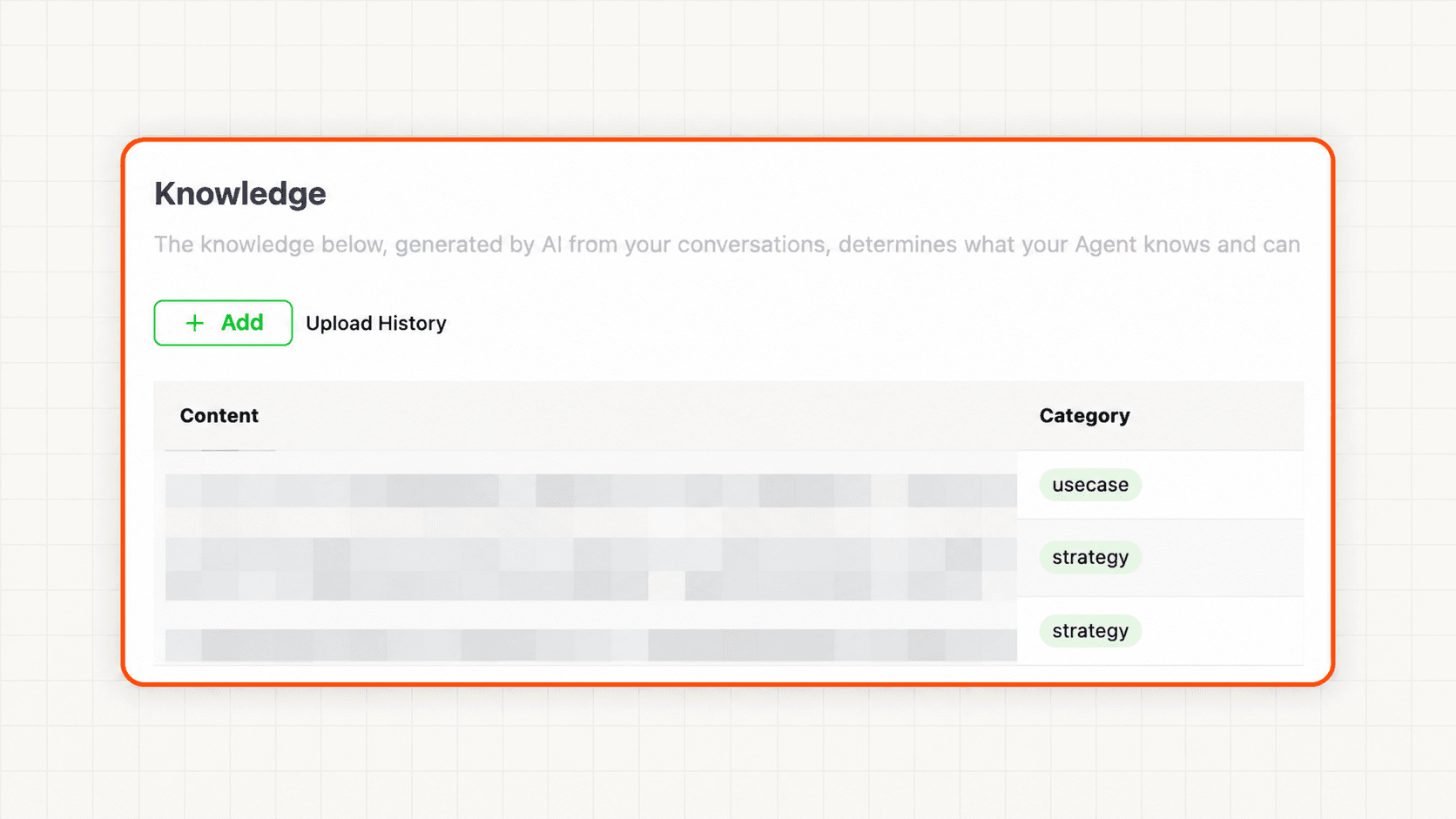
Aspirante is expected to answer from information Hugo has provided and reviewed. When the Agent cannot confirm something, it should say so rather than fill the gap with an assumption.
Automation becomes risky when the correct answer depends on personal circumstances, changing regulations, or professional interpretation. Hugo made that boundary part of Aspirante’s instructions.
The Agent may provide general information contained in its approved knowledge. But it should not interpret complex criminal law, decide what a regulation means for an individual, or present itself as a substitute for an appropriate specialist. It is also instructed not to engage in political arguments related to firearms.
Aspirante should move the conversation to a person when:
The customer asks a highly specific legal question
The answer depends on individual circumstances
The request goes beyond the scope of Hugo’s courses
The customer becomes angry or distressed
The customer explicitly asks to speak with a person
The Agent cannot verify the answer from its knowledge
This is not a failure of the automation. It is part of the design. A useful sales Agent should understand both its responsibility and its limits, with a clear path for human handoff when judgment is still required.
What a conversation with Aspirante can look like
Imagine that a prospective student writes:
“I’ve never handled a firearm before. Is this course suitable for me?”
Aspirante does not immediately send a payment link. It first recognizes that the person is a beginner.
It can explain that the training covers foundational subjects, including safety, firearm mechanisms, and shooting fundamentals. It can describe Hugo’s non-intimidating teaching approach and ask one relevant question at a time to understand what the student hopes to learn.
Once the person has enough information, the Agent can explain how to register.
Now imagine that the same person asks:
“Based on my personal situation, am I legally allowed to carry a firearm?”
That question requires a different response.
Instead of improvising a legal conclusion, Aspirante should explain that the answer depends on individual circumstances and recommend speaking with an appropriate specialist.
The first question keeps the sales conversation moving. The second activates a boundary.
The value is not simply that the Agent can answer. It is that Hugo has defined which answers belong to the Agent and which decisions still belong to a person.
FREE INSTAGRAM COMMENT-TO-DM
Add your business knowledge, define the next steps, and decide when a person should take over. Dealism helps you turn repeated customer questions into conversations that keep moving.
A sales Agent should know how to help—and when to step aside
Prospective customers do not want to feel interrogated. Aspirante begins with the customer’s question and collects information only when it helps provide a better response or guide the next step.
It asks one question at a time. It does not request information the customer has already provided. If someone does not want to share personal details, the Agent should continue helping rather than repeatedly asking for them.
Its style is welcoming, direct, and confident—similar to an experienced instructor who communicates clearly without intimidating the student.
Hugo’s course information is unique to his business, but the structure behind Aspirante is reusable:
Understand what the prospective customer needs.
Explain the most relevant offer using approved business knowledge.
Address common concerns without aggressive pressure.
Give interested customers a clear next step.
Move sensitive or uncertain decisions to a person.
Hugo has used Dealism for about a year to assist clients and future students with questions about his courses, mentorships, and administrative processes. His experience shows that useful sales automation is not about letting AI make every decision. It is about deciding which parts of a sales conversation can be handled consistently—and protecting the moments that still require human judgment.
Build an Agent around your own sales process
Turn your business knowledge, customer questions, qualification approach, and handoff rules into an Agent that helps every conversation keep moving.
ABOUT
Hugo
Hugo is a firearms and shooting instructor who offers courses and mentorship programs. He built his Dealism Agent’s knowledge library and has used it for about a year to help clients and prospective students understand his programs and general administrative processes.

Creator
She Didn’t Need More Followers. She Needed a Better Way to Handle the DMs
Read story →
Professional Service
How an AI Agent Gets Evaristo’s Clients to the Final Stage of Intake—Before He Steps In
Read story →
Education
Hugo Let Dealism Handle the Questions—But Not the Decisions That Need Him
Read story →
THE EDITORIAL IDEA
Less software theatre. More attention to the exact point where a customer hesitates, asks, decides, or needs a person.