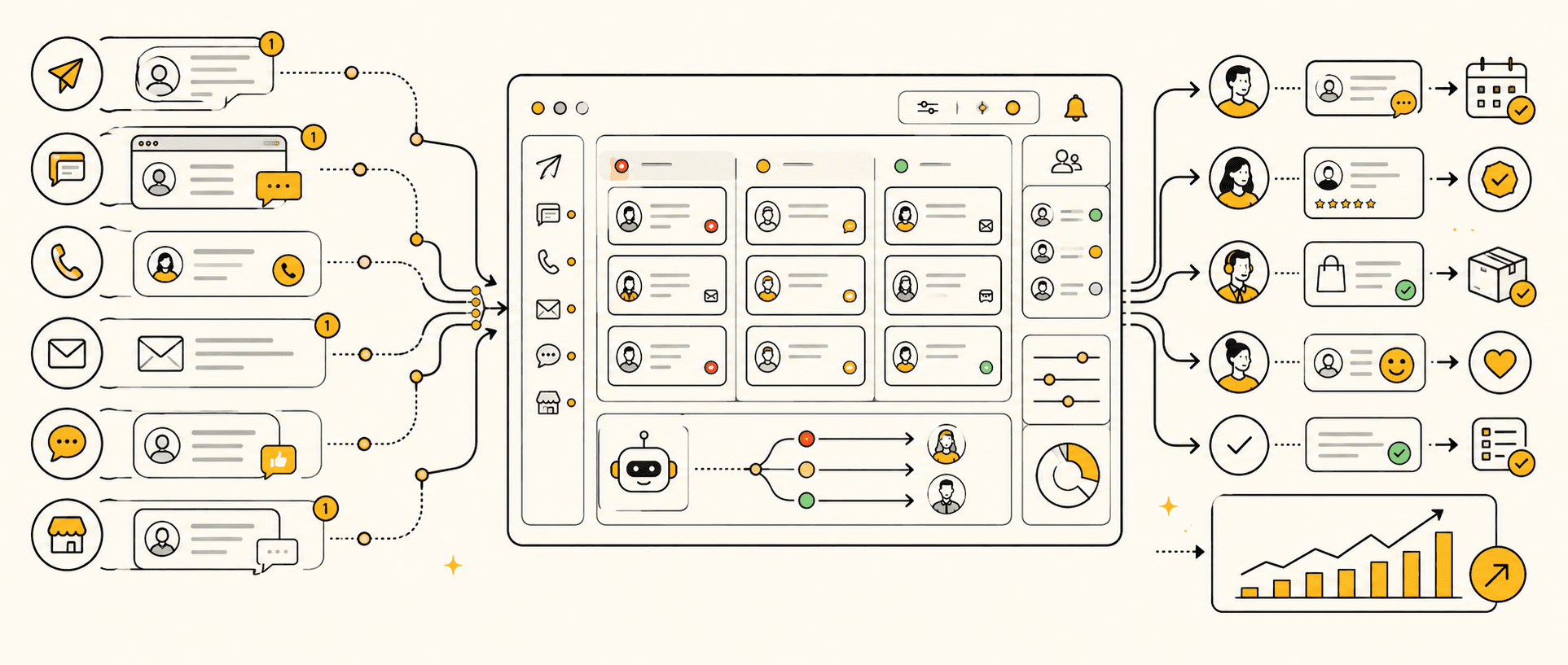
A customer asks about the price on your website. Another sends “interested” on Instagram. Someone else asks on WhatsApp if you have availability this week. Each message looks small, but each one may be a real buying signal. The surface problem is too many messages. The real problem is weaker control over the sales process.
When chats are spread across apps, teams lose context, miss follow-ups, and reply without knowing what the customer really wants. That is why sales chat management and customer chat support matter. For businesses that depend on WhatsApp, Instagram, and web chat, better unified messaging and smarter multi platform messaging can turn scattered conversations into clear sales actions.
What Is Sales Chat Management?
Sales chat management is the process of organizing, replying to, tracking, and following up with customer conversations across different messaging channels. It is not only about answering faster. A good system helps teams understand what the customer means, keep the right context, and guide each chat toward a clear next step.
For example, “How much is it?” may mean the customer is comparing prices. “Do you have time this week?” often shows booking intent. “I’m interested” needs a simple qualifying question. “Can I see examples?” calls for proof and trust. Basic chat support answers the message. Sales chat management moves the conversation forward.
Why Multi Platform Messaging Creates Sales Gaps
Most customers do not move in a straight line. They may find your business on Google, check your website, view Instagram posts, and then ask a question on WhatsApp. This is normal buying behavior, but it creates pressure for small sales teams.
Messages are easy to miss. A price question may show strong buying intent, but it can get buried under casual comments or low-value chats.
Context gets lost. A customer may explain their needs in web chat, then move to WhatsApp. If the team asks the same questions again, the experience feels slow and careless.
Follow-up becomes random. Many leads need a quote, reminder, booking link, or case example before they decide. Without a clear system, these warm leads disappear.
Good multi platform messaging is not about being everywhere. It is about keeping control when customers come from everywhere.
Where Automation Fits in Sales Chat Management
When missed messages, lost context, and weak follow-up start hurting sales, many teams first feel the problem as daily chaos. Some businesses are fixing this by adding auto-replies. In sales chat management, a good automated tool handles repeated steps while keeping the conversation moving toward a clear sales action.
Answer simple questions faster: Automation can handle FAQs about services, opening hours, pricing ranges, or booking steps, so humans are not stuck repeating the same replies.
Qualify leads earlier: When a customer says “I’m interested” or “How much is it?”, automation can ask about their goal, timeline, or preferred service before a salesperson steps in.
Keep follow-up moving: If a lead does not reply after a quote or booking link, automated follow-up can recover interest before the chat goes cold.
Route serious chats to humans: High-value or complex conversations should still go to a real person.
Tools like Dealism make this workflow more practical for small sales teams. Its AI Sales Chat can learn from the business knowledge base, answer repeated questions consistently, and guide customers toward the next step instead of stopping at a basic auto-reply. With AI sales strategy, Dealism can help judge their interest level, respond with the right context, and prioritize high-intent chats. If the request is complex or the lead is valuable, it can also route the conversation to a human at the right moment.
How Dealism Supports AI Sales Chat Across Platforms
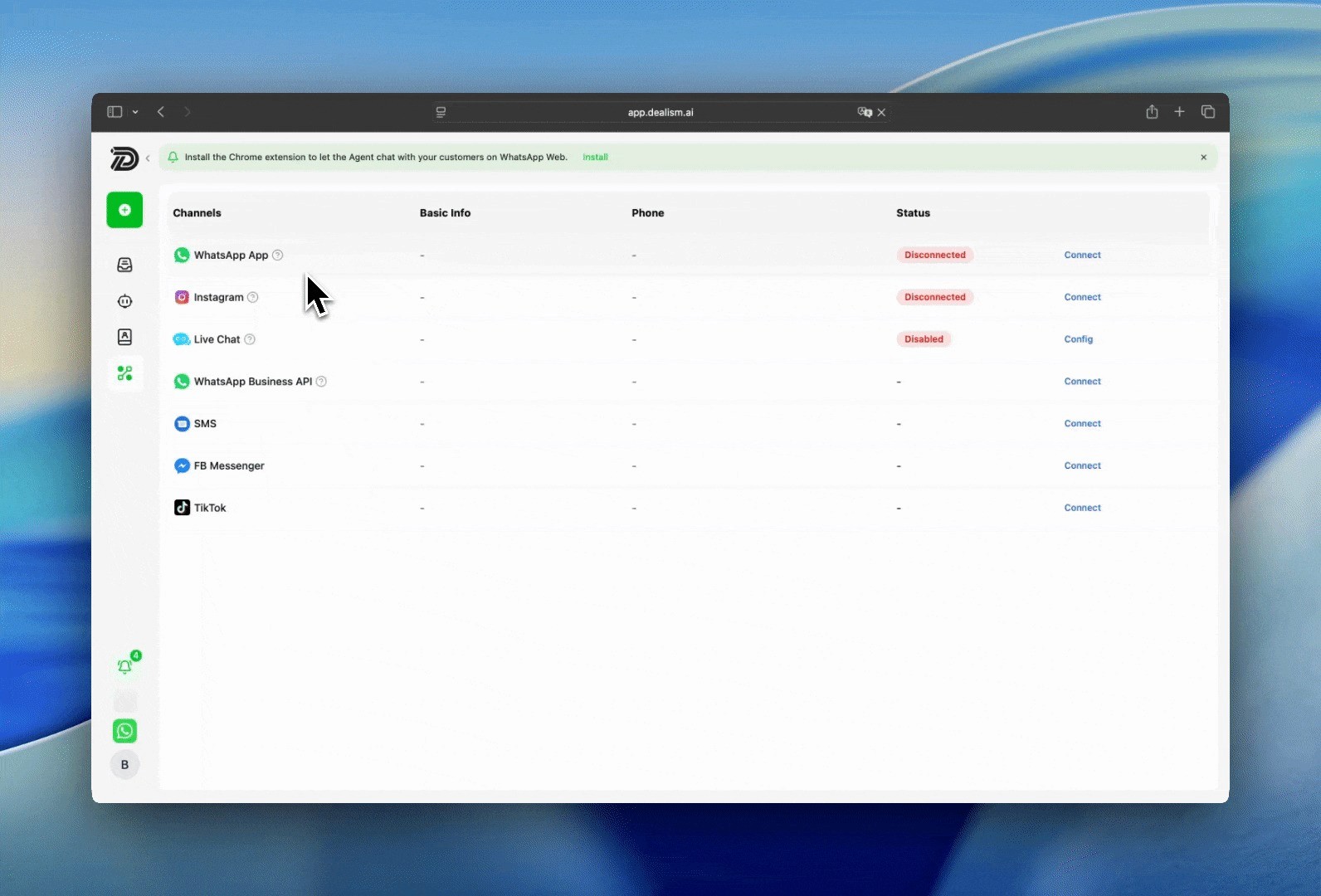
For teams managing sales chats across website chat, WhatsApp, and Instagram, the first value of Dealism is control. Instead of forcing staff to jump between different apps, Dealism brings messages into a more unified workspace. A website inquiry, an Instagram DM, and a WhatsApp follow-up can be handled as parts of the same sales journey, not separate tasks. This helps small teams reply faster while still seeing who the customer is, what they asked, and what should happen next. With clearer context and better timing, teams can improve conversions by moving serious leads toward booking, quotes, follow-ups, or human handoff before interest fades.
From Website Visit to Ongoing Chat
Dealism Live Chat is not only a website chat box. It can guide visitors from your website into WhatsApp or Instagram, where the conversation can continue after they leave the page. This is useful when someone asks about price, availability, service details, or booking options.
From Auto-Reply to Sales Action
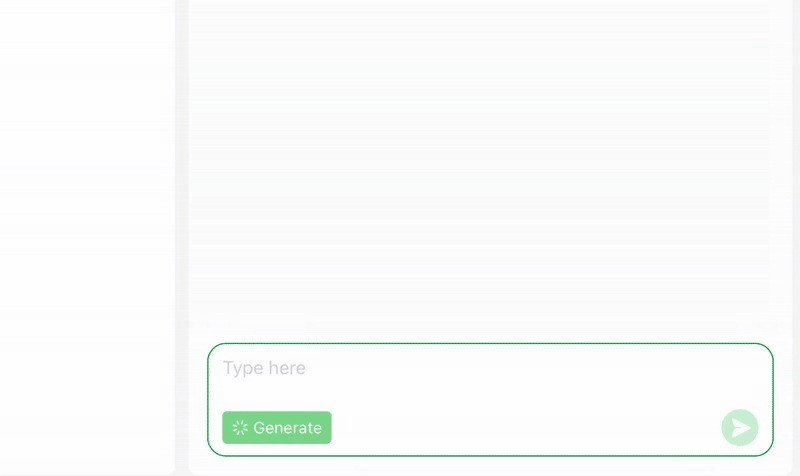
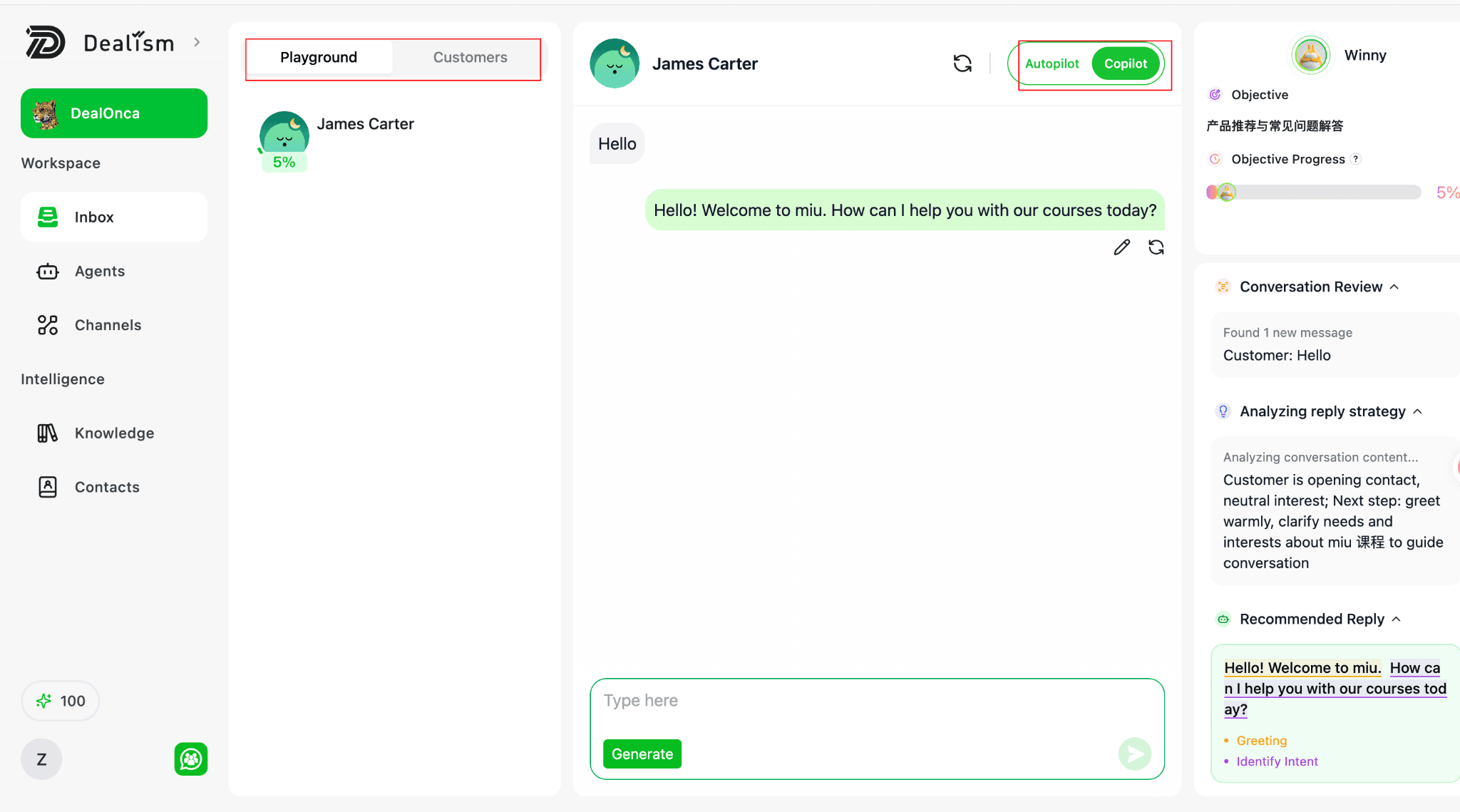
Dealism’s AI Sales Chat can learn from the business knowledge base and use auto reply to answer repeated questions with more consistency. More importantly, it can respond differently based on intent. A vague “I’m interested” may trigger a qualifying question, while “Do you have slots this Friday?” can be treated as a higher-priority booking signal. Through the DL interface, teams can also upgrade the workflow when they need deeper automation and agent control.
From Agent Execution to Team Management
Dealism's built-in "ChatGPT for sales" adds a higher-level management layer after the AI Customer Agents work. It can help sync knowledge, monitor lead quality, highlight high-intent chats, generate reports, and remind the team when follow-up or human action is needed. This makes Dealism more than a reply tool. It becomes a system for turning scattered sales chats into managed sales actions.
Sales Chats Are Becoming the New Sales Funnel
The sales is no longer only built from forms, calls, quotes, and CRM stages. For many service businesses, the real decision process now happens inside chat. A customer may compare prices in WhatsApp, ask for examples on Instagram, or check availability through website chat. These are not just small messages. They are buying signals. That is why sales chat management is becoming a core part of sales growth. The stronger team is not the one that receives the most messages, but the one that can understand each message, respond with context, and guide the customer toward a clear next step.
For teams that rely on multi platform messaging, Dealism gives this process a more reliable structure. With unified messaging, Dealism helps businesses connect website visitors with WhatsApp or Instagram conversations, answer repeated questions from a knowledge base, prioritize high-intent leads, and bring humans in when the conversation needs trust, judgment, or closing support. This is the value of Conversation as Execution: chats do not stay as scattered replies. If your customers already start the buying journey in chat, Dealism helps your team manage that journey with more speed, context, and confidence.
Read more:
Best AI Tools for Customer Service Automation That Drive Conversions
What Is Managed Live Chat and How It Works for Local Businesses