Small businesses don’t usually struggle with traffic or interest.
They struggle with what happens after the message arrives.
WhatsApp messages pile up. Instagram DMs go unanswered. Website visitors ask questions and disappear.
The real problem is not visibility—it is execution inside conversations.
This is where modern systems like Dealism are redefining how small businesses operate: turning chats into structured systems that increase sales, acquire customers, and automate replies while still keeping conversations human and contextual.
1. Marketing Starts With Conversations, Not Campaigns
Most businesses think marketing ends when leads arrive.
But in reality, marketing only starts when a customer sends a message.
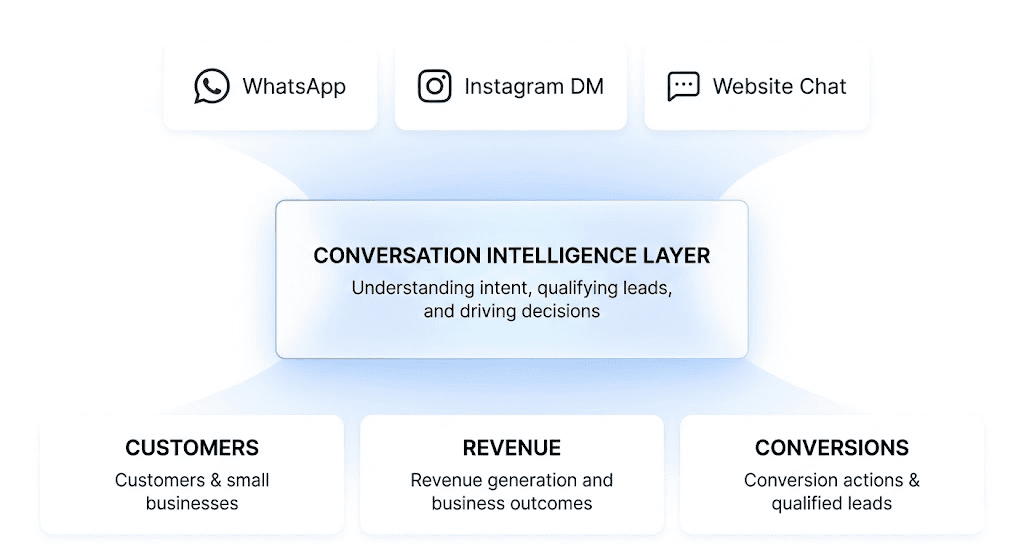
Every WhatsApp DM or Instagram inquiry is not just a question—it is a high-intent signal.
The goal is not just to reply to inquiries, but to convert them into:
qualified opportunities
real customers
measurable revenue
This is where modern marketing strategies for small business shift from “attracting attention” to turning attention into action.
2. From Replies to Revenue: Why Speed Alone Doesn’t Increase Sales
Fast replies are not enough.
Most SMBs already respond quickly—but still lose customers.
Why?
Because they respond without understanding intent.
A real system doesn’t just reply to inquiries or questions. It interprets context and moves the conversation forward toward a decision.
To truly increase sales, businesses need more than responsiveness—they need conversational intelligence that converts interest into action.
3. The Hidden Failure: No Pre-Judgment in Customer Conversations
Most small businesses treat chat as a scheduling tool.
They wait until the end of the conversation to decide what to do.
But in high-performing systems, the first job is not booking—it is understanding.
Many industries like clinics, consultants, and service businesses fail here because front desk teams only:
repeat information
forward messages
schedule blindly
A real system performs pre-judgment, not reception work:
It clarifies underlying needs, identifies urgency, and matches the right service before pushing for booking. It acts as an intelligent triage layer, not a scripted receptionist.
This is where conversation becomes a business decision engine, not just communication.
4. Stop Losing Leads After the First Message
A large portion of revenue is lost not during conversations—but after them.
Customers:
pause to compare options
forget to respond
lose urgency over time
Without structured follow-up, intent decays.
Modern systems solve this challenge of customer conversations at scale by introducing structured automation and intelligent decision-making inside every chat.
This directly improves conversion rates without increasing workload.
5. Turn Instagram Engagement Into Customer Acquisition
Instagram is no longer just a branding channel.
It is a customer acquisition engine.
With automation systems like Dealism, every comment or Reel interaction can become a direct sales entry point.
Example flow:
user comments on post
system triggers DM automatically
personalized message is sent instantly
user receives offer, link, or trial CTA
This turns engagement into structured acquisition instead of passive interaction.
6. Live Chat Is Not Support—It Is Your First Sales Layer
Most websites treat live chat as customer support.
But in reality, live chat is often the first sales conversation.
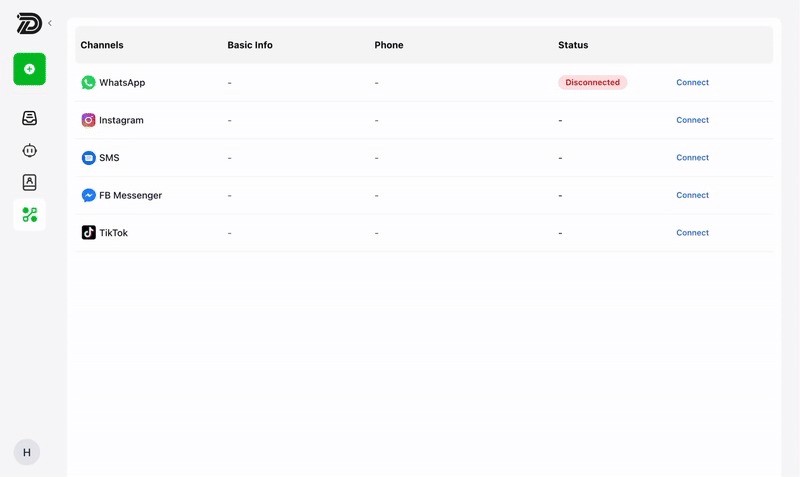
Modern embedded chat systems allow users to start conversations via WhatsApp or Instagram without friction.
This creates a direct funnel:
visitor → conversation → qualification → customer
Instead of waiting for users to “decide,” the system actively guides them toward action.
7. Replace Scripts With Adaptive Conversations
Scripts fail because customers don’t behave predictably.
They ask unexpected questions, change direction, and express hesitation.
Rigid templates break under real-world behavior.
Instead, businesses need adaptive conversation systems that can:
understand intent dynamically
adjust tone and response
continue conversations naturally
This ensures consistency without losing flexibility.
8. Automated Replies That Actually Drive Decisions
Automation is often misunderstood.
Traditional automated replies are static:
fixed messages
rule-based triggers
limited flexibility
Modern systems redefine automation completely.
It is no longer about sending predefined templates.
It becomes autonomous conversation handling:
understanding intent, maintaining multi-turn context, and continuously guiding the user toward a decision without breaking flow.
This is what makes automated replies useful in real sales environments—not just customer service.
9. Focus Human Effort Only on High-Intent Customers
Not all leads are equal.
Some are ready to buy immediately. Others are just exploring.
AI systems can analyze conversations to identify:
purchase intent level
urgency signals
conversion probability
This allows teams to focus only on high-value opportunities, while automation handles the rest.
The result is better efficiency without increasing headcount.
10. Build Systems, Not Response Habits
The biggest difference between stagnant and scalable businesses is simple:
Stagnant teams rely on people replying manually
Scalable teams rely on systems that manage conversations end-to-end
Platforms like Dealism's built-in "ChatGPT for sales" (powered within the Dealism ecosystem) enable businesses to:
build custom AI sales agents
train them on product knowledge, pricing, FAQs, and objections
deploy across WhatsApp, Instagram, and website chat
continuously improve based on real conversation data
Instead of manually handling inquiries, businesses design how conversations behave.
Final Perspective: From Messaging to Revenue Systems
The real transformation in small business sales is not about communication.
It is about structure.
replying to inquiries → becomes structured engagement
manual follow-ups → becomes automated replies
scattered conversations → becomes customer acquisition systems
chat interactions → become engines that increase sales, acquire customers, and generate revenue
Modern platforms like Dealism don’t just automate responses.
They transform conversations into business processes.