
In 2026, choosing the right WhatsApp automation tool is no longer just about sending auto-replies. Businesses now rely on WhatsApp as a primary revenue channel — for lead qualification, customer retention, and sales execution.
As messaging becomes the dominant communication method worldwide, automation determines whether conversations convert — or disappear.
This buyer’s guide explains what to look for, how pricing works, and how modern AI-powered platforms are transforming WhatsApp into a full-scale growth engine.
What Is a WhatsApp Automation Tool?
A WhatsApp automation tool is software that allows businesses to automate and manage conversations at scale through the official WhatsApp business api.
Unlike the basic WhatsApp Business App, API-based automation enables:
Structured WhatsApp automated messages
Trigger-based workflows
Intelligent routing
CRM integration
Campaign broadcasting
Performance analytics
Official API access is provided through WhatsApp and managed under the broader ecosystem of Meta.
You can review the official API documentation directly via the WhatsApp Business Platform overview.
Why Businesses Need WhatsApp Automation in 2026
Customer expectations have changed. Instant responses and personalized communication are now standard.
Without automation:
Leads go unanswered
Follow-ups are inconsistent
Sales teams become overwhelmed
Conversion rates drop
With automation:
Every message receives an instant response
Conversations scale 24/7
Lead qualification becomes systematic
Revenue tracking becomes measurable
Modern WhatsApp marketing software bridges messaging and sales performance.
Core Features to Look For
Not all tools are built the same. A powerful WhatsApp automation tool should include:
1. Automated Reply & Workflow Logic
Set keyword triggers and time-based sequences to enable automated reply in WhatsApp without manual effort.
2. Broadcast & Campaign Management
Send compliant bulk messages for promotions, announcements, and re-engagement campaigns.
3. CRM Integration
A strong WhatsApp crm lets you:
Track conversation history
Assign chats to team members
Monitor pipeline stages
Measure deal progression
4. Official API Access
Serious scalability requires verified WhatsApp business api access.
5. Analytics Dashboard
Track delivery rates, response times, and conversion metrics to optimize performance.
WhatsApp Marketing vs WhatsApp CRM
Businesses often confuse outreach with pipeline management.
WhatsApp marketing focuses on broadcasts and campaigns.
WhatsApp CRM focuses on tracking and progressing individual conversations toward revenue.
The best platforms integrate both.
To understand how structured messaging evolves into revenue-driven systems, it’s worth exploring how WhatsApp marketing automation transforms conversations into measurable conversions.
Pricing Models Explained
Most platforms follow one of three pricing structures:
Subscription-based SaaS pricing
Conversation-based pricing (Meta charges per conversation category)
Hybrid pricing (platform + API usage fees)
For official pricing structure details, see the updated explanation from Meta regarding conversation-based billing.
Understanding your expected message volume and conversation type (marketing, utility, authentication) is critical before committing.
The Shift Toward AI-Driven WhatsApp Automation
Traditional automation relies on rigid decision trees and scripted flows.
In contrast, AI-driven systems analyze context, intent, and emotional tone to guide conversations dynamically. This is where automation evolves from “auto-reply” to intelligent execution.
Instead of simply sending WhatsApp automated messages, advanced systems:
Qualify leads automatically
Recommend next steps
Trigger contextual follow-ups
Push conversations toward decisions
How Dealism Approaches WhatsApp Automation
Dealism approaches WhatsApp differently from conventional broadcast-focused platforms.
Rather than operating solely as chatbot software, Dealism functions as an AI Vibe-Selling Agent designed to execute business actions inside conversations.
Through official WhatsApp business api integration, Dealism:
Understands customer intent
Identifies emotional signals
Structures conversations toward decisions
Automates follow-ups intelligently
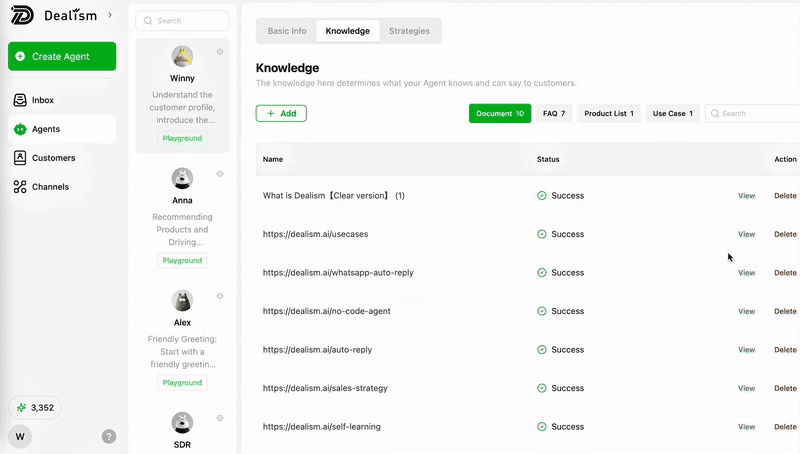
For a breakdown of WhatsApp infrastructure and cost structure, you can review how WhatsApp Business works and whether it’s free in practical terms.
Unlike traditional tools that emphasize static flows, Dealism focuses on turning chat into structured execution — conversation → clarification → decision → action.
How to Choose the Right WhatsApp Automation Tool
Before selecting a platform, ask:
Does it support official API access?
Can it scale beyond simple auto-replies?
Does it integrate CRM visibility?
Does it use AI or only rule-based flows?
Does it help move conversations toward measurable revenue?
If your business depends heavily on inbound leads, intelligent automation often delivers stronger ROI than broadcast-only solutions.
Final Thoughts: From Messaging App to Revenue Engine
A WhatsApp automation tool should do more than automate replies — it should drive growth.
In 2026, competitive advantage comes from:
Official API integration
CRM-level visibility
AI-powered conversation guidance
Structured revenue execution
As customer communication continues shifting toward messaging platforms, the businesses that master intelligent WhatsApp automation will outperform those relying on manual or rule-based systems.
Conversations are no longer support tickets.
They’re your most scalable sales channel.