A customer does not always become a lead after filling out a form. Often, the buying moment starts with a short message: “How much is it?”, “Do you have availability this week?”, or “Which option is right for me?” These are not casual questions. They show intent, timing, and hesitation.
The problem is that many businesses treat chat as basic support. They answer, but they do not guide. Sales chat fixes that gap. It helps teams understand intent, reply fast, qualify leads, match customers to the right service, and move the conversation toward a booking, quote, consultation, or purchase. Good sales chat does not push harder. It makes the next step easier.
What Is a Sales Chat?
Sales chat is the process of using chat conversations to help potential customers make buying decisions. These conversations can happen on a website, WhatsApp, Instagram DM, Web Chat, or another messaging channel.
The goal is simple: turn interest into action.
A normal support chat may answer questions like “Where is my order?” or “How do I reset my password?” A sales chat conversation answers questions before the customer buys. It helps with pricing, service fit, booking, availability, product choice, and next steps.
For example:
Customer: “How much is your service?”
Weak reply: “Prices start at $99.”
Better reply: “Prices start at $99. What are you looking for help with, and do you need a one-time service or ongoing support?”
The second reply does more than answer. It opens the path to qualification. That is the difference between a reply and a selling conversation.
A chat sale happens when a customer moves from a message to a business action. That action may be a booked appointment, a quote request, a product order, a demo call, or a follow-up from a human team member.
Why Sales Chat Increases Conversions
Many businesses do not need more traffic first. They need to stop losing the leads they already attract. A visitor may come from Google, an ad, or Instagram, check your service page, and ask one simple question. If the reply is slow or unclear, that warm lead can disappear.
Sales chat improves conversions because it answers customers while their buying intent is still active. Instead of searching through FAQs or waiting for email, they get guidance and a clear next step.
Key benefits include:
Faster replies before leads go cold
Better lead qualification from the first message
Fewer missed bookings, quotes, and consultation requests
Clearer answers about price, service fit, and availability
Easier human handoff for high-value conversations
More follow-up chances after the first chat
Speed helps, but judgment closes the gap.
How to Build a Sales Chat That Converts
A good sales chat strategy should guide customers when they are close to action, not just wait for them to ask for help. Start by placing chat on high-intent pages:
Pricing page: explain value and reduce doubt
Service page: help customers choose the right option
Booking page: confirm timing and availability
Checkout page: answer last-minute concerns
Ad landing page: connect the offer to the customer’s need
Proactive chat should feel helpful, not intrusive. Instead of a generic “How can I help?”, use messages like:
“Need help choosing the right service?”
“Want to check availability before booking?”
“Not sure which option fits your situation?”
A practical sales chat script should cover price questions, vague interest, availability requests, service matching, hesitation, no-reply follow-up, and human handoff.
This is where Dealism fits naturally. As an AI Vibe-Selling Agent, it helps businesses turn chat into action. For example, if a customer asks, “Do you have time this week?”, Dealism can ask what service they need, check intent, guide them toward booking, or alert a human when the lead is valuable.
The goal is simple: do not just count chats. Track qualified leads, bookings, quote requests, follow-ups, and completed actions.
What Features Should Sales Chat Software Include?
Choosing software should not start with the longest feature list. It should start with your sales process.
The right tool should help you:
Reply instantly to common questions
Understand customer intent
Qualify leads before human follow-up
Keep conversation history
Route high-value chats to the right person
Trigger messages based on page behavior
Support channels like Web Chat, WhatsApp, and Instagram
Track conversion-related metrics
Some searches, such as chat counters for sale, may show mixed or unclear intent. But for a real business, the better question is not simply which chat tool exists. The better question is which system can turn conversations into sales actions.
A basic widget cannot manage that journey well.
How Dealism Fits Into AI sales chat and Increases Conversions
Dealism fits into the part of sales chat where simple replies are no longer enough. Many service businesses already get messages from WhatsApp, Instagram, and Web Chat, but the hard part is not receiving messages. The hard part is knowing which customer is serious, what they need, and what should happen next.
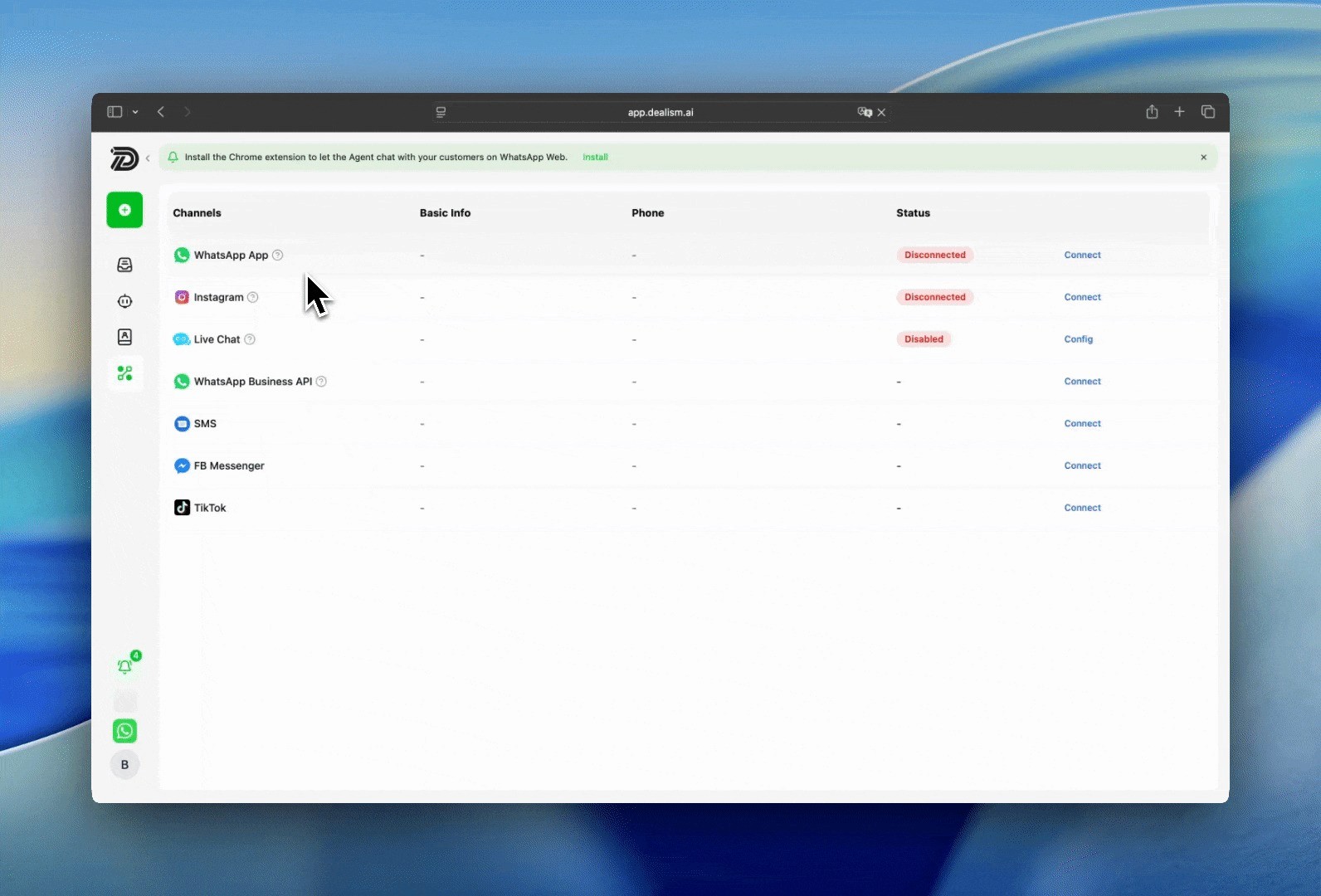
Its role is closer to an AI Vibe-Selling Agent than a basic chatbot:
Price question → qualification
When a clinic schedule, salon party, or home service business gets “How much is it?”, Dealism can give a useful price direction, then ask what service, timing, or condition the customer is asking about. The chat moves from price curiosity to a qualified lead.Vague interest → service matching
A message like “I’m interested” is too unclear for a team to act on. Dealism can narrow it down: service type, customer goal, preferred time, and urgency. This helps the business recommend the right package, staff member, or next step.Multi-channel messages → continuous context
A customer may first ask on Web Chat, then continue on WhatsApp or Instagram. Dealism keeps the sales thread connected, so the team does not lose what the customer already said.Automation → better human timing
Not every chat should stay automated. With automated messages, Dealism can collect key details when a lead asks for custom pricing, has urgent timing, or shows strong buying intent. Then it supports better human timing by reminding the right person to step in when trust, negotiation, or closing needs real judgment.
That is the real value of AI sales chat. It does not just respond faster. It helps small teams turn customer messages into bookings, quotes, follow-ups, and better sales decisions.
Sales Chat Is Becoming the New Sales Floor
The next stage of conversion will not be won only by better ads, longer landing pages, or heavier CRMs. It will be won in the short moment after a customer shows interest and waits for a reply. That moment may happen on a website, WhatsApp, Instagram, or Web Chat. The customer may ask about price, availability, service fit, or the next step. If the reply is slow or unclear, the lead cools down. If the reply is useful, sales chat can turn uncertainty into a booking, quote, consultation, or purchase.
For service businesses, chat is no longer just a support channel. It is where trust, qualification, and conversion often begin. Dealism is built for this shift. This ai sales agent helps small teams turn scattered WhatsApp, Instagram, and Web Chat messages into clear sales actions, from answering repeated questions to collecting context, guiding follow-ups, and handing serious leads to humans. If your team is missing leads after the first message, Dealism helps every serious chat sale move forward with more speed, context, and control.
Also explore relevant article:
Live Chat Customer Service Strategies That Turn Conversations Into Sales
Best AI Tools for Customer Service Automation That Drive Conversions