Knowledge
Updated
5 min read
Use cases are guidance, not guarantees
Describe realistic situations and verified outcomes. Do not imply that every customer will receive the same result.
What a customer use case does
A use case connects a recognizable customer situation to the most relevant product, service, workflow, or next step. It helps the Agent explain why an option may fit without making unsupported promises.
Use case best practices
Customer: describe the business type, role, or situation without exposing private personal data.
Problem: state the concrete task or obstacle in the customer's own language.
Trigger: explain when the customer usually needs help.
Recommended approach: identify the relevant offer or workflow and why it fits.
Process: describe the main steps, requirements, and expected timeline.
Outcome: use a verified, specific result or a cautious expected benefit—not a guarantee.
Limits and handoff: explain when the use case does not apply and when a person should take over.
Add and find use cases
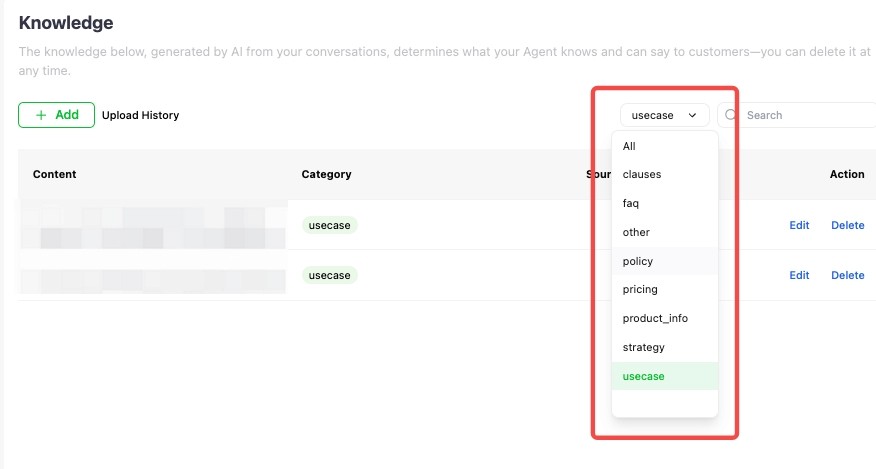
Add the use case from a clear file or direct link. After it appears in Knowledge, select the usecase category to review all use cases together. Search for the customer type or problem to make sure a similar entry does not already exist.
Test matching and boundaries
Ask the Agent about a customer who clearly matches the use case, one who partially matches, and one who should not receive the recommendation. A good result explains the fit, asks for missing information, and respects the stated limitations.
To keep recommendations grounded in accurate offer details, see Add products and services.