Knowledge
Updated
5 min read
Separate facts from sales language
Give the Agent exact product facts first. Positioning and benefits should never contradict pricing, availability, or policy details.
What to include
Create a clear source for each product or service. Include the official name, who it is for, the problem it solves, what is included, what is not included, the price or quote process, delivery or availability, and the correct next step.
Product and service best practices
Use exact names: match the name used on your website, checkout, and internal systems.
Define the audience: explain who should and should not choose the offer.
Describe scope: list included features, limits, prerequisites, and exclusions.
Make pricing unambiguous: include amount, currency, billing period, taxes or fees when relevant, and any eligibility conditions.
State availability: include supported regions, languages, dates, inventory, or service hours.
Add the next action: provide the correct product page, booking step, checkout link, or human handoff rule.
Organize related knowledge
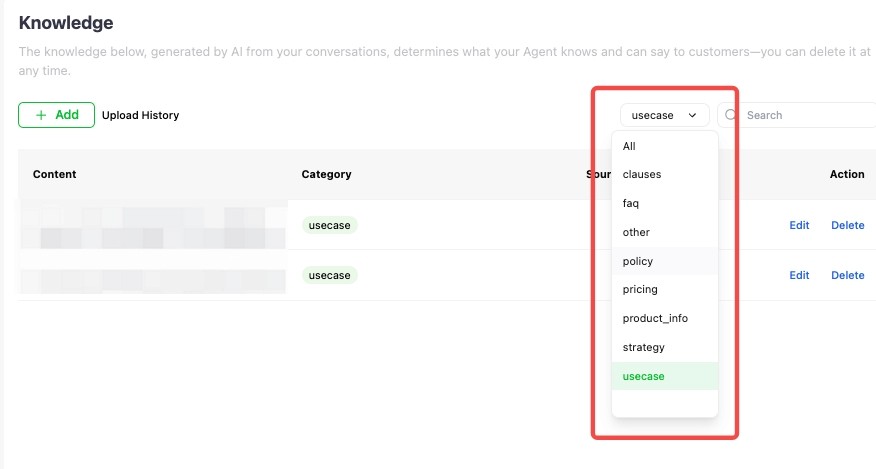
Keep the main description focused on the offer. Store frequently changing price details as pricing knowledge and important restrictions as policy knowledge. In the Knowledge list, use the product_info, pricing, and policy filters to review related facts for consistency.
Test before customers rely on it
Ask the Agent about price, who the offer is for, what is included, one limitation, and the next step. Then test a comparison between two offers. Correct any vague or conflicting response before using the Agent with customers.
For realistic examples of matching an offer to a customer situation, see Add customer use cases.